

Built-In vs Freestanding Bookshelves: Value Guide
Deciding between built-in and freestanding bookshelves requires a rigorous evaluation of your spatial constraints, aesthetic preferences, and long-term financial goals regarding property value. Homeowners and interior designers alike frequently grapple with this architectural dilemma, as the choice fundamentally alters the visual weight and functional geometry of a room. A carefully curated library or display wall serves as a focal point in living rooms, home offices, and bedrooms, making the shelving infrastructure a critical design investment. Understanding the nuanced differences between permanent carpentry and movable furniture is essential for optimizing both your daily living experience and your real estate portfolio.
Storage Efficiency and Space Utilization
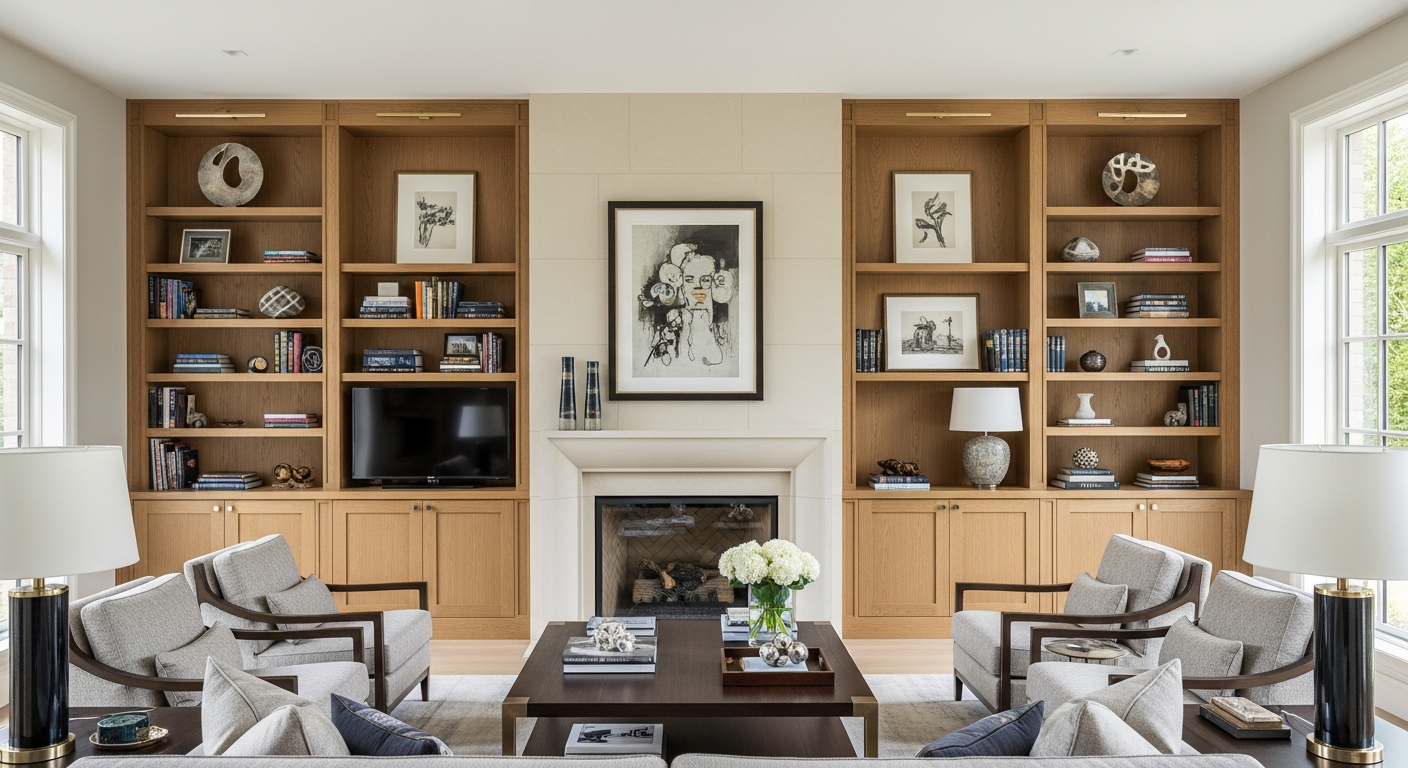
When evaluating storage efficiency, built-in bookshelves offer an unparalleled advantage by capitalizing on every available millimeter of a room's footprint. Custom carpentry is specifically engineered to navigate structural anomalies, such as sloped ceilings, awkward alcoves, or non-standard wall lengths, transforming previously dead zones into highly functional storage repositories. By extending shelves seamlessly from the floor to the ceiling, built-ins maximize vertical real estate, drawing the eye upward and creating an illusion of heightened ceilings while dramatically increasing linear shelf space.
Conversely, freestanding bookshelves are constrained by standardized manufacturing dimensions, which inevitably leads to inefficient spatial utilization. When a standalone unit is placed against a wall, there are almost always residual gaps between the top of the bookcase and the ceiling, as well as dead space on either side if the unit does not perfectly match the wall's width. Furthermore, baseboards often prevent freestanding units from sitting completely flush against the wall behind them, creating a narrow void that traps dust and reduces the overall stability of the structure.
The volumetric capacity of a shelving system must also account for the depth and weight-bearing requirements of the items being stored. Built-in units can be structurally anchored directly into the wall studs, allowing for deeper shelves and heavier loads without the risk of tipping, which is a frequent concern with tall freestanding units. This structural integrity permits a more dense concentration of heavy art books, encyclopedias, and decorative objects without bowing or structural failure.
- Vertical Optimization: Built-ins eliminate the wasted space above standard bookcases by extending all the way to the ceiling line.
- Alcove Utilization: Custom units can be tailored to fit precisely into recessed wall spaces, turning architectural quirks into functional assets.
- Flush Installation: By integrating directly with the wall and floor, built-ins eliminate the awkward gaps caused by baseboards and crown molding.
- Structural Load Capacity: Anchoring to wall studs allows built-in shelves to safely support significantly more weight per square inch than freestanding alternatives.
- Depth Customization: Permanent units can be built with varying depths to accommodate oversized volumes on the bottom and standard paperbacks on top, optimizing the room's floor plan.
Aesthetic Integration and Premium Appeal
The aesthetic superiority of built-in bookshelves stems from their ability to masquerade as original architectural features rather than added furniture. When a shelving unit is constructed to match the room's existing trim, wainscoting, and paint color, it creates a cohesive visual narrative that elevates the perceived luxury of the space. This seamless integration reduces visual clutter, as the eye is not interrupted by the distinct edges and contrasting materials of a standalone piece of furniture, resulting in a more serene and sophisticated environment.
Freestanding units, however, provide a completely different aesthetic paradigm based on versatility and statement design. A carefully selected antique bookcase, a mid-century modern teak unit, or a contemporary metal and glass étagère can serve as a striking focal point that contrasts deliberately with the room's architecture. This eclectic approach allows homeowners to inject distinct personality into a space, utilizing the shelving unit itself as a piece of sculptural art rather than a mere backdrop for books.
Despite the charm of standalone pieces, they often struggle to achieve the monolithic, library-like grandeur that custom built-ins effortlessly provide. The continuous horizontal lines of a built-in unit create a sense of expansive width, making rooms feel larger and more purposefully designed. Furthermore, the ability to seamlessly integrate closed cabinetry at the base of a built-in unit allows for the discreet concealment of unsightly electronics, board games, or paperwork, maintaining a pristine aesthetic on the exposed upper shelves.
- Architectural Continuity: Built-ins utilize matching crown molding and baseboards to blend perfectly with the room's existing architectural language.
- Visual Calmness: By eliminating the distinct borders of furniture, permanent shelving reduces visual noise and creates a unified backdrop.
- Concealed Storage: Custom lower cabinets can be perfectly matched to the upper open shelving, hiding clutter while maintaining aesthetic harmony.
- Eclectic Contrast: Freestanding shelves excel at providing a deliberate stylistic contrast, adding layered complexity to the room's design.
- Silhouette Variation: Standalone units offer unique shapes, such as leaning ladders or geometric asymmetrical grids, which are difficult to achieve with permanent wall-to-wall carpentry.
Customization and Architectural Harmony
The degree of customization available with built-in bookshelves is virtually limitless, allowing homeowners to tailor the infrastructure to their exact functional and aesthetic requirements. From the specific spacing of the shelves to accommodate a prized collection of vinyl records, to the integration of specialized hardware and rolling library ladders, custom carpentry adapts to the user rather than forcing the user to adapt to the furniture. This bespoke approach ensures that every inch of the installation serves a deliberate purpose, reflecting the unique lifestyle of the inhabitants.
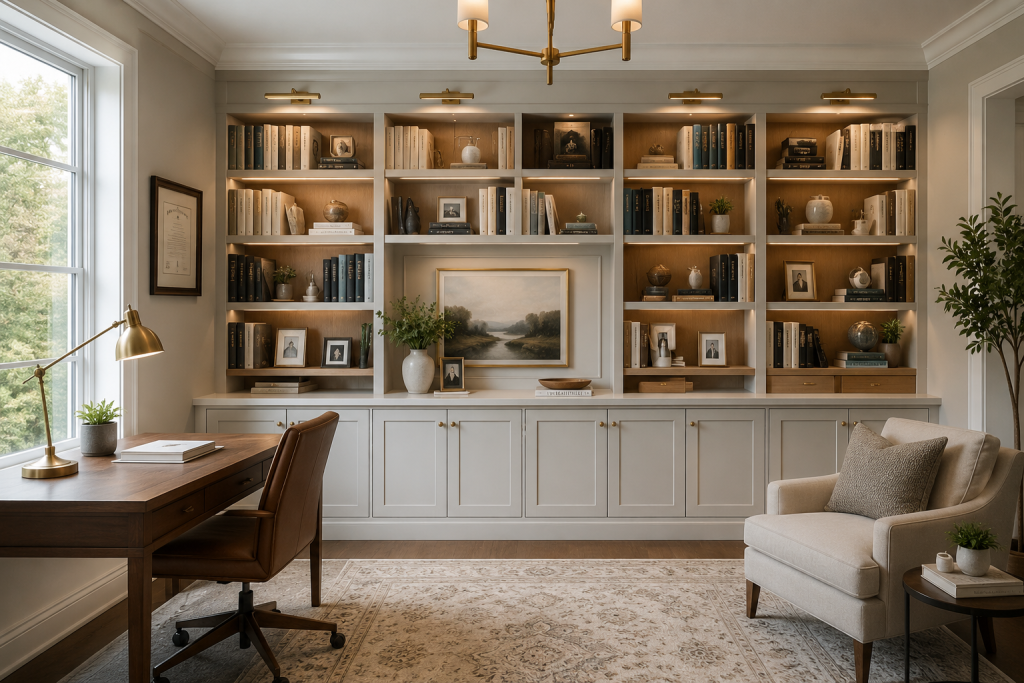
Advanced customization extends beyond mere dimensions to encompass integrated technology and lighting solutions. Built-in units can seamlessly incorporate hardwired LED strip lighting, recessed puck lights, or elegant brass picture lights to illuminate specific display items, completely hiding the wiring within the structural framework. Additionally, modern built-ins frequently feature hidden channels for audiovisual cables, integrated charging stations, or even concealed motorized projection screens, merging classic library aesthetics with contemporary smart home functionality.
In contrast, freestanding bookshelves offer a modular form of customization, which is inherently limited by the manufacturer's ecosystem. While many modern shelving systems allow users to adjust shelf heights, add optional doors, or connect multiple units together, they rarely achieve the flawless, millimetric precision of custom carpentry. The materials used in freestanding units, particularly flat-pack furniture, often rely on standard veneers and particleboard, which cannot be easily modified, painted, or integrated with the high-end hardwoods or specialized finishes utilized in custom architectural millwork.
- Bespoke Dimensions: Every shelf can be measured and constructed to house specific items, eliminating the wasted vertical space common in standardized furniture.
- Integrated Illumination: Hardwired lighting can be built directly into the cabinetry, providing museum-quality display lighting without visible cords.
- Technological Concealment: Wires, routers, and smart home hubs can be permanently hidden behind custom-vented cabinetry doors within the built-in structure.
- Material Selection: Homeowners can select premium, durable materials like solid mahogany, white oak, or specialized architectural MDF that matches the home's exact specifications.
- Hardware Curation: Custom units allow for the selection of high-end hinges, pulls, and sliding mechanisms that elevate the tactile experience of interacting with the storage.
Impact on Property Value and Resale
From a real estate perspective, built-in bookshelves are classified as permanent fixtures, meaning they are legally and functionally part of the property itself. High-quality custom carpentry is widely recognized by appraisers and prospective buyers as a premium upgrade, directly contributing to the overall valuation of the home. A meticulously designed built-in unit signals to buyers that the property has been cared for and thoughtfully upgraded, often justifying a higher asking price and reducing the time the property spends on the market.
The psychological impact on potential buyers cannot be overstated; walking into a room featuring wall-to-wall custom shelving instantly evokes a sense of established luxury and permanence. Buyers frequently perceive built-ins as high-value additions because they recognize the significant cost, time, and logistical effort required to hire a carpenter and execute such a project. This perceived value often exceeds the actual cost of the installation, providing an excellent return on investment (ROI) for homeowners looking to differentiate their property in a competitive real estate market.
Conversely, freestanding bookshelves are personal property and add absolutely zero appraised value to a home. When the property is sold, freestanding units are packed up and moved with the seller, leaving behind blank walls. While high-end standalone furniture retains its value as a personal asset that can be sold on the secondary market or utilized in a future residence, it does not enhance the equity of the real estate portfolio. Therefore, homeowners looking to maximize their property's structural value should heavily favor permanent, built-in solutions.
- Fixture Classification: Built-ins are appraised as part of the home's permanent architecture, directly increasing the property's market value.
- Buyer Perception: Custom millwork is universally viewed as a luxury amenity, making the home more attractive to discerning buyers.
- Market Differentiation: Homes with integrated libraries or custom office built-ins stand out significantly against comparable properties with standard blank walls.
- Return on Investment: High-quality carpentry often yields a high ROI, as the perceived aesthetic value to buyers frequently outpaces the initial construction costs.
- Asset Portability: Freestanding units retain value as movable personal assets but contribute nothing to the actual real estate equity.
Making the Right Shelving Choice for Your Space
Selecting the optimal shelving solution requires a pragmatic assessment of your current living situation, budget, and long-term residency plans. Freestanding bookshelves are the unequivocally superior choice for renters, students, or professionals who anticipate moving frequently. The ability to disassemble, transport, and reconfigure standalone units in a new living space preserves your financial investment in the furniture. Additionally, freestanding options require no structural modifications to the walls, ensuring that security deposits remain intact and landlord disputes are entirely avoided.
Built-in bookshelves are the definitive choice for homeowners residing in their forever homes, or those undertaking significant renovations aimed at maximizing spatial efficiency and luxury. If a room suffers from awkward architectural proportions, such as deep recesses flanking a fireplace or unusable space under a staircase, custom built-ins are the only viable method for reclaiming that square footage. The initial financial outlay and construction disruption are easily justified by the permanent enhancement of the home's daily functionality and aesthetic grandeur.
For those seeking a middle ground, semi-custom solutions offer an intriguing compromise between the two extremes. By utilizing high-quality, commercially available freestanding modular units and securing them to the wall, homeowners can apply custom trim, crown molding, and unified paint to simulate the appearance of custom carpentry. This hybrid approach significantly reduces the labor costs associated with raw custom millwork while still delivering the integrated, premium aesthetic that elevates a room's design, providing a highly effective strategy for budget-conscious interior upgrades.
- Mobility Requirements: Choose freestanding units if you are a renter or plan to relocate within the next few years to protect your furniture investment.
- Budget Constraints: Standalone shelving offers a vast spectrum of price points, making it accessible for immediate storage needs without financing a construction project.
- Architectural Correction: Opt for built-ins when you need to fix awkward room layouts, camouflage structural columns, or utilize sloped ceiling spaces.
- Long-Term Investment: Commit to custom carpentry if you are looking to increase your home's equity and establish a permanent, high-end aesthetic.
- Hybrid Execution: Consider framing out standardized flat-pack shelving with custom trim to achieve a built-in look at a fraction of the bespoke carpentry price.