
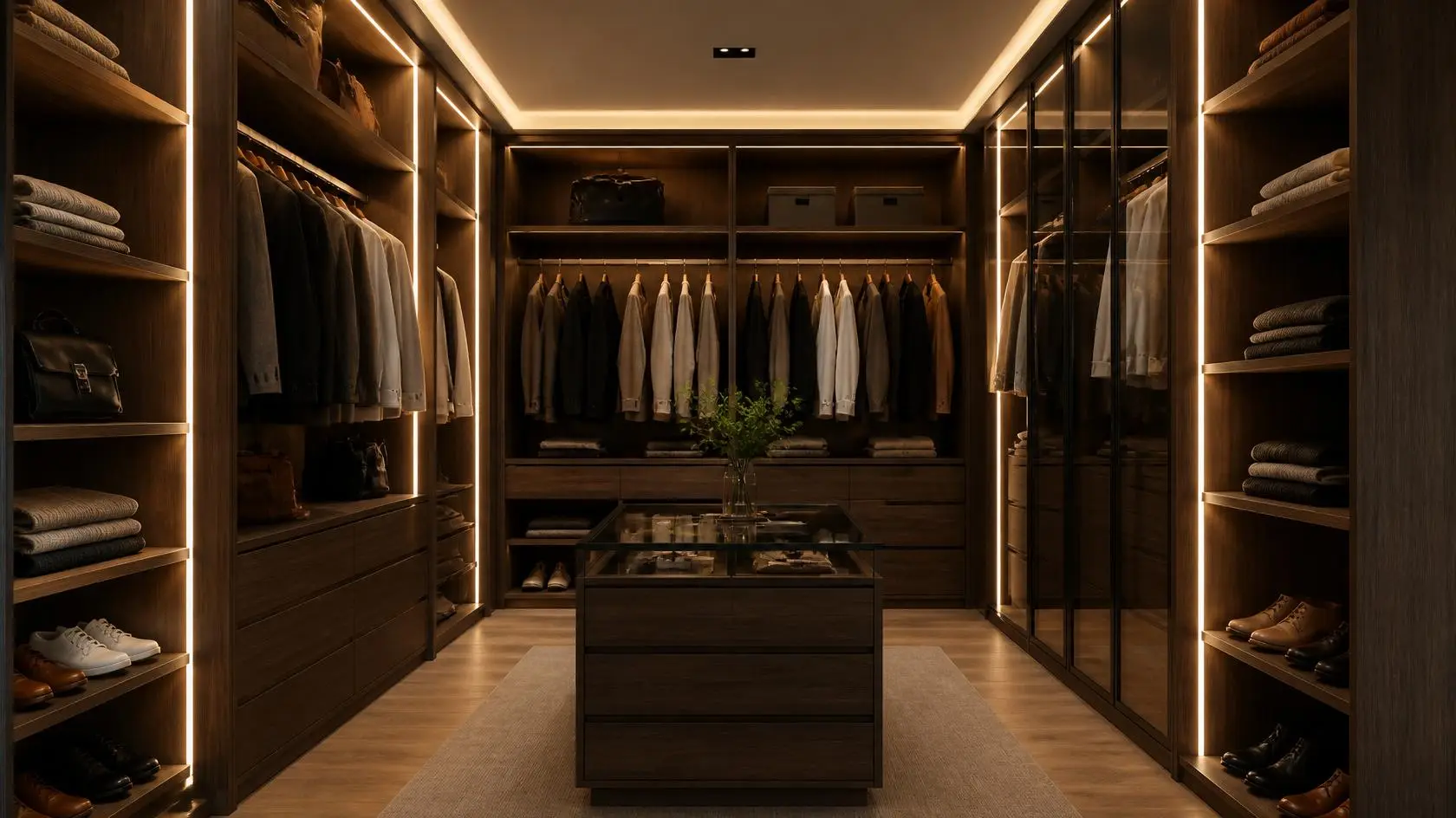

Closet Lighting Ideas for a Brighter and More Luxurious Closet
Effective closet lighting ideas combine layered ambient ceiling light with targeted low-voltage LED lighting channels routed directly into wardrobe shelving. To illuminate a closet properly, use 3500K to 4000K neutral white LEDs along vertical cabinet face frames. This placement eliminates harsh shadows, makes clothing colors look true to life, and satisfies residential electrical building codes.
What is Modern Closet Lighting and How Does It Work?
Modern closet lighting is an integrated network of ambient ceiling fixtures and low-voltage accent lights engineered to illuminate clothing inventory clearly. Far beyond a single incandescent bulb, current systems use recessed LED channels, motion sensors, and strategic space planning to eliminate dark corners, improve accessibility, and complement your home's interior design.
In standard residential construction, closet lighting is often treated as an afterthought. Builders frequently install a single flush-mount ceiling dome or a bare bulb socket above the door frame. When you stand inside the closet to select an outfit, your head and shoulders cast a heavy shadow over lower shelves and hanging rods.
Upgrading your closet layout requires a layered lighting strategy. Integrating low-voltage LED lighting directly into your custom cabinetry ensures that light reaches every shelf, drawer, and shoe rack. This transforms a dark utility alcove into a bright, well-lit dressing area where you can easily distinguish dark navy from black.
What are the Main Benefits of Upgrading Your Closet Lighting?
Upgrading your closet lighting improves color accuracy, prevents accidental styling mistakes, and speeds up your morning routine. In addition, installing energy-efficient, low-voltage LED systems alongside high-end built-in storage reduces fire risks, highlights fine material finishes like white oak or walnut, and directly enhances overall home equity and resale value.
- Accurate Color Rendering: High-CRI (Color Rendering Index) lighting ensures your navy suits, black jackets, and charcoal pants appear in their true colors.
- Elimination of Shadows: Integrated shelf lighting casts direct illumination onto folded sweaters and shoe displays, removing harsh overhead shadows.
- Improved Energy Efficiency & Safety: Modern low-voltage LEDs operate at cold temperatures, eliminating the fire hazards associated with hot incandescent bulbs placed near hanging clothes.
- Elevated Residential Equity: In luxury homes, beautifully lit wardrobes act as striking architectural features that leave a lasting impression on prospective buyers.
How Much Do Different Closet Lighting Systems Cost?
Closet lighting installations typically cost between $50 and $4,500+, depending on whether you choose battery-operated fixtures or hardwired, integrated LED channels. While surface-mounted battery puck lights sit at the entry-level price point, custom hardwired systems with vertical aluminum tracks, motion sensors, and dedicated transformers represent premium investments.
To help you budget for your home storage renovation, let us review the average cost ranges:
| Lighting System Scope | Average Price Range | Key Fixtures & Installation Highlights |
| Integrated Architectural LEDs | $1,800 – $4,500+ | Hardwired 24V low-voltage drivers; recessed vertical aluminum channels; diffuse cover lenses; automated magnetic door switches; integrated into millwork. |
| Hardwired Overhead & Accent | $600 – $1,800 | Recessed ceiling cans or flush-mount fixtures; hardwired under-shelf puck lights; wall switch controls; professional electrical installation. |
| Surface-Mounted Battery Fixtures | $50 – $300 | Rechargeable stick-on LED strip bars; battery puck lights; motion sensors; easy DIY installation with no electrical wiring. |
LED Strip Channels vs. Puck Lights vs. Overhead Fixtures: Which is Best?
Choosing the best closet lighting depends on your storage layout, ceiling height, and cabinetry construction. Vertical LED strip channels offer the most even, shadow-free illumination across all shelf levels, puck lights excel at spotlighting specific display nooks, and central overhead fixtures provide general ambient light across the room floor.
Comparing Closet Lighting Options
Let us evaluate these three primary lighting approaches to help you build the right combination for your space:
| Feature | Vertical LED Strip Channels | Recessed Puck Lights | Overhead Ceiling Fixtures |
| Light Distribution | Continuous, shadowless light running top-to-bottom across all shelves. | Concentrated pools of light pointing downward on specific items. | Broad ambient light filling the room center; casts shadows on side shelves. |
| Installation Method | Recessed into vertical route channels in plywood or MDF side panels. | Drilled into the undersides of fixed horizontal shelves or top headers. | Mounted to central ceiling junction boxes by a licensed electrician. |
| Best Application | Open shoe shelves, hanging rod bays, and full-height wardrobe towers. | Display cubbies, glass-top island drawers, and vanity countertops. | Walk-in closet dressing areas and central walkways. |
| Visual Appearance | Sleek, modern, and completely hidden when viewing cabinets straight-on. | Subtle circular light dots visible under upper cabinet headers. | Decorative focal point (pendant, flush-mount, or chandelier). |
What are the National Electrical Code (NEC) Rules for Closet Lighting?
National Electrical Code (NEC Article 410.16) enforces strict safety distances between light fixtures and clothing storage areas to prevent house fires. Bare incandescent bulbs are completely prohibited, while enclosed LEDs and recessed ceiling fixtures must maintain specific minimum clearances from hanging rods and open shelves.
Safety is paramount when planning lighting inside enclosed storage areas. Heat buildup from incorrect light fixtures placed too close to fabrics is a historical cause of residential fires.
To ensure your installation complies with local building codes, follow these standard distance guidelines:
- Enclosed Surface-Mounted LEDs: Must maintain at least 12 inches of clearance from the nearest storage space (hanging rods or shelves).
- Recessed LED Fixtures: Must maintain at least 6 inches of clearance from storage spaces when installed in ceilings or cabinet headers.
- Surface-Mounted Fluorescent Fixtures: Must maintain a minimum 6-inch clearance from storage areas.
- Prohibited Fixtures: Open-lamp incandescent bulbs, exposed halogen fixtures, and pendant lights with open bulbs are strictly forbidden inside clothes closets.
What Common Closet Lighting Mistakes Should You Avoid?
The most frequent mistakes in closet lighting design are choosing cold color temperatures, ignoring transformer placement, and relying on a single overhead light. Selecting blue-toned 6000K bulbs distorts fabric colors, while failing to hide low-voltage LED drivers results in unsightly power boxes cluttering your shelves.
Avoid these critical design and installation pitfalls when upgrading your closet:
- Choosing Cool, Blue-Toned Bulbs (5000K–6000K): High color temperatures look sterile and cold, making dark clothes appear washed out or unnaturally blue. Stick to neutral white light (3500K to 4000K) with a high Color Rendering Index (90+ CRI).
- Placing Lights Directly Overhead: Mounting a single fixture in the middle of the ceiling ensures that when you step up to a shelf, your body blocks the light, casting your clothes in darkness.
- Forgetting Access to LED Drivers: Low-voltage LED tape requires a 12V or 24V transformer driver. Never bury transformers inside closed walls. Place them inside accessible top cabinet headers or behind magnetic access panels.
- Using Bare LED Tape Without Diffuser Covers: Sticking raw LED tape directly to wood shelves creates harsh glare spots and visible light dots. Always mount LED tape inside extruded aluminum channels fitted with frosted plastic diffuser lenses.
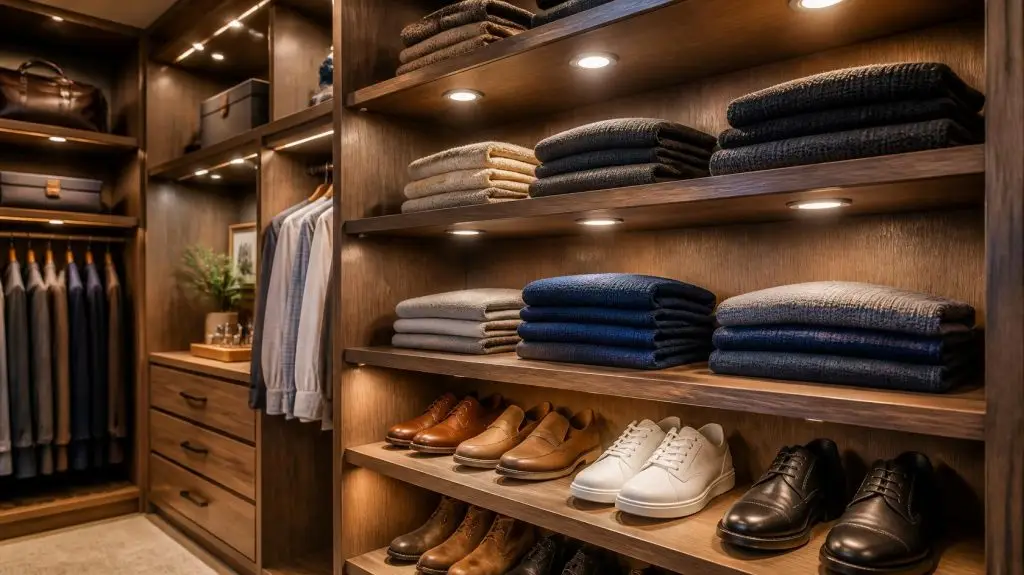
How to Successfully Implement an Integrated LED Lighting Plan
Implementing an integrated lighting plan requires routing wire channels, calculating transformer wattage loads, and selecting automated switch triggers. Start by running low-voltage wiring during the framing phase, recessing aluminum channels into cabinet panels, and connecting automatic door sensors that turn lights on when you enter.
Follow this five-step implementation process for a seamless lighting upgrade:
1.Rough-In Electrical and Driver Locations:Step 1.
Hire a licensed electrician to run 120V power to an accessible upper cabinet location where your low-voltage LED transformer driver will sit. Install wall switches or sensor wire runs before drywall is closed.
2.Route Aluminum Channels into Cabinet Panels:Step 2.
During custom carpentry manufacturing, route 1/2-inch vertical channels along the inside face frames of your plywood or MDF side panels. This allows aluminum tracks to sit completely flush with the wood.
3.Install LED Tape and Frosted Diffusers:Step 3.
Press high-density 24V LED tape (90+ CRI, 3500K) into the aluminum tracks. Snap frosted plastic diffuser covers over the tracks to soften the light and prevent harsh glare spots.
4.Connect Automated Sensor Switches:Step 4.
Install magnetic reed switches on closet doors or infrared motion sensors near the entry. These sensors automatically turn the low-voltage LED system on when the door opens and shut it off when closed.
5.Finish Trim and Test Color Temperature:Step 5.
Wrap top cabinet headers with decorative crown molding to hide upper wiring runs. Test the lighting alongside your actual clothing inventory to verify smooth dimming and accurate color rendering.
Expert Design Tips for High-Performance Closet Lighting
- Illuminate the Closet Island Countertop: Hang a decorative pendant light or place recessed puck lights directly above your center island to provide focused task light for folding clothes and staging outfits.
- Add Under-Toe-Kick Accent Strips: Run a low-voltage LED strip along the bottom toe-kick cutout of your base cabinets. This creates a floating visual effect and serves as a soft, automatic nightlight.
- Highlight Glass Cabinet Doors: Place top puck lights inside upper glass-front cabinets to showcase luxury handbags, watches, and crystal accessories like a retail display case.
- Coordinate with Cabinet Finishes: Warm white light (3000K–3500K) brings out the rich warmth of dark walnut cabinets, while crisp neutral white (4000K) pairs beautifully with painted shaker cabinets or light white oak.
Frequently Asked Questions
What is the best color temperature for closet lighting?
The best color temperature is between 3500K (neutral white) and 4000K (natural daylight white) with a Color Rendering Index (CRI) of 90 or higher. This ensures fabric colors are rendered accurately without looking overly yellow or cold blue.
Are wireless motion-sensor closet lights good?
Rechargeable battery-powered motion lights are a solid temporary option for rental units or quick retrofits. However, for a permanent, high-end look, hardwired low-voltage LED channels integrated into custom millwork offer far superior brightness and reliability.
Can I install LED strip lights in an existing closet?
Yes. You can surface-mount aluminum LED channels under existing wood shelves or along face frames, running low-voltage wiring behind back panels to an outlet driver.
What is Color Rendering Index (CRI) and why does it matter?
CRI measures how accurately a light source reveals true material colors compared to natural sunlight on a scale from 0 to 100. Always select LED lights with a CRI of 90 or higher for closet spaces so navy and black garments do not look identical.
How do motion sensors work in a walk-in closet?
Infrared (PIR) motion sensors detect heat and movement when you step into the room, triggering the lights instantly. Alternatively, magnetic jamb switches mounted on doors turn cabinet lights on the moment a closet door swings open.
Are LED closet lights a fire hazard?
Low-voltage LEDs operate at very low temperatures compared to traditional incandescent or halogen bulbs, making them exceptionally safe for close-proximity storage near hanging garments when installed to code.
Should closet lights be on a dimmer switch?
Yes, installing a dimmable LED driver allows you to adjust light levels based on the time of day, providing soft illumination during early mornings without blinding brightness.
Where should the light switch be placed for a walk-in closet?
Mount the primary wall switch right outside or just inside the closet entrance. For automated systems, pair the main switch with a door-jam sensor or ceiling motion detector for hands-free operation.
Brighten Your Home Storage with Clear Closets
Are you ready to eliminate dark corners, organize your wardrobe under crystal-clear lighting, and build a gorgeous custom dressing area? The design and master cabinetry team at Clear Closets is here to help you bring your ideas to life. From custom master walk-in closets and reach-ins to integrated LED lighting layouts, pantries, and laundry rooms, we handle every step—from 3D spatial planning to clean, professional installation.
We proudly design and build custom storage systems throughout Alpharetta, Roswell, Johns Creek, and the greater Atlanta metro area. Contact the design experts at Clear Closets to schedule your complimentary custom design consultation today.