
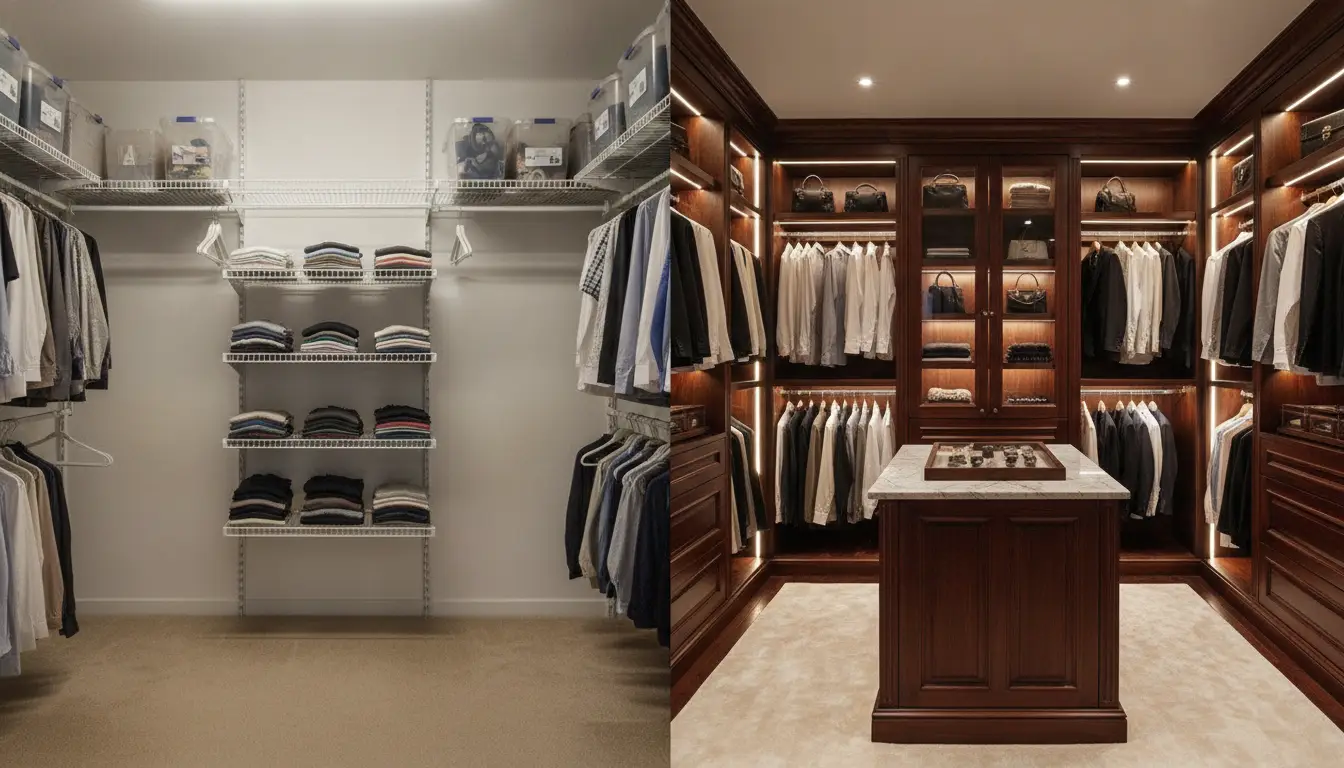

Wire Shelving vs Custom Wood: Upgrade Guide
Upgrading from wire shelving to custom wood is worth it if you value durability, aesthetic appeal, and increased property value. While wire shelving is highly cost-effective and provides basic ventilation, custom wood shelving supports significantly more weight, prevents clothing creases, and offers personalized organization. The choice depends entirely on your budget, structural requirements, and long-term home improvement goals.
What is the best material for closet organization: Wire Shelving vs Custom Wood?
The best material for closet organization depends on your specific needs. Wire shelving excels in utility spaces requiring airflow and budget-friendly installations. Custom wood is the superior choice for primary bedrooms and pantries, offering unmatched structural integrity, seamless aesthetics, and the ability to customize exact dimensions for maximum storage efficiency.
When evaluating closet systems, you must consider the fundamental differences in material composition. Wire shelving consists of vinyl-coated or epoxy-coated steel grids that are lightweight and easy to mount. This design allows for rapid installation and immediate usability, making it a staple in new builder-grade home construction. However, the open grid design can leave distinct impressions on folded garments and lacks the structural rigidity needed for heavy storage loads.
Custom wood shelving, typically constructed from medium-density fiberboard (MDF), plywood, or solid hardwood, transforms a functional space into an architectural feature. These solid surfaces provide a stable base for all items, from delicate silk blouses to heavy winter boots. The structural integrity of wood prevents the dreaded middle-shelf sag that frequently plagues overloaded wire systems over time.
- Ventilation: Wire shelving allows air to circulate, which is ideal for linen closets or damp environments.
- Surface stability: Wood provides a flat surface, preventing small items from slipping through gaps.
- Aesthetic integration: Wood can be painted or stained to match your home's existing interior trim.
- Weight capacity: Properly anchored wood systems can hold substantially more weight than standard wire racks.
How much does upgrading from wire to custom wood shelving cost?
Upgrading to custom wood shelving costs significantly more than installing basic wire racks. While standard wire shelving typically ranges from $10 to $30 per linear foot installed, custom wood systems average between $50 and $150 per linear foot. Complex designs featuring solid hardwoods or specialized cabinetry can exceed these estimates.
Budgeting for a closet upgrade requires understanding the hidden costs associated with removal and wall repair. Before installing custom wood shelving, the existing wire racks must be uninstalled, which often leaves large anchor holes in the drywall. You must factor in the time and expense of patching, sanding, and repainting the closet walls to ensure a pristine backdrop for your new investment.
The long-term return on investment (ROI) often justifies the initial upfront expense of custom wood. Real estate professionals frequently note that upgraded, aesthetically pleasing closets are a strong selling point for prospective homebuyers. While wire shelving is viewed as a basic utility, custom wood organization systems are perceived as premium upgrades that elevate the overall luxury and functionality of the home.
- Basic Wire Systems: Highly affordable, often available in pre-packaged kits at local hardware stores.
- MDF Wood Systems: A mid-range option offering the look of custom wood without the premium price tag of solid lumber.
- Solid Hardwood: The most expensive tier, providing maximum durability and high-end visual appeal.
- Installation Labor: Professional installation adds 20% to 40% to the total project cost, regardless of the material chosen.
Are custom wood shelves worth it for pantry and garage storage?
Custom wood shelves are highly worth it for pantries due to their flat surfaces, which keep small appliances and narrow cans stable. However, for garage storage, heavy-duty wire or industrial steel shelving is often better, as wood can warp from moisture fluctuations and temperature extremes typical in unconditioned spaces.
In a kitchen pantry, the functional superiority of solid wood shelving becomes immediately apparent. Wire racks are notoriously frustrating for storing small items; spice jars tip over, cereal boxes sit unevenly, and flour bags can snag on exposed wire ends. A solid wood or MDF shelf provides the seamless, stable foundation necessary for organizing groceries efficiently and maintaining a tidy aesthetic.
Conversely, utility environments like garages and unfinished basements present unique environmental challenges that can compromise wood. High humidity, potential water leaks, and dramatic temperature shifts can cause MDF to swell and solid wood to warp or crack. In these specific zones, the corrosion resistance of epoxy-coated wire or heavy-duty steel shelving makes them the more practical and durable choice.
- Pantry Stability: Solid surfaces prevent tall, narrow bottles from tipping over.
- Appliance Support: Thick wood shelves safely support heavy stand mixers and slow cookers.
- Garage Moisture: Wire shelving resists the mold and mildew that can plague wood in damp areas.
- Cleaning Ease: Wood pantry shelves can be easily wiped down if sticky liquids spill, whereas wire grids are tedious to clean.
How do I choose the right closet shelving system for my space?
Choosing the right closet shelving system requires evaluating your wardrobe, measuring your space, and identifying your primary storage frustrations. If you primarily hang long garments, wire might suffice. If you fold heavy sweaters, store numerous shoes, or desire enclosed drawers, a custom wood system is the optimal solution.
The first step in selecting a system is conducting a thorough inventory of the items you need to store. Count your pairs of shoes, measure the length of your hanging dresses, and assess the volume of your folded knitwear. This detailed inventory dictates the ratio of hanging rods to flat shelving, ensuring your new system perfectly accommodates your specific lifestyle rather than forcing you to adapt to a generic layout.
Another crucial consideration is the structural integrity of your walls. Wire shelving relies heavily on drywall anchors and a top-hanging track, which can fail if overloaded with heavy winter coats. Custom wood systems, particularly floor-mounted designs, transfer the weight directly to the floor, significantly reducing the strain on your walls and providing a much safer solution for extensive wardrobes.
| Feature | Wire Shelving | Custom Wood Shelving |
|---|---|---|
| Installation Speed | Fast (1-2 hours) | Slow (1-2 days) |
| Weight Capacity | Moderate (Prone to sagging) | High (Excellent structural support) |
| Aesthetic Appeal | Basic / Utility | Premium / Built-in look |
- Analyze your wardrobe: Determine if you need more hanging space or flat surfaces.
- Check wall studs: Ensure you have adequate structural support for wall-mounted systems.
- Consider floor mounting: Use floor-based wood systems to bypass weak drywall issues entirely.
- Plan for adjustability: Look for wood systems with pre-drilled holes to move shelves as needs change.
What are the most common mistakes when upgrading closet shelving?
The most common mistakes when upgrading closet shelving include failing to patch old anchor holes properly, miscalculating the depth needed for hangers, and ignoring the importance of adjustability. Homeowners often install fixed wood shelves, only to realize later that they cannot accommodate taller boots or longer coats.
Rushing the demolition phase is a frequent error that compromises the final installation. When ripping out old wire shelving, impatient homeowners often tear large chunks of drywall away with the anchors. Taking the time to carefully unscrew or clip the anchors prevents extensive wall damage, saving hours of frustrating drywall repair and ensuring your new wood system mounts to a perfectly flat, structurally sound surface.
Failing to account for hanger clearance is another critical oversight. Standard clothing hangers require a minimum closet depth of 24 inches to hang straight without brushing against the back wall or protruding past the door frame. If you design a custom wood system that pushes the hanging rod too far forward in a shallow closet, you will find it impossible to close the closet doors properly.
- Ignoring lighting: Upgraded wood shelves cast shadows; always plan for integrated LED lighting.
- Forgetting adjustability: Fixed shelves limit future flexibility; always opt for adjustable shelf pins.
- Poor measuring: Always measure the closet width at the top, middle, and bottom, as walls are rarely perfectly square.
- Skimping on hardware: Cheap drawer glides and hanging rods will fail quickly, even if the wood shelves are high quality.
Frequently Asked Questions (FAQs) about Shelving Upgrades
Reviewing frequently asked questions about shelving upgrades helps clarify common doubts regarding installation, maintenance, and material longevity. Below, we address specific user queries concerning the practical differences between wire and wood systems, helping you make a fully informed decision for your home organization project.
Understanding the nuances of closet design is essential for maximizing your investment. Many homeowners find themselves overwhelmed by the sheer volume of choices, from material thickness to hardware finishes. The questions below are curated from real-world scenarios, reflecting the most pressing concerns people have when transitioning from builder-grade wire to custom cabinetry.
Whether you are tackling this as a weekend DIY project or hiring a professional closet company, having the right information is your best tool. We cover everything from dealing with awkward corners to managing the structural requirements of heavy storage, ensuring your upgrade process is as smooth and successful as possible.
How do I remove old wire shelving without ruining my drywall?
To remove wire shelving cleanly, use pliers to gently pull the pins out of the wall anchors before attempting to extract the anchor itself. Once the pin is removed, the anchor will collapse slightly, allowing you to pull it out with minimal drywall tearing. Always patch the holes with a high-quality spackling compound and sand it flush before painting.
Which wood is best for custom closet shelves?
Medium-density fiberboard (MDF) is widely considered the best material for custom painted closets because it is highly dimensionally stable, resists warping, and provides a perfectly smooth surface for paint. If you prefer a natural wood grain look, cabinet-grade plywood with a hardwood veneer is an excellent, durable choice that holds screws securely.
Are wire shelves bad for clothing?
Wire shelves are not inherently bad for clothing, but they can cause issues with specific garments. Heavy sweaters folded directly on wire grids will develop deep, permanent creases and indentations. To prevent this, you should either line the wire shelves with plastic shelf liners or upgrade to flat, solid wood shelving for delicate knits.
How much weight can a custom wood shelf hold?
The weight capacity of a custom wood shelf depends on its length, thickness, and mounting hardware. A standard 3/4-inch thick MDF shelf spanning 30 inches can comfortably hold 40 to 50 pounds without sagging. Adding a solid wood front edge or a rear support cleat can significantly increase this weight capacity for heavy items.
Can I mix wire and wood shelving in the same closet?
Yes, mixing wire and wood shelving is a practical, budget-friendly compromise. Many homeowners use custom wood for eye-level display shelves, drawers, and shoe storage, while utilizing high-quality wire shelving for the upper, out-of-reach storage areas where aesthetics matter less. This hybrid approach balances premium functionality with cost savings.
How do I stop my wood shelves from sagging in the middle?
To prevent wood shelves from sagging, keep the shelf span under 36 inches between vertical supports. If you must have a wider span, upgrade the shelf thickness to 1 inch, or install a structural support cleat along the back wall. Additionally, attaching a solid hardwood nosing to the front edge dramatically increases the shelf's rigidity.
What is the best way to organize shoes on wood shelves?
The best way to organize shoes on wood shelves is to use angled shelves with a front heel catch, allowing you to view your entire collection easily. If using flat shelves, space them approximately 7 to 8 inches apart for standard shoes, and leave larger 18-inch gaps at the bottom for tall boots to maximize vertical space.
Are custom closets a good investment for home resale?
Custom closets yield a high return on investment, particularly in primary bedrooms and main floor pantries. Prospective buyers view custom wood organization as a premium luxury feature that indicates a well-maintained, high-end home. While it may not increase the appraised square footage value, it significantly boosts buyer appeal and can help sell the home faster.
How do I clean and maintain custom wood shelving?
Maintain custom wood shelving by regularly dusting with a microfiber cloth to prevent dirt buildup. For sticky residues or spills, use a slightly damp cloth with a mild, non-abrasive dish soap, and immediately dry the surface. Avoid harsh chemical cleaners or excessive water, which can degrade the paint finish or cause the wood to swell over time.
Action Point:
Ready to upgrade your closet? Start planning your custom wood shelving layout today.
Contact Us