
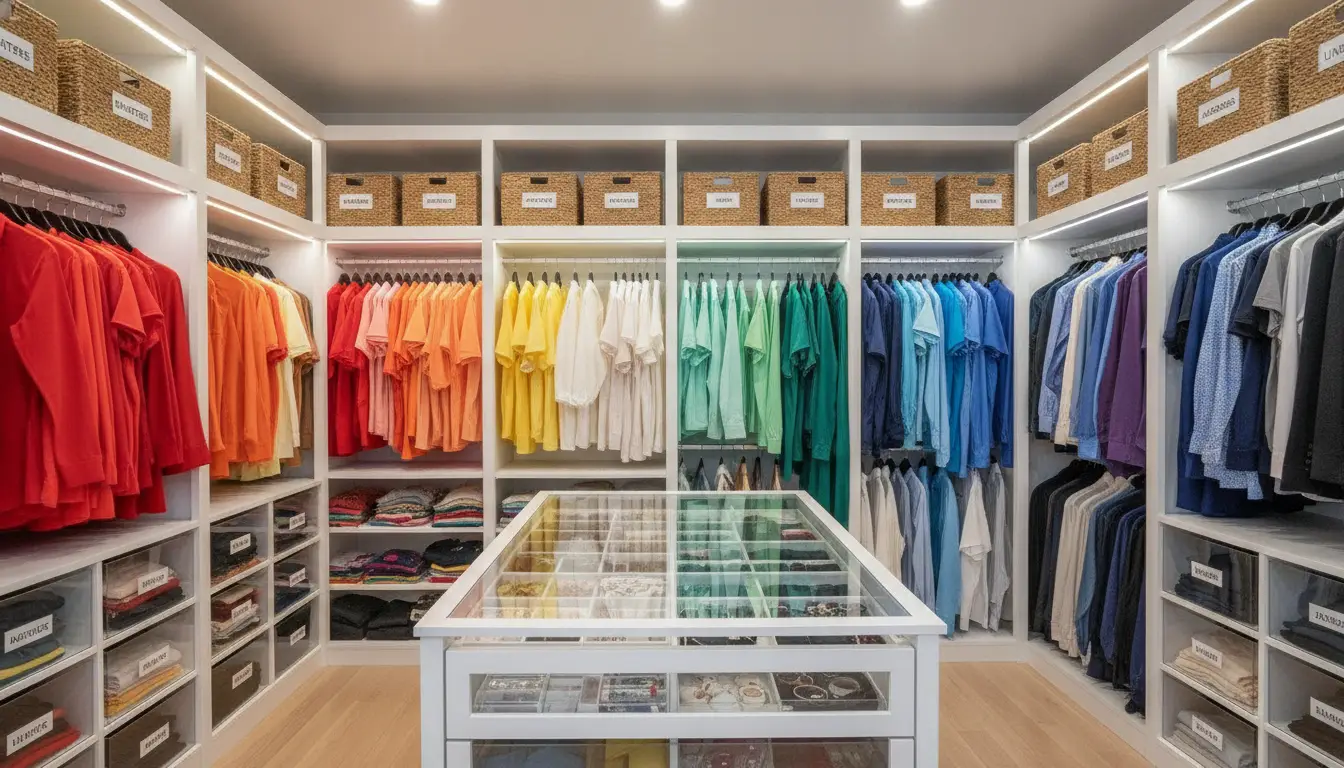

Closet Organization 2026: Pro Tips
To organize your closet in 2026 effectively, you must declutter systematically, implement smart modular storage systems, and categorize clothing by season, color, and usage frequency. Utilizing vertical space with double-hang rods and integrating AI-driven wardrobe management apps will maximize efficiency. This modern approach ensures long-term sustainability, reduces daily decision fatigue, and protects your garment investments.
What is the best way to start organizing your closet?
The best way to start organizing your closet is by completely emptying the space and categorizing every item into keep, donate, sell, or discard piles. This comprehensive visual inventory forces you to confront your actual wardrobe volume and forms the foundation for implementing new structural storage solutions effectively.
Many homeowners skip the initial purge phase and attempt to organize a cluttered space, which ultimately leads to overflowing bins and broken storage systems. By physically removing every garment, shoe, and accessory from the closet, you create a blank canvas. This process allows you to assess the architectural limitations of your space, measure your functional areas accurately, and visualize where specific modular components will fit best. It also provides a rare opportunity to deep-clean the baseboards, vacuum hidden corners, and apply fresh paint to the interior walls.
When categorizing your inventory, modern 2026 organization standards emphasize practical utility over purely emotional attachment. If a garment has not been worn in the past twelve months, does not fit your current lifestyle, or requires extensive repairs that you have been avoiding, it should not occupy premium real estate in your primary wardrobe. Establishing rigid boundaries for what deserves to return to the closet is the single most critical step in long-term spatial management.
- Remove absolutely everything from the closet to establish a clean slate.
- Wipe down all shelving, vacuum the floors, and check for signs of moisture or pests.
- Sort all garments into distinct, uncompromising categories: keep, donate, sell, and trash.
- Group the remaining keep items by season and broad categories to gauge volume.
- Measure the empty space meticulously before purchasing any new storage bins or shelving units.
How much does a custom closet organization system cost?
A custom closet organization system costs between $500 for basic wire shelving DIY kits to over $5,000 for premium, professionally installed wood-laminate modular systems. The total investment depends heavily on the materials chosen, the square footage of your space, and whether you integrate smart lighting and automated racks.
Understanding the financial commitment required for closet renovation is crucial for setting realistic project expectations. Entry-level solutions, typically found at big-box hardware stores, rely heavily on ventilated wire racks and plastic mounting brackets. While these are highly budget-friendly and can be installed in a single afternoon, they often lack the structural rigidity necessary for heavy winter wardrobes and fail to provide the polished, high-end aesthetic that many homeowners desire.
On the opposite end of the spectrum, bespoke closet installations involve custom millwork, soft-close cabinetry, integrated LED lighting, and specialized accessory islands. These luxury systems not only maximize every cubic inch of available space but also significantly increase the resale value of the home. Mid-range modular systems, which blend the affordability of DIY installation with the durability of engineered wood, have become the dominant choice in 2026 for balancing cost with long-term functionality.
- Wire Shelving Kits: $100 to $400. Best for tight budgets and utility closets.
- Modular Laminate Systems: $500 to $2,000. Offers a built-in look with adjustable configurations.
- Custom Solid Wood: $3,000 to $10,000+. Provides maximum durability, luxury aesthetics, and home value increase.
- Smart Accessories: $200 to $1,000+. Includes automated tie racks, RFID cataloging tags, and motion-sensor lighting.
Are smart closet organizers and AI wardrobe apps worth it?
Smart closet organizers and AI wardrobe apps are highly worth the investment for professionals seeking to reduce morning decision fatigue and maximize outfit rotations. These digital tools track garment usage metrics, suggest weather-appropriate outfits, and identify neglected clothing, ultimately saving you time and preventing unnecessary apparel purchases.
The integration of artificial intelligence into home organization has transformed how individuals interact with their personal wardrobes. By utilizing digital cataloging apps, users can upload photos of their clothing and allow the AI to generate weekly lookbooks based on local weather forecasts and personal calendar events. This technological bridge between physical storage and digital management ensures that every piece of clothing is utilized, effectively eliminating the common issue of wearing the same five outfits on rotation.
Furthermore, advanced smart closet ecosystems in 2026 often include physical hardware upgrades, such as motorized wardrobe lifts that bring high-hanging garments down to eye level with a voice command. When paired with smart LED lighting that adjusts its color temperature to mimic natural daylight, these tech-forward solutions provide an unprecedented level of convenience, accessibility, and color-matching accuracy for daily dressing routines.
- Download a reputable AI wardrobe management application to digitize your inventory.
- Attach washable RFID tags or use visual scanning to log new purchases automatically.
- Review the app's wear-frequency analytics quarterly to identify candidates for donation.
- Install smart bulbs inside the closet to ensure accurate color rendering during outfit selection.
Wood vs. Wire Shelving: Which closet material is best for long-term storage?
Wood laminate shelving is significantly better for long-term storage than wire shelving because it prevents garments from creasing, offers superior structural support for heavy items, and provides a premium aesthetic. While wire shelving is cheaper and promotes airflow, it often leaves permanent indentations on folded sweaters and delicate fabrics.
The debate between wood and wire shelving ultimately comes down to the specific types of garments you intend to store and the architectural context of the space. Solid wood or high-density laminate shelves create a flat, uncompromising surface that is ideal for stacking delicate knits, cashmere sweaters, and structured handbags. Because there are no gaps, items cannot slip through, sag, or become deformed over extended periods of storage.
Conversely, wire shelving is highly susceptible to structural bowing when overloaded with heavy denim or winter coats. The metal rungs create concentrated pressure points that can permanently damage the fibers of soft clothing. However, wire shelving remains highly effective in specific scenarios, such as linen closets where maximum airflow is required to prevent mustiness, or in temporary rental properties where heavy investment in custom millwork is impractical.
- Wood Shelving Benefits: Protects garment integrity, supports heavy loads without sagging, and offers a luxurious visual appeal.
- Wood Shelving Drawbacks: Requires a higher initial investment, takes longer to install, and is difficult to reconfigure once mounted.
- Wire Shelving Benefits: Highly cost-effective, promotes excellent air circulation, and is exceptionally easy to install or modify.
- Wire Shelving Drawbacks: Causes crease damage to soft fabrics, struggles with heavy weight distribution, and looks purely utilitarian.
What are the most common closet organization mistakes to avoid?
The most common closet organization mistakes include failing to utilize vertical space, buying storage bins before measuring shelves, and using mismatched hangers. Additionally, people frequently store out-of-season clothing in prime accessibility zones, which clutters daily sightlines and drastically reduces the overall functional efficiency of the wardrobe space.
A pervasive error in modern closet management is the phenomenon of aspirational organization. This occurs when individuals purchase dozens of identical, visually appealing storage bins without first assessing whether they will actually maintain the folding habits required to use them. When the reality of daily life sets in, these bins become dumping grounds for unfolded laundry, completely defeating their organizational purpose and creating hidden pockets of chaos.
Another significant misstep is ignoring the vertical potential of the closet. Many standard builder-grade closets feature a single hanging rod positioned at chest height, leaving vast amounts of empty air near the ceiling and wasted floor space below the garments. By failing to install double-hang systems or floor-to-ceiling shelving, homeowners artificially restrict their storage capacity, leading to cramped hanging areas and wrinkled clothing.
- Avoid mixing plastic, wire, and wooden hangers, as the varying heights create visual clutter and snag garments.
- Never store heavy items on high shelves where they pose a physical risk during retrieval.
- Do not keep out-of-season winter coats in your primary summer sightline; rotate them to secondary storage.
- Avoid overstuffing drawers, which damages the tracking hardware and wrinkles the fabrics inside.
- Do not forget to utilize the back of the closet door for shoe racks, jewelry organizers, or belt hooks.
How do I choose the best organizational layout for a small reach-in closet?
To choose the best organizational layout for a small reach-in closet, prioritize a double-hang rod system for shirts and pants, which instantly doubles your hanging capacity. Reserve the top shelf for off-season storage bins and utilize the floor space for a narrow, tiered shoe rack to maximize vertical efficiency.
Reach-in closets present unique spatial challenges because of their limited depth and the notorious dead zones located behind the door returns on the left and right walls. To optimize this layout, you must map out the geometry of the space carefully. The center of the closet, which is immediately visible and accessible upon opening the doors, should house your daily workwear and most frequently used items. The hard-to-reach corners should be reserved for formal wear, seasonal items, or luggage.
Incorporating shelf dividers is another highly effective strategy for small spaces. When stacking jeans or sweaters on a single top shelf, the piles inevitably topple over and merge into a disorganized mass. Rigid acrylic shelf dividers keep these stacks perfectly vertical, allowing you to build higher piles safely while maintaining clear visual boundaries between different clothing categories.
- Install a double-hang rod system in the center of the closet to maximize short-garment capacity.
- Reserve one small section of single-hang space specifically for long dresses and winter coats.
- Use ultra-slim velvet hangers exclusively to reclaim up to thirty percent more lateral rod space.
- Place rigid acrylic dividers on the top shelf to keep folded sweaters from toppling over.
- Mount hooks on the interior side walls to capture dead space for hats, scarves, and lightweight bags.
Frequently Asked Questions About Closet Organization
Navigating closet organization requires understanding specific storage techniques, material care, and spatial optimization strategies. These frequently asked questions address the most common challenges individuals face when attempting to maintain a meticulously organized wardrobe, offering expert-backed solutions for long-term structural and aesthetic success in your daily routines.
Maintaining an organized closet is an ongoing process that extends far beyond the initial weekend purge. By understanding the nuances of garment care, seasonal rotations, and adaptive storage systems, you can ensure that your wardrobe remains functional and visually appealing throughout the entire year. Consistency in these micro-habits prevents the gradual return of clutter.
The following expert insights are designed to troubleshoot specific, granular issues that arise in everyday closet management. From handling delicate fabrics to optimizing awkward architectural spaces, these detailed answers provide the foundational knowledge necessary to elevate your home organization strategy to a professional standard.
How often should I declutter my closet?
You should declutter your closet at least twice a year, ideally during the transitional seasons of spring and autumn. This biannual rhythm allows you to assess which items you actually wore during the previous season and prevents the gradual accumulation of unworn garments that consume valuable storage real estate.
What is the best way to store heavy winter sweaters?
The best way to store heavy winter sweaters is by folding them flat on solid shelves or inside breathable cotton storage boxes. Never hang heavy knits, as the gravitational pull will stretch the shoulder seams and permanently distort the garment's structural integrity over time.
How do I organize shoes in a walk-in closet?
Organize shoes in a walk-in closet by utilizing adjustable, angled shoe shelves that display the footwear clearly while maximizing vertical footprint. Group the shoes by category—such as athletic, formal, and casual—and store the most frequently worn pairs at eye level for immediate daily access.
Are vacuum storage bags safe for all clothing types?
Vacuum storage bags are not safe for all clothing types; they should never be used for natural fibers like silk, wool, leather, or down-filled jackets. The extreme compression can fracture natural fibers and permanently destroy the loft of winter coats, so reserve vacuum bags strictly for durable synthetics and cotton linens.
Which hangers are best for maximizing closet space?
Ultra-slim velvet hangers are universally considered the best option for maximizing closet space because their narrow profile allows you to fit up to thirty percent more garments on a single rod. Furthermore, the flocked velvet texture prevents wide-necked blouses and delicate dresses from slipping off and falling to the floor.
How can I prevent moisture and odors in my closet?
To prevent moisture and odors in your closet, ensure adequate airflow by not overstuffing the hanging rods and by leaving the closet door open periodically. Integrating silica gel packets, cedar blocks, or a small, plug-in dehumidifier will actively absorb excess ambient moisture and neutralize stale environmental odors.
What should I do with clothes that no longer fit?
Clothes that no longer fit should be immediately removed from your primary daily closet space to eliminate psychological friction and physical clutter. If you are actively working toward fitting into them again, store them in a clearly labeled, opaque bin on the highest shelf; otherwise, donate or consign them.
How do I organize belts, ties, and small accessories?
Organize belts, ties, and small accessories by installing sliding valet rods, wall-mounted peg racks, or dedicated drawer inserts with small compartmentalized dividers. Keeping these items separated prevents tangling, protects delicate leather finishes from scratching, and ensures every accessory is visible when coordinating your morning outfit.
Action Point:
Start transforming your wardrobe space today using these advanced 2026 closet organization strategies.
Contact Us