
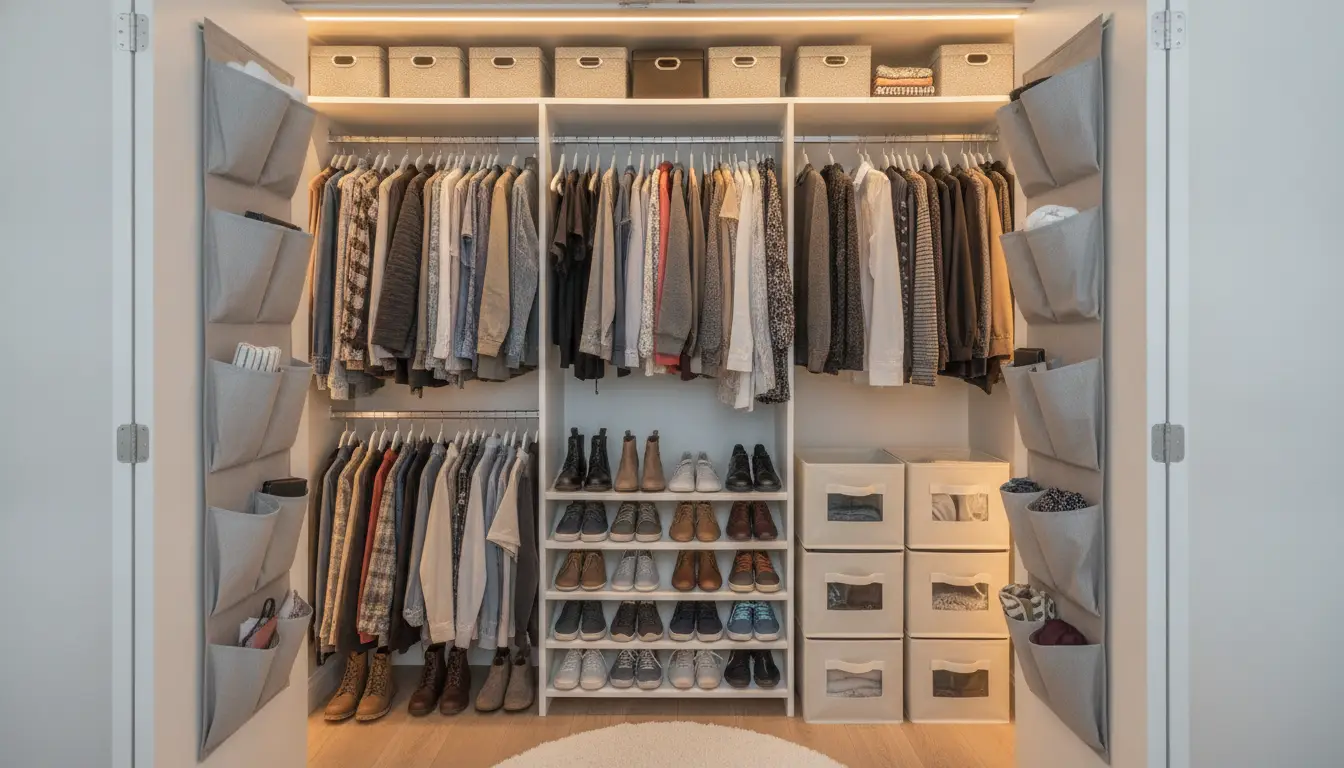

Small Closet Ideas: Maximize Storage Space
To maximize storage in a small closet, you must utilize every inch of available vertical space. Install double hanging rods to instantly double your clothing capacity, use the back of the closet door for shoe organizers or accessory hooks, and add high shelving up to the ceiling for out-of-season items. Replacing bulky plastic hangers with slim velvet alternatives also reclaims significant horizontal space.
What are the best small closet ideas for maximum storage?
The best small closet ideas focus on vertical optimization, modular shelving, and multi-purpose organizers. By implementing double rods, over-the-door storage, and shelf dividers, you can transform cramped quarters into highly functional spaces. Prioritize systems that adapt to your specific wardrobe dimensions and seasonal rotation needs.
When dealing with limited square footage, the most critical dimension is height. Most standard builder-grade closets feature a single rod and one shelf, which wastes roughly fifty percent of the usable volume. By removing this standard setup and installing an adjustable track system, you can tailor the vertical spacing exactly to the length of your garments.
The back of the closet door represents prime real estate that homeowners frequently overlook. Over-the-door organizers with clear pockets can hold everything from rolled belts and scarves to bulky winter gloves and everyday footwear. If you have a solid core door, mounting permanent wire racks or pegboards provides structural stability for heavier items like handbags or heavy winter coats.
Hanger selection dramatically impacts horizontal capacity. Standard plastic or thick wooden hangers consume unnecessary width, causing garments to compress and wrinkle. Slim velvet or rubberized hangers grip delicate fabrics securely while allowing you to fit up to thirty percent more clothing on the exact same hanging rod.
- Install double hanging rods to separate short shirts from folded pants.
- Use rigid shelf dividers to keep stacked sweaters from toppling over.
- Add tension rods near the floor for an impromptu, adjustable shoe rack.
- Utilize cascading hangers for storing multiple items vertically in a single column.
How much does a custom small closet system cost?
A custom small closet system typically costs between $150 for basic DIY wire kits and $2,000 for professionally installed wood veneer systems. The final price depends heavily on materials, the inclusion of soft-close drawers, and whether you hire a professional closet designer or install modular pieces yourself.
Budgeting for a closet makeover requires understanding the vast spectrum of available materials and their associated price points. Off-the-shelf wire systems from big-box hardware stores offer the most economical entry point, often requiring only basic hand tools and a free afternoon to install. These systems are highly utilitarian but lack the polished, high-end aesthetic that many homeowners desire for primary bedrooms.
Mid-range options usually involve modular melamine or engineered wood kits purchased online or from specialized furniture retailers. These systems mimic the look of custom cabinetry and generally range from $400 to $800 for a standard reach-in closet. They require more intensive assembly and precise measuring, but they offer features like integrated drawers, adjustable shoe shelves, and decorative molding.
Professionally designed and installed systems represent the highest tier of investment. When hiring a specialized closet company, you are paying for precise 3D spatial planning, premium finishes, and expert labor. While expensive, these bespoke solutions navigate awkward architectural quirks, such as sloped ceilings or deep returns, ensuring that absolutely no cubic inch goes to waste.
- Basic Wire Kits: $100 to $250 (DIY installation).
- Modular Wood/Melamine: $300 to $900 (DIY or handyman installation).
- Custom Professional Build: $1,000 to $2,500+ (Includes design and labor).
- Accessories: Budget an extra $50 to $150 for specialty hooks, valet rods, and bins.
Wire vs Wood Closet Systems: Which is best for small spaces?
Wire closet systems are best for tight budgets and spaces requiring maximum airflow, while wood systems offer superior aesthetics and stability for heavy items. Wood or melamine shelving prevents small items from slipping through gaps, whereas wire racks provide a lightweight, easily adjustable solution for renters.
Wire shelving systems have long been the default choice for budget-conscious homeowners and apartment complexes. Their open grid design promotes excellent air circulation, which is particularly beneficial in humid climates or for storing damp outerwear. Furthermore, wire systems are incredibly lightweight, putting less structural strain on drywall anchors in older homes with questionable stud placement.
Despite their practical benefits, wire systems possess distinct disadvantages. The gaps between the wires make it impossible to store small items without them tipping over or falling through completely. Additionally, heavy stacks of denim or thick winter sweaters can cause lower-gauge wire shelves to bow over time, creating an unsightly and potentially hazardous storage environment.
Solid wood or engineered melamine systems provide a sturdy, flat surface that accommodates everything from tiny jewelry boxes to heavy storage bins with ease. While they require a larger upfront investment and more robust installation methods, they instantly elevate the perceived value of the home. For small closets, white or light-colored wood finishes are highly recommended to reflect light and make the cramped space feel brighter.
- Airflow: Wire excels at keeping clothes fresh and preventing mildew buildup.
- Stability: Wood handles heavy loads without bending, warping, or sagging.
- Aesthetics: Wood provides a built-in, premium look that wire simply cannot match.
- Adjustability: Both offer track-based systems, but wire is generally easier to reconfigure on the fly.
What are common mistakes when organizing a tiny closet?
The most common mistakes in small closet organization include failing to utilize vertical space up to the ceiling, hoarding unworn clothing, and relying on mismatched, bulky hangers. Overlooking lighting solutions and ignoring the floor space also severely limit a small closet's overall storage capacity and daily functionality.
One of the most frequent errors homeowners make is treating the top shelf as the absolute ceiling of their storage capacity. In many homes, there is a gap of twelve to twenty-four inches between the highest shelf and the actual ceiling. Leaving this space empty wastes prime real estate that should be dedicated to vacuum-sealed seasonal garments, extra bedding, or travel luggage.
Lighting is another critically overlooked element in small closet design. A dark closet makes it incredibly difficult to distinguish between navy and black garments, leading to frustration and messy rummaging that destroys organizational systems. Relying solely on ambient bedroom light is insufficient; dedicated closet lighting is essential for maintaining order and visibility.
Finally, attempting to organize clutter is an exercise in futility. Investing in expensive modular systems will not solve the fundamental problem of owning too many unworn items. Homeowners often skip the crucial decluttering phase, forcefully cramming garments into new organizers. A rigorous purge of items that no longer fit, are damaged, or haven't been worn in a year must precede any structural upgrades.
- Failing to measure the exact depth of the closet return before buying bins.
- Using a single hanging rod instead of dividing the space into upper and lower zones.
- Neglecting to install battery-operated motion sensor lights in dark corners.
- Storing everyday items in hard-to-reach areas instead of at eye level.
How do I choose the right storage bins and organizers?
Choose storage bins based on exact shelf measurements to maximize depth, and opt for clear acrylic or labeled opaque containers to maintain visibility. Select modular organizers that stack securely, ensuring you can customize the configuration as your wardrobe changes without wasting valuable vertical or horizontal space.
The geometry of your storage bins must perfectly align with the dimensions of your shelving. Purchasing round baskets for square shelves results in wasted corner space, which is a luxury you cannot afford in a small closet. Always opt for square or rectangular bins with straight sides, and measure the depth of your shelves to ensure the bins sit flush without hanging over the edge.
The debate between clear and opaque bins depends entirely on your personal organizational habits and the items being stored. Clear acrylic bins are phenomenal for items you need to identify quickly, such as specific pairs of shoes or colorful accessories. However, if you are storing visually chaotic items like mismatched socks or workout gear, opaque bins with uniform labels provide a much cleaner, streamlined aesthetic.
Fabric bins offer a lightweight, flexible alternative that is gentle on delicate clothing and won't scratch wood shelving. When selecting fabric organizers, ensure they have reinforced cardboard or plastic inserts in the base and sides. Without structural support, fabric bins will bulge and sag when fully loaded, making them difficult to slide in and out of tight shelving compartments.
- Measure the width, depth, and height of every shelf before purchasing containers.
- Use clear acrylic drawers for small accessories like jewelry and sunglasses.
- Opt for breathable canvas boxes for storing natural fibers like wool and cashmere.
- Utilize stackable shoe boxes with front-drop doors for easy access without unstacking.
Frequently Asked Questions About Small Closets
Navigating the challenges of a small closet often leads to highly specific questions about dimensions, structural integrity, and renter-friendly solutions. Understanding the technical limitations and creative possibilities of your unique space is absolutely crucial for implementing a successful, long-lasting organizational system.
Many homeowners and renters share similar struggles when trying to retrofit older, cramped closets with modern storage solutions. The inquiries below reflect the most common real-world scenarios, from dealing with awkward architectural features to finding non-destructive mounting methods that protect your security deposit.
By addressing these frequent concerns, you can avoid costly purchasing mistakes and ensure your chosen storage system accommodates your specific wardrobe needs. Review these expert answers to troubleshoot your most pressing small closet dilemmas and optimize your daily routine.
- Review dimensions carefully before purchasing renter-friendly systems.
- Consider weight limits on drywall anchors before loading heavy winter gear.
- Always check local building codes before hardwiring new closet lighting.
- Consult a professional for load-bearing concerns in older residential properties.
Are custom closet systems worth the investment for small spaces?
Yes, custom systems are highly valuable for small spaces because they eliminate dead zones and maximize every available cubic inch. A tailored design can increase your usable storage by up to fifty percent compared to a standard single-rod setup, adding both daily convenience and long-term property value.
How can I organize a small closet without drilling holes?
Renters or those hesitant to drill can use freestanding wardrobe racks, heavy-duty tension rods, and over-the-door hanging organizers. Modular stacking drawers that rest directly on the floor provide excellent vertical storage without requiring any structural modifications or wall anchors.
What is the best way to store shoes in a tiny closet?
The most space-efficient method for shoe storage is utilizing the back of the closet door with a pocket organizer. Alternatively, stackable clear plastic drop-front shoe boxes allow you to build vertical columns of shoes on the floor or upper shelves while keeping them protected from dust.
How deep should shelves be in a small closet?
Standard closet shelves are typically twelve to fourteen inches deep, which is ideal for folded garments like shirts and jeans. Shelves deeper than sixteen inches often result in lost items pushed to the back, making the space less functional and more prone to hidden clutter.
Can I put a dresser inside a small closet?
Placing a small, low-profile dresser inside a closet is an excellent way to consolidate bedroom furniture and free up floor space in the main room. Ensure the dresser leaves enough clearance for hanging clothes above it and that the drawers can open fully without hitting the door frame.
How do I store bulky winter coats in a small space?
Bulky coats should be moved to a secondary storage area, such as a hallway closet or under-bed storage, during the off-season. If they must remain in the primary small closet, use vacuum-sealed space bags to drastically reduce their volume before placing them on the highest shelf.
What type of lighting is best for small closets without wiring?
Rechargeable, battery-operated LED motion sensor lights are the perfect solution for un-wired closets. They can be mounted instantly using adhesive magnetic strips, providing bright, targeted illumination exactly when you open the door, without the need for an electrician.
How do I handle deep return walls in a reach-in closet?
Deep returns—the hidden spaces to the left and right of the door frame—are notoriously difficult to access. Utilize these areas for out-of-season storage, or install specialized pull-out valet rods and sliding hook racks that allow you to bring the garments out into the light.