
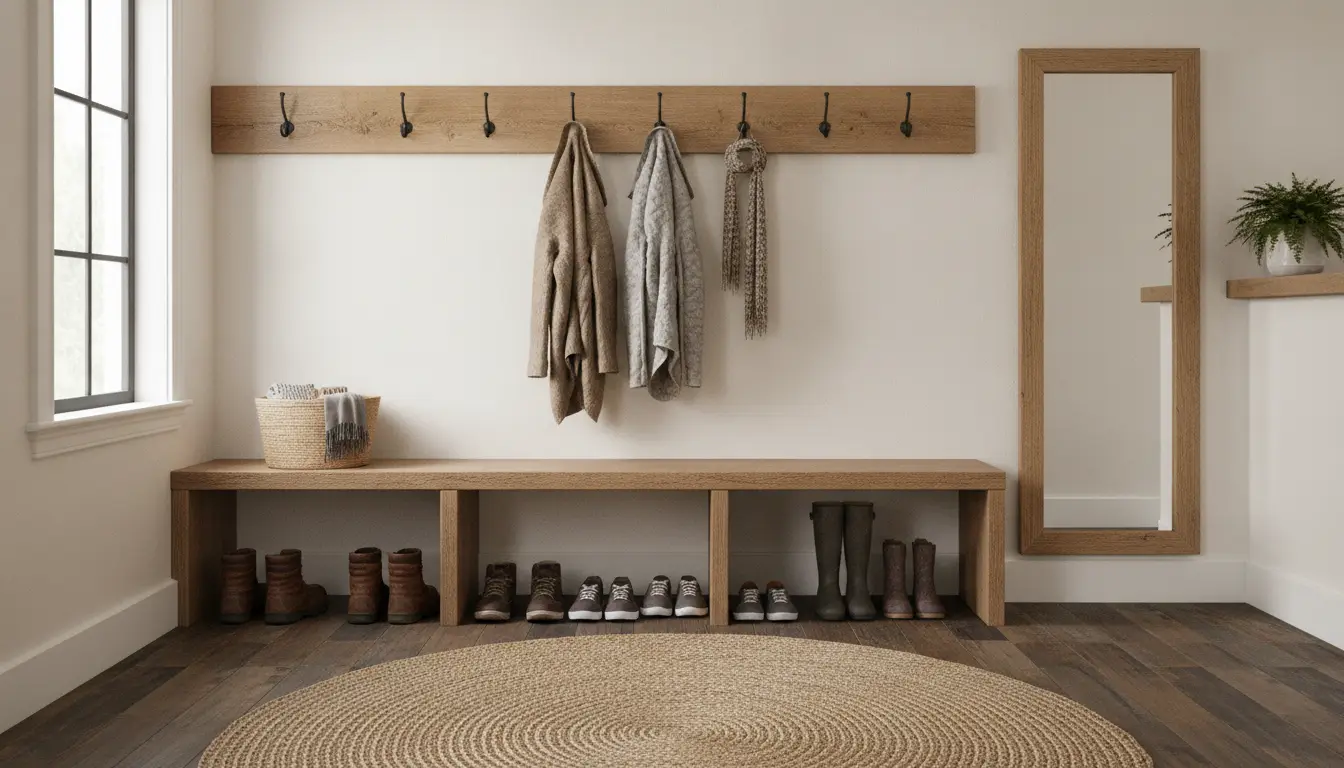

Mudroom Shoe Holder Ideas: Entryway Guide
The best mudroom shoe holder ideas include built-in cubbies for everyday sneakers, closed cabinetry for seasonal footwear, and floating shelves for small entryways. To maintain a clutter-free space, combine hidden storage with accessible drop zones, ensuring each family member has a dedicated section tailored to their specific shoe dimensions and daily routine.
What are the best mudroom shoe holder ideas for busy households?
The most effective mudroom shoe holder ideas for busy households combine accessibility with visual organization. Top solutions include individual storage cubbies, tiered wire racks for wet boots, pull-out drawer systems, and custom bench seating with integrated compartments underneath to maximize vertical space.
Implementing a successful entryway storage strategy requires understanding your family's daily habits. When children and adults enter the home, they naturally seek the path of least resistance for discarding footwear. If your storage system requires opening heavy doors or bending down to access complicated racks, shoes will inevitably end up scattered across the floor. Designing a seamless drop zone ensures immediate compliance and long-term organization.
Beyond simple racks, modern mudrooms benefit from a hybrid approach to shoe management. Integrating multiple storage types within a single architectural unit accommodates varying footwear dimensions, from tall winter boots to slim summer sandals. By assigning specific zones based on frequency of use, you create an intuitive environment that naturally discourages clutter while preserving the aesthetic integrity of your home's entrance.
- Built-in cubbies: Ideal for quick access and visual inventory of daily sneakers.
- Tilt-out shoe cabinets: Perfect for narrow hallways requiring slim-profile storage.
- Under-bench baskets: Provide a rustic aesthetic while hiding mismatched footwear.
- Wall-mounted peg systems: Excellent for drying wet boots and athletic cleats.
- Rolling storage carts: Offer flexible organization that can be relocated during deep cleaning.
How much does a custom mudroom shoe storage system cost?
A custom mudroom shoe storage system typically costs between $1,500 and $5,000, depending on materials, dimensions, and labor. Prefabricated modular units range from $200 to $800, while simple DIY wire racks or wooden benches offer budget-friendly alternatives falling between $50 and $150.
Financial planning for an entryway renovation must account for both immediate material expenses and long-term durability requirements. Mudrooms endure significant wear and tear from moisture, dirt, and daily impacts. Investing in high-quality plywood or solid wood construction rather than cheap particleboard prevents premature warping and degradation. While custom millwork represents a higher initial investment, it precisely maximizes every available square inch of your specific floor plan.
Homeowners should also consider the hidden costs associated with professional installation and finishing. Custom cabinetry requires precise measuring, leveling, and integration with existing baseboards and wall textures. Alternatively, semi-custom solutions from major retailers provide a middle-ground option, allowing you to achieve a built-in aesthetic by combining standardized boxes with custom trim work at a fraction of the bespoke carpentry price.
- Bespoke carpentry: $3,000 - $8,000 (Includes custom dimensions, premium finishes, and installation).
- Semi-custom modular systems: $800 - $2,500 (Requires self-assembly or hiring a handyman).
- Freestanding furniture pieces: $150 - $600 (Ready-to-use benches and standalone cabinets).
- Over-the-door organizers: $20 - $50 (Highly economical but less durable).
- DIY plywood cubbies: $100 - $300 (Material costs only, requires significant personal labor).
Open shelving vs closed cabinets: Which shoe holder is best for entryways?
Open shelving provides immediate accessibility and optimal ventilation for damp footwear, making it ideal for daily-use shoes. Closed cabinets offer a cleaner aesthetic by concealing visual clutter and protecting seasonal footwear from dust, though they require more physical space for door clearance.
The debate between exposed and concealed storage ultimately depends on your household's tolerance for visual noise and the specific climate in which you live. In regions experiencing heavy rain or snow, open shelving is functionally superior because it allows air circulation to dry wet soles and prevents mold growth. Trapping damp boots inside a dark, unventilated cabinet frequently leads to unpleasant odors and material damage.
Conversely, closed cabinetry elevates the architectural sophistication of an entryway, transforming a utilitarian mudroom into a polished transitional space. For homes with open floor plans where the mudroom is visible from the main living areas, hiding footwear behind shaker-style doors maintains interior design cohesion. Many professional organizers recommend a hybrid approach to balance these competing needs effectively.
- Open Shelving Advantages: Promotes rapid drying of wet shoes through natural air circulation.
- Open Shelving Drawbacks: Exposes all footwear to visitors, creating potential visual clutter.
- Closed Cabinet Advantages: Maintains a pristine, minimalist aesthetic by hiding mismatched shoes.
- Closed Cabinet Drawbacks: Restricts airflow, potentially trapping odors and moisture.
- Hybrid Solution: Utilize open cubbies for daily wear and closed upper cabinets for off-season storage.
How do I choose the right materials for entryway shoe organizers?
Choosing the right materials for entryway shoe organizers requires balancing moisture resistance, durability, and aesthetics. Powder-coated steel and treated hardwoods are excellent for handling wet boots, while melamine and exterior-grade plywood offer cost-effective, easily cleanable surfaces resistant to daily scuffs and dirt.
Material selection directly dictates the lifespan and maintenance requirements of your mudroom infrastructure. Standard indoor furniture materials often fail when exposed to the harsh realities of an active entryway. Mud, melting snow, and abrasive road salt quickly degrade untreated wood and standard MDF. Prioritizing non-porous surfaces or applying heavy-duty polyurethane sealants ensures your investment survives seasonal weather fluctuations without warping or staining.
Sustainable and innovative materials are increasingly popular in modern mudroom designs. Bamboo offers incredible tensile strength and natural moisture resistance, making it an eco-friendly alternative to traditional hardwoods. For industrial or ultra-modern aesthetics, perforated metal shelving provides unmatched durability while allowing dirt to fall through to a designated, easily swept catch-tray below, drastically reducing daily cleaning efforts.
- Powder-coated metal: Highly resistant to rust and scratching; ideal for heavy winter boots.
- Solid oak or maple: Offers timeless beauty and structural integrity when properly sealed.
- High-pressure laminate (HPL): Provides a budget-friendly, wipeable surface immune to minor water exposure.
- Wire mesh: Maximizes airflow for athletic shoes but may dent under extreme weight.
- Marine-grade plywood: The ultimate choice for custom builds in high-humidity coastal environments.
What are the most common mistakes when implementing mudroom shoe storage?
The most common mistakes in mudroom shoe storage include underestimating footwear dimensions, failing to account for proper ventilation, and neglecting vertical space. Homeowners frequently build cubbies too small for winter boots or forget to include waterproof drip trays, leading to damaged floors.
Spatial miscalculations plague many DIY and professional mudroom renovations. A standard pair of men's athletic shoes requires significantly more depth and width than a pair of women's flats, yet many standardized cubbies apply a one-size-fits-all dimension. When compartments are too shallow, shoes protrude into the walking path, creating tripping hazards and defeating the purpose of the organizational system entirely.
Another frequent oversight is the failure to plan for seasonal transitions and fluctuating inventories. A storage system designed solely for summer sandals will catastrophically fail when winter necessitates heavy snow boots. Incorporating adjustable shelving allows the architecture to adapt to changing seasonal requirements. Furthermore, neglecting floor protection beneath the storage unit allows standing water from melting snow to seep into baseboards and subflooring.
- Ignoring boot height: Failing to provide tall compartments for rain boots and winter footwear.
- Inadequate depth: Building shelves less than 13 inches deep, causing larger shoes to hang off the edge.
- Poor lighting: Creating dark, deep cubbies where smaller shoes become lost or hard to identify.
- Lack of seating: Forgetting to integrate a bench, making the process of putting on shoes uncomfortable.
- Skipping drip trays: Allowing wet soles to rest directly on wood surfaces, causing rot and discoloration.
Frequently Asked Questions About Mudroom Shoe Storage
Navigating the complexities of mudroom shoe storage often brings up specific logistical and design questions. Understanding how to handle odors, integrate seating, and maximize small spaces ensures your entryway remains both highly functional and welcoming for family members and guests alike.
Addressing these common queries helps refine your approach to entryway organization. Every home presents unique architectural challenges, from narrow hallways to sprawling dedicated mudrooms. By analyzing how experts solve these specific pain points, you can adapt proven methodologies to your personal space.
The following section compiles the most pressing questions homeowners face when designing their shoe storage systems. These insights bridge the gap between theoretical design principles and practical, everyday execution, ensuring your final build meets all functional requirements without sacrificing aesthetic appeal.
Are custom mudroom shoe cabinets worth the investment?
Yes, custom cabinets are highly worthwhile if you plan to remain in your home long-term. They maximize awkward architectural spaces, increase property value, and provide tailored solutions for your specific family size and footwear habits.
How deep should a mudroom shoe cubby be?
A standard shoe cubby should be at least 13 to 14 inches deep to comfortably accommodate men's footwear. For households with exceptionally large shoe sizes, extending the depth to 15 inches prevents shoes from protruding into the walkway.
What is the best way to prevent shoe odors in a mudroom?
Preventing odors requires a combination of adequate ventilation and moisture control. Utilizing open wire shelving, installing a small exhaust fan, and placing activated charcoal bags or cedar blocks inside storage compartments will naturally neutralize unpleasant smells.
Can I use floating shelves for entryway shoe storage?
Floating shelves are an excellent, minimalist option for narrow entryways. However, they require heavy-duty wall anchors to support the cumulative weight of multiple pairs of shoes, and they expose all footwear to visual scrutiny.
How do I organize shoes in a very small entryway?
In tight spaces, prioritize verticality. Tall, slim tilt-out shoe cabinets can store dozens of pairs while only protruding a few inches from the wall. Over-the-door organizers and stackable clear bins also maximize limited square footage efficiently.
Which paint finish is best for wooden shoe cubbies?
Always opt for a high-gloss or semi-gloss enamel paint for shoe cubbies. These finishes create a hard, non-porous shell that is significantly easier to wipe clean of mud and scuff marks compared to flat or matte paints.
How many pairs of shoes should I keep in the mudroom?
As a general rule of organization, keep only two to three pairs of in-season shoes per family member in the primary mudroom. Off-season or rarely worn formal footwear should be relocated to bedroom closets to prevent entryway overcrowding.
Is it better to store shoes on the floor or on shelves?
Storing shoes on elevated shelves is vastly superior to floor storage. Elevating footwear protects it from floor-level dust, makes sweeping or vacuuming the mudroom drastically easier, and visually expands the floor space, making the room feel larger.