

Decorative Storage Cabinets That Blend Style with Everyday Storage
Decorative storage cabinets are specialized furniture pieces and built-in units designed to combine visual appeal with functional organization. To optimize a room, decorative storage cabinets integrate custom doors, glass panels, and quality materials to conceal household clutter, display decor, and serve as architectural focal points in living rooms, dining spaces, entryways, and master suites.
What are Decorative Storage Cabinets and How Do They Work?
Decorative storage cabinets are dual-purpose cabinetry solutions that bridge the gap between interior design and practical home storage. Unlike basic utility shelving or plain plastic bins, these cabinets feature stylized door fronts, detailed trim, and furniture-grade materials to store household items out of sight while enhancing the room's overall aesthetic.
In contemporary home design, keeping living areas uncluttered without sacrificing personal style is a constant balancing act. Standard storage units often look utilitarian, while purely decorative accent tables offer little to no usable space for daily storage needs.
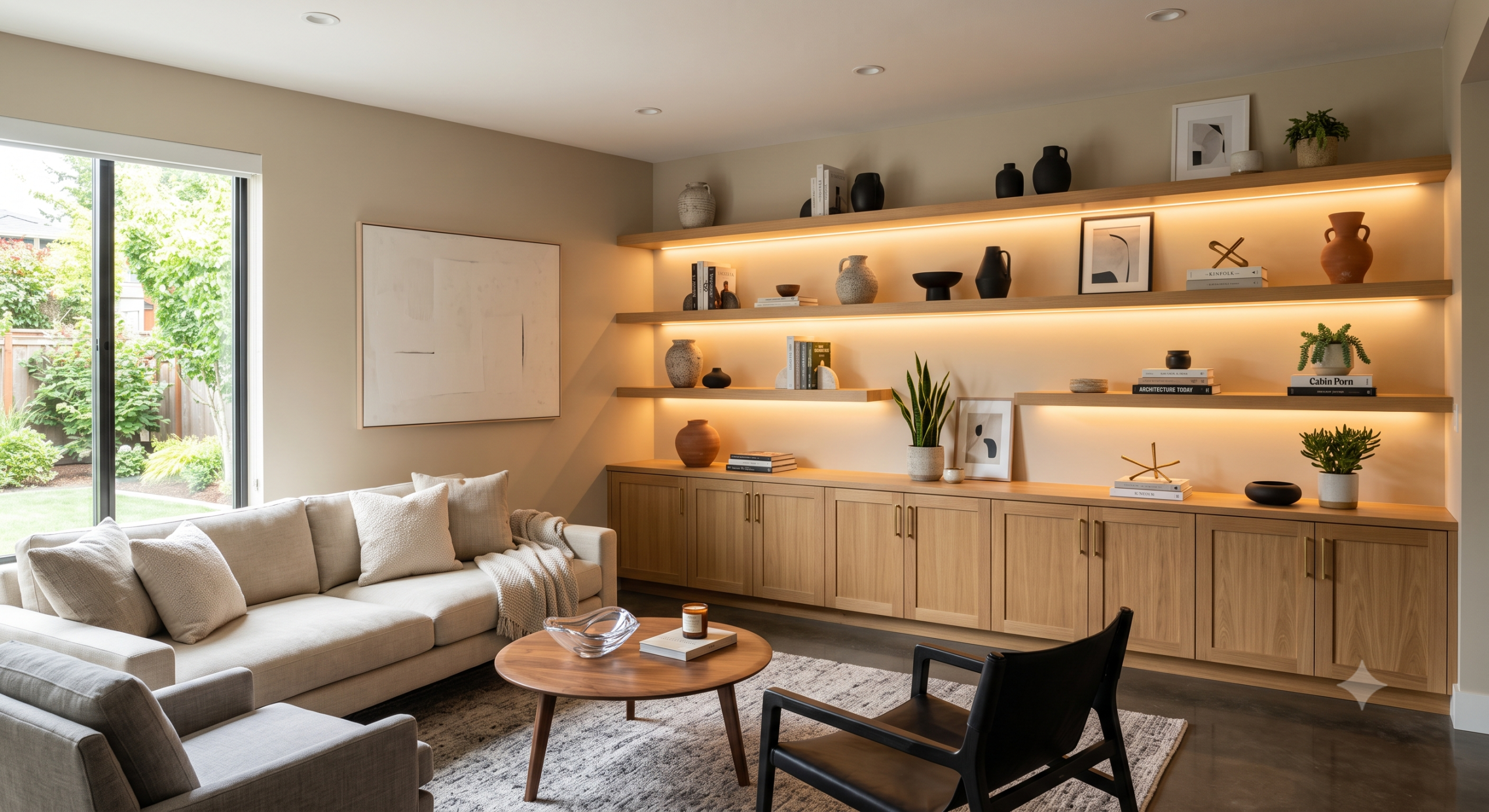
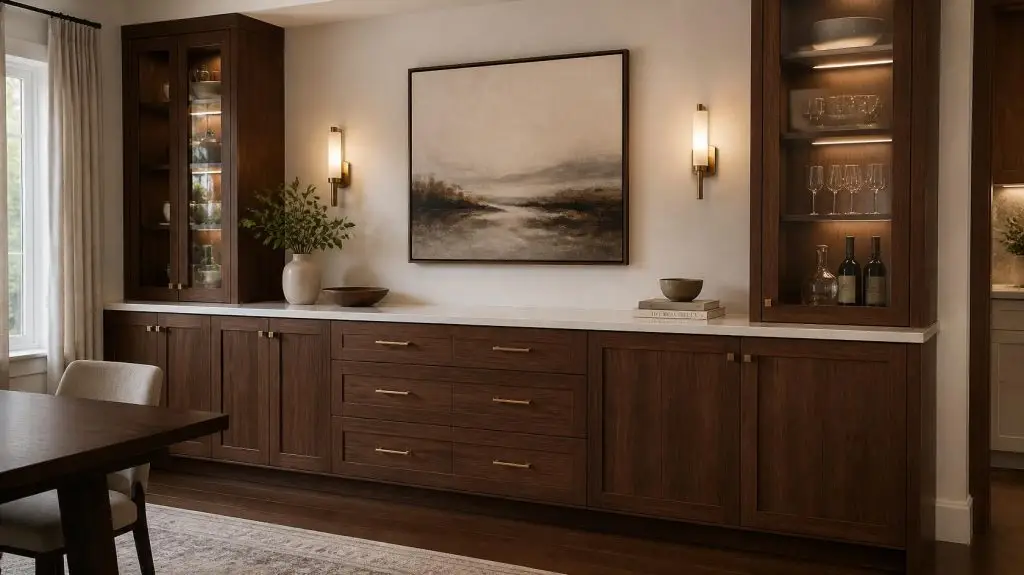
Integrating accent units into your space planning solves both challenges. Whether configured as a floating sideboard in a dining room, a hallway credenza, or built-in living room shelving, these cabinets combine structured custom cabinetry with decorative elements. Using targeted space planning, you can conceal everything from board games and extra linens to audio-visual equipment behind handsome door fronts, keeping your main living areas clean and welcoming.
What are the Main Benefits of Decorative Storage Cabinets?
Installing decorative storage cabinets eliminates visual clutter, organizes household overflow, and adds architectural character to blank walls. Furthermore, incorporating custom built-in cabinetry crafted from durable materials provides a long-lasting storage upgrade that enhances everyday functionality while increasing your home's aesthetic appeal and long-term resale value.
- Concealed Clutter Control: Closing cabinet doors instantly hides loose toys, electronics, media cords, or extra tableware, maintaining a clean visual look.
- Architectural Focal Points: Detailed door profiles, such as shaker cabinets or fluted wood panels, transform plain drywall into an attractive design feature.
- Protection for Household Items: Enclosed storage keeps fine china, glassware, linens, and books safe from dust, ambient moisture, and pet hair.
- Versatile Room Applications: Decorative cabinets work seamlessly across hallways, living rooms, dining spaces, entryways, and master bedrooms.
How Much Do Decorative Storage Cabinets Cost?
Decorative storage cabinets typically cost between $800 and $15,000+, depending on whether you choose freestanding furniture pieces or custom built-in installations. While basic prefabricated wood accent cabinets sit on the lower end, custom floor-to-ceiling cabinetry with hardwood veneers, stone tops, and integrated lighting occupy the premium tier.
To help you budget for your next home improvement project, let us compare the typical cost structures:
| Cabinet Type & Scope | Average Price Range | Material & Construction Highlights |
| Custom Built-In Storage Cabinet | $5,000 – $15,000+ | Floor-to-ceiling cabinetry; natural white oak or walnut wood veneers; stone countertops; recessed LED lighting; crown molding. |
| Custom Built-In Cabinet | $2,500 – $6,000 | Painted MDF or cabinet-grade plywood construction or sturdy plywood frames; shaker cabinets; full-extension drawer slides; soft-close hinges. |
| Freestanding Accent Cabinet | $500 – $2,000 | Prefabricated composite or solid wood base; brushed nickel or matte black hardware; adjustable interior shelving; painted or stained finish. |
Freestanding Accent Cabinets vs. Custom Built-In Storage: Which is Best?
Choosing between freestanding accent furniture and custom built-in cabinetry comes down to room dimensions, budget, and long-term storage needs. Freestanding cabinets offer portability and lower upfront costs, whereas built-in storage maximizes every inch of vertical wall space, provides superior weight capacity, and creates a seamless furniture look.
Comparing Built-In and Freestanding Storage
Let us evaluate these two primary storage approaches to help you decide which fits your lifestyle best:
| Feature | Custom Built-In Cabinets | Freestanding Accent Cabinets |
| Space Utilization | Maximizes 100% of vertical height and wall width; leaves no empty gaps. | Fixed sizes leave gaps on sides, top, and behind the unit. |
| Storage Capacity | High; accommodates heavy loads, wide shelves, and multi-tier drawers. | Moderate; limited by small internal dimensions and fixed shelves. |
| Design Integration | Blends seamlessly with existing millwork, baseboards, and wall colors. | Standalone style that may contrast with room architecture. |
| Permanence & ROI | Permanent structural addition that directly increases home equity. | Portable furniture item that moves with you when you relocate. |
MDF vs. Plywood: What is the Best Material for Decorative Cabinets?
Selecting the best cabinet material depends on whether you prefer a painted or stained wood finish. High-density MDF is the gold standard for smooth, painted finishes because it resists cracking along joints, while cabinet-grade plywood is the premier structural choice for holding heavy-weight loads under natural wood veneers.
Material Options Compared
Understanding cabinet materials ensures your storage units handle daily use without sagging over time:
- Medium-Density Fiberboard (MDF): Made from fine wood fibers bound with resin, MDF is perfectly flat, dense, and uniform. It does not expand or contract with temperature shifts, making it the ideal substrate for a smooth, painted finish on shaker cabinets and decorative door panels.
- Cabinet-Grade Plywood: Constructed from alternating layers of wood veneer, plywood provides exceptional lateral strength and screw-holding power. It is the preferred material for building heavy cabinet boxes that support stone tops or heavy book collections.
- Natural Hardwoods (White Oak / Walnut): Staining natural hardwoods brings organic warmth and elegance to your interior design. White oak offers a bright, modern Scandinavian tone, while walnut delivers a rich, classic look that pairs beautifully with hardwood floors.
What Common Decorative Cabinet Mistakes Should You Avoid?
The most frequent mistakes when choosing decorative cabinets are selecting shallow depths for bulky items, neglecting cord management for electronics, and using low-quality hardware. Forgetting to verify shelf weight limits or choosing delicate door finishes in high-traffic hallways leads to early wear and functional frustration.
Keep these common design and layout pitfalls in mind to ensure your project runs smoothly:
- Choosing Shallow Counter Depths: Standard 12-inch shallow accent cabinets cannot fit large serving platters, game boxes, or audio receivers. Ensure your main storage cabinet is at least 15 to 18 inches deep for versatile home storage.
- Neglecting Cable Management: If you plan to place a television, lamp, or media player on or inside your cabinet, ensure the design includes rear wire grommets and internal ventilation cutouts to prevent overheating.
- Using Budget Drawer Slides and Hinges: Cheap hardware wears out quickly under daily use. Always specify heavy-duty soft-close hinges and full-extension drawer slides that keep daily operation quiet and smooth.
- Forgetting Proportional Scale: Placing a tiny accent cabinet on a massive 16-foot living room wall makes the room feel unbalanced. Match the cabinet scale to your wall dimensions or build out a full wall system.
How to Successfully Implement Decorative Cabinets in Your Home
Implementing decorative storage cabinets requires measuring your room layout, evaluating what you need to store, and selecting a door style that complements your home. Start by establishing clear walkways, choosing durable materials, adding internal organization systems, and topping the unit with decorative trim.
Follow this five-step process to plan a flawless cabinet installation:
- Step 1: Audit Your Storage Needs: List the items you need to hide away—such as extra throw blankets, board games, liquor bottles, or dinnerware. Measure the largest items to determine necessary shelf depths and heights.
- Step 2: Map Walkway Clearances: Measure your room footprint carefully. Ensure you maintain at least 36 inches of clear walking space in front of the cabinet so doors and drawers can open fully without blocking traffic.
- Step 3: Select Your Door Profile: Choose a door style that matches your room's aesthetic. Classic shaker doors offer timeless appeal, glass-front doors showcase collectibles, and fluted or slatted wood panels add modern texture.
- Step 4: Build Sturdy Cabinet Boxes: Work with a custom cabinet maker to construct box frames using high-density plywood or moisture-resistant MDF. Install adjustable shelf pins so you can reconfigure internal space over time.
- Step 5: Finish with Trim and Lighting: Wrap the top and base of custom built-ins with crown molding and baseboards to match your home. Add low-voltage LED lighting channels inside glass cabinets or under floating shelves for ambient warmth.
Expert Styling and Organization Tips for Accent Cabinets
- Balance Closed and Open Storage: Combine closed lower cabinetry with open upper floating shelves. Use the hidden lower cabinets for unsightly clutter and the open shelves to display books, vases, and framed photos.
- Incorporate Adjustable Shelf Pins: Fixed shelves limit what you can store. Always specify adjustable shelf pin tracks so you can change shelf heights as your storage needs evolve.
- Add Internal Drawer Insert Trays: Keep small items organized inside cabinet drawers by adding custom felt or wood dividers for silverware, remote controls, or office supplies.
- Use Warm Accent Lighting: Install puck lights or continuous LED tape along the undersides of shelves. Soft 3000K warm white lighting turns a standard storage cabinet into a gorgeous evening backdrop.
Frequently Asked Questions
What is the standard depth for a decorative storage cabinet?
The standard depth for a decorative living room or dining room storage cabinet is 15 to 18 inches. This depth provides ample room for serving platters, media devices, and storage baskets while keeping a slim profile against the wall.
Can I use decorative storage cabinets in an entryway?
Yes, absolutely. A shallow decorative cabinet in an entryway acts as a stylish drop zone for keys, mail, shoes, and dog leashes, keeping your front entrance clean and organized.
How do soft-close hinges protect custom cabinetry?
Soft-close hinges use small hydraulic dampers to catch cabinet doors as they close, gently pulling them shut. This prevents slamming, protects glass inserts, and reduces wear on wood frames over time.
Are custom built-in cabinets better for resale value than freestanding furniture?
Yes. Custom built-in cabinetry is considered a permanent structural addition that appraises as home equity, appealing strongly to buyers in luxury homes.
What is the best wood finish for a modern decorative cabinet?
Natural white oak and rich walnut are the most popular wood-grain finishes in contemporary design. White oak provides a bright, Scandinavian feel, while walnut adds rich, mid-century warmth.
How do I hide television wires around a decorative media cabinet?
Design your custom cabinet with a hollow rear backing panel or wire chase. Route all HDMI lines and power cords behind the drywall or cabinet back directly to lower outlets.
What is the weight capacity of a plywood cabinet shelf?
A high-quality 3/4-inch cabinet-grade plywood shelf supported properly across a 36-inch span can comfortably hold 75 to 100 pounds without bowing or sagging.
How high should a dining room sideboard cabinet be?
Standard dining room sideboards and credenzas sit between 30 and 36 inches high, making them comfortable for serving food and staging drinks during dinner parties.
Design Your Ideal Storage with Clear Closets
Are you ready to clear out visual clutter, organize your home's living areas, and add gorgeous custom cabinetry to your space? The design and master cabinetry team at Clear Closets is here to help you bring your storage ideas to life. From custom decorative wall units and living room built-ins to master walk-in closets, pantries, and laundry systems, we manage the entire project—from initial 3D design plans to clean, professional installation.
We proudly design and build custom storage systems throughout Alpharetta, Roswell, Johns Creek, and the greater Atlanta metro area. Contact the design experts at Clear Closets to schedule your complimentary custom design consultation today.