
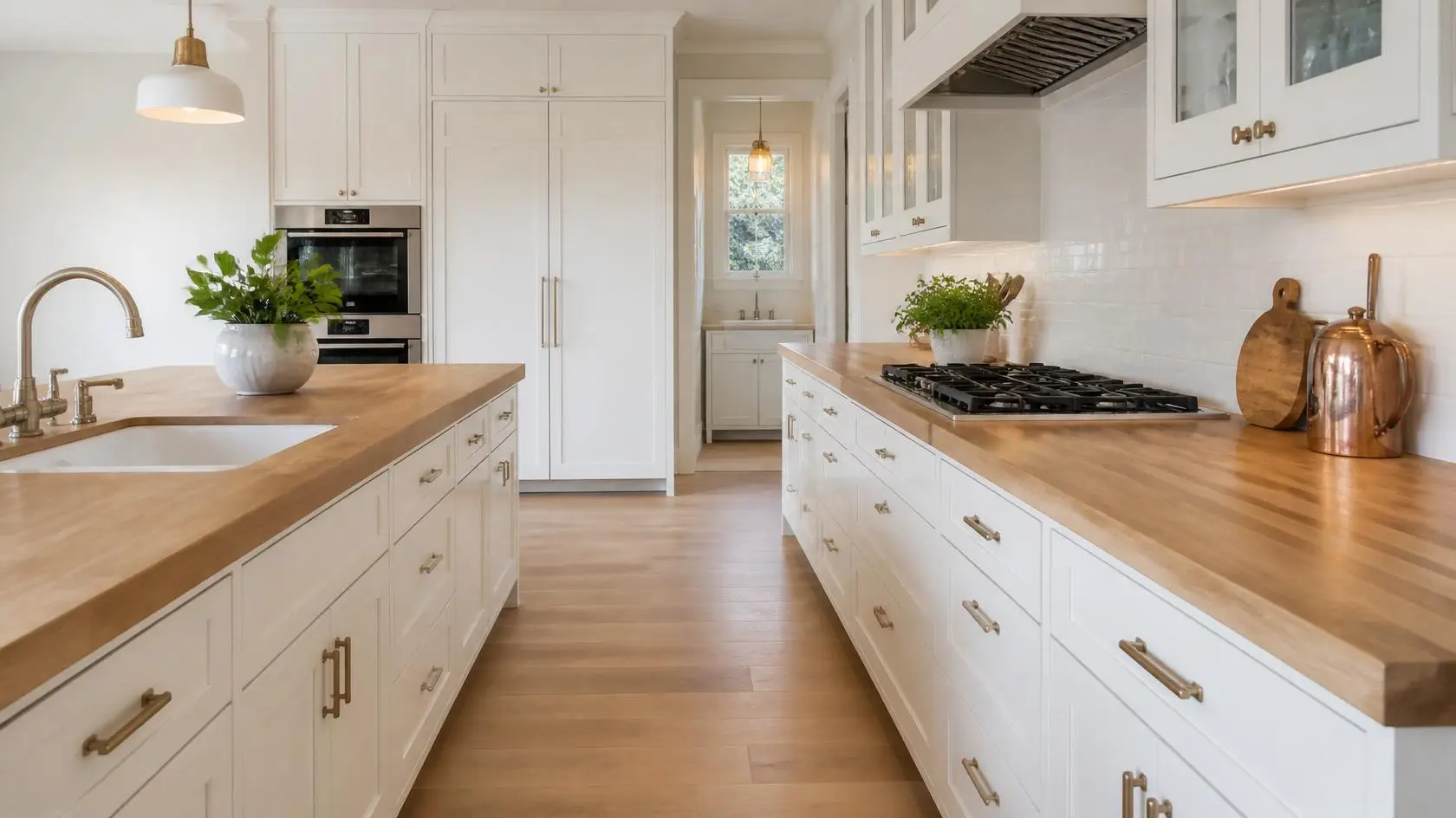

Wood Countertops for Every Style and Budget
Wood countertops are durable surfaces made from natural solid hardwoods, edge-grain planks, or end-grain butcher block. They cost between $30 and $150 per square foot depending on wood species like white oak or walnut. Ideal for kitchens, laundry rooms, and custom cabinetry, wood countertops require periodic sealing with food-safe oils or polyurethane to prevent water damage and warping.
Table of Contents
What is a Wood Countertop?
A wood countertop is a custom-engineered surface crafted from solid hardwood slabs, edge-grain lumber, or end-grain butcher block blocks. Unlike synthetic laminates or stone, natural wood surfaces bring organic warmth, sound dampening, and repairability to kitchens, utility spaces, and built-in storage areas while seamlessly integrating with custom carpentry and millwork.
Wood countertops have evolved from simple utility surfaces into defining architectural features in modern home design. Homeowners frequently choose solid hardwoods to break up cold stone surfaces or to add warmth to custom cabinetry and shaker cabinets.
When planning space planning in luxury homes, wood provides a tactile quality that stone cannot match. Modern wood counters are engineered to resist moisture and dimensional shifting through precise kiln-drying and advanced joining techniques. Whether used on a kitchen island, for pantry makeover or a dedicated folding station in a laundry room closet, wood provides a versatile balance between structural durability and high-end aesthetic value.
What are the Main Benefits of Wood Countertops?
Wood countertops offer exceptional versatility, warmth, and longevity because they can be sanded and refinished multiple times over decades. They reduce noise from cookware, prevent glassware breakage, improve home resale value, and allow seamless integration with custom carpentry, soft-close hinges, and integrated LED lighting systems.
- Aesthetic Warmth and Versatility: Natural grain patterns in species like walnut and white oak complement both modern interior design and traditional shaker cabinets.
- Refinishability and Repairability: Unlike quartz or granite, which require costly specialized repairs if chipped, a damaged wood counter can be sanded down, re-stained, and sealed on-site.
- Acoustic and Impact Cushioning: Wood absorbs sound waves and offers a softer impact landing, reducing kitchen noise and protecting delicate dishes.
- Customization and Integration: Wood can easily be shaped to fit around built-in storage, custom cabinetry, crown molding, and unique nook dimensions during home storage upgrades.
How Much Do Wood Countertops Cost?
Wood countertops typically cost between $30 and $150+ per square foot for materials, with professional installation adding approximately $20 to $50 per square foot. Total project prices range from $1,200 for standard butcher block installations to over $6,000 for custom walnut or exotic hardwood surfaces paired with complex millwork.
The overall cost depends heavily on the chosen wood species, grain construction, and thickness. Below is a breakdown of realistic pricing structures and material specifications across common project types:
| Wood Species & Type | Average Price Range (per sq. ft.) | Material & Structural Highlights |
| Standard Butcher Block (Maple/Birch) | $30 – $60 | Edge-grain construction; highly durable; ideal for utility rooms and budget kitchen updates. |
| Premium White Oak & Walnut | $75 – $120+ | Premium solid hardwood; rich figure and grain depth; pairs exceptionally well with custom cabinetry. |
| Premium Walnut Countertops | $100 – $150+ | Superior knife resilience; self-healing grain; thick construction ideal for food preparation surfaces. |
White Oak vs. Walnut vs. Maple: What is the Best Wood Species for Countertops?
The best wood species depends on your budget, usage intensity, and color scheme. White oak offers superior moisture resistance and tight grain; walnut provides rich dark tones that elevate luxury homes; maple delivers maximum hardness for heavy chopping and utility work.
Selecting the right wood species requires balancing hardness (measured on the Janka scale), grain stability, and color compatibility with surrounding home storage solutions:
- White Oak: Highly stable with tight pores, making it inherently more resistant to moisture. Its light neutral tone pairs perfectly with painted shaker cabinets and modern space planning.
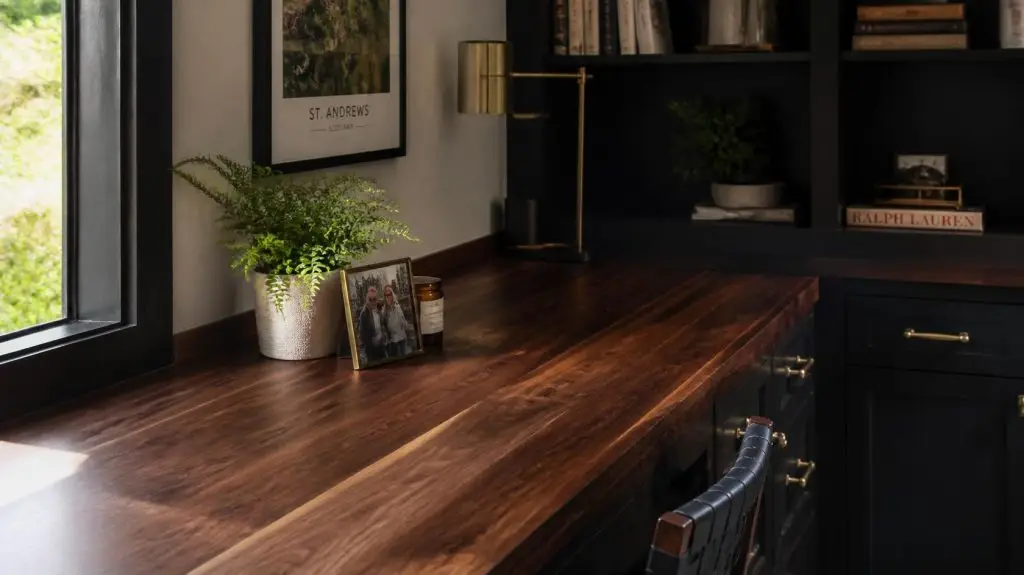
- Walnut: Known for deep brown hues and elegant grain patterns. While slightly softer than maple, walnut adds instant resale value and acts as a focal point in high-end interior design.
- Maple: Extremely dense and non-porous. It resists dents and scratches, making it the industry standard for functional butcher block prep zones and high-traffic areas.
Solid Wood vs. MDF vs. Plywood: Material Comparison for Moist Environments
Solid hardwood is ideal for dry prep areas and high-impact counters, whereas moisture-resistant plywood or engineered MDF with hardwood veneers offer superior dimensional stability in high-humidity areas like laundry room closets, preventing warping and joint separation caused by ambient moisture.
Choosing the right substrate is essential when installing wood surfaces near sinks, washers, or moisture-prone areas:
- Solid Hardwood: Excellent for longevity and refinishing, but naturally expands and contracts across seasons. Requires proper mechanical fasteners that allow wood movement.
- Cabinet-Grade Exterior Plywood: Features alternating wood-grain directions for extreme structural stability. Ideal for under-counter substructures and hidden built-in storage support.
- Industrial-Grade MDF (Moisture-Resistant): Provides a completely flat surface that will not warp or telegraph imperfections, making it a stable base for veneer wraps in climate-controlled utility spaces.
How Do You Seal and Maintain Wood Countertops?
To maintain wood countertops, apply food-safe mineral oil or hardwax oil every 4–6 weeks for butcher blocks, or seal non-food prep areas with a satin polyurethane. Wipe up spills immediately, avoid leaving standing water near seams, and clean surfaces using pH-neutral wood cleaners.
Proper maintenance prevents water penetration, staining, and drying out:
- For Food Prep (Butcher Blocks): Use food-grade mineral oil, beeswax, or organic butcher block conditioners. Apply generously, allow it to soak overnight, and wipe away excess.
- For Decorative & Utility Surfaces: Apply hardwax oils (like Rubio Monocoat or Osmo) or water-based polyurethanes. These form a protective barrier that resists liquid penetration while maintaining a low-sheen, natural look.
- Daily Care: Avoid harsh bleach or abrasive scrubbing pads. Use a damp microfiber cloth with mild dish soap, followed by a dry towel to eliminate residual moisture.
What Common Mistakes Should You Avoid with Wood Countertops?
Common mistakes include sealing wood with non-food-safe chemicals on food prep zones, trapping standing water around sink cutouts, ignoring seasonal expansion gaps during installation, and placing hot pots directly on the wooden surface without trivets.
Avoid these frequent pitfalls during installation and daily use:
- Over-tightening Fasteners: Screwing wood counters directly to base cabinets without slotted brackets or expansion washers prevents natural wood movement, leading to severe cracking.
- Neglecting the Underside: Sealing only the top surface causes uneven moisture absorption, leading to upward or downward cupping over time. Always seal all six sides equally.
- Placing Hot Pans Directly on Wood: Direct heat scorches the wood finish and can break down glue joints in laminated butcher blocks.
- Ignoring Plumbing Clearance: Failing to leave sealed expansion gaps around undermount sinks allows water to seep into the end grain, causing wood rot and discoloration.
Frequently Asked Questions (FAQs)
Are wood countertops sanitary for kitchen use?
Yes. Studies show that natural hardwoods like maple and white oak have inherent antimicrobial properties that draw in and destroy bacteria, provided the wood is properly oiled and cleaned after use.
Can you install a sink in a wood countertop?
Yes, drop-in and undermount sinks can be installed with wood countertops. However, the cutout edges must be thoroughly sealed with marine-grade varnish or silicone sealant to prevent water from penetrating the raw wood.
How do I choose between edge-grain and end-grain wood countertops?
Choose edge-grain for long continuous plank aesthetics and lower cost. Choose end-grain (checkerboard pattern) if you intend to chop heavily on the surface, as knife blades slide between wood fibers without dulling.
Is white oak better than red oak for countertops?
Yes. White oak has closed tyloses (cellular structures) that block water absorption, whereas red oak has open pores that soak up liquids and stain easily when exposed to moisture.
Are wood countertops worth it compared to quartz?
Wood countertops are worth it if you value warmth, repairability, and acoustic comfort. While quartz requires less daily maintenance, wood can be sanded and restored indefinitely, extending its lifespan over decades.
How do wood countertops affect home resale value?
High-quality wood countertops paired with custom cabinetry, soft-close hinges, and crown molding increase perceived craft value in luxury homes, making spaces feel custom-designed rather than builder-grade.
How much expansion space is needed for wood countertop installation?
Leave a $1/8$-inch to $1/4$-inch expansion gap along walls and cabinet perimeters, hidden under backsplash tile or molding, to accommodate natural humidity shifts throughout the year.
Can you use wood countertops in a laundry room closet?
Yes. Wood countertops provide an excellent, smooth surface above washers and dryers for folding clothes, provided the surface is sealed against moisture and ambient steam.
Planning a home upgrade with custom storage solutions? Explore how custom carpentry, space planning, and premium materials come together to transform your home by visiting Clear Closets Contact Page.