
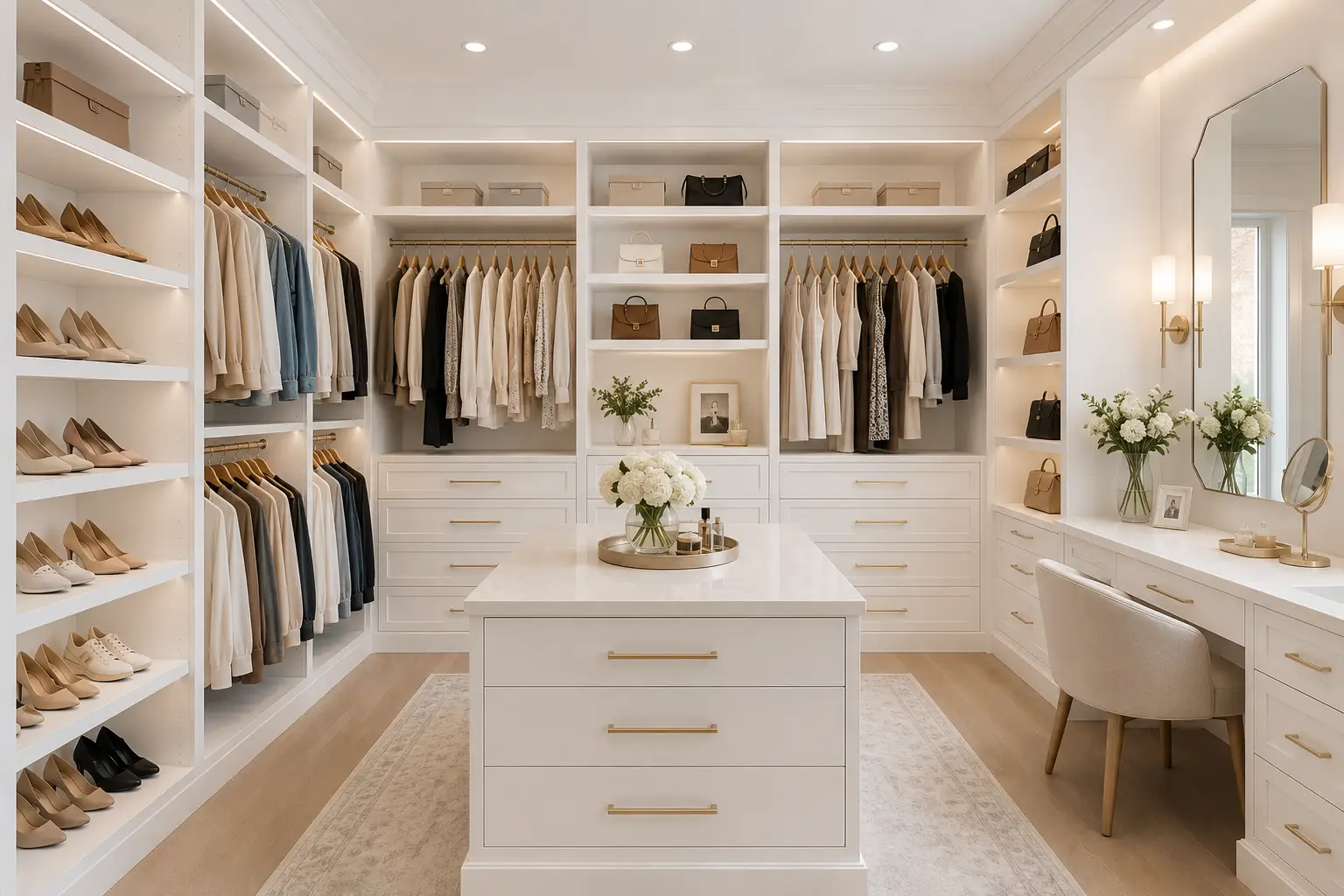

Hiring a Closet Organizer in Atlanta: Systems, Costs, and Tips
Working with a professional closet organizer in Atlanta allows you to transform cluttered closets into highly efficient, custom organization systems. By designing personalized layouts with high-quality custom cabinetry, adjustable shelving, and specialized hanging zones, local experts maximize your available wall space to store and protect your wardrobe while matching the specific architectural style of your home.
What is a Professional Closet Organizer and How Does It Work?
A professional closet organizer design is a tailored, structural solution engineered to maximize home storage capacity and simplify your daily dressing routine. These integrated systems replace basic wire racks with heavy-duty built-in storage towers, soft-closing drawers, and dedicated hanging zones configured to match your specific wardrobe inventory and bedroom layout.
For many homeowners across the Atlanta metro area, storage space is at a premium. Older homes in neighborhoods like Midtown, Virginia-Highland, and Buckhead often feature tiny, shallow closets that quickly turn into chaotic piles of clothes and shoes. Even in newer construction, standard builder-grade wire shelves fail to utilize the room's true vertical potential.
An organized custom system is essentially a high-performance piece of furniture built permanently into your wall studs. By utilizing professional space planning, designers divide your closet into functional zones. This ensures that every jacket, pair of shoes, accessory, and folded sweater has a clear, visible, and dedicated home.
What are the Main Benefits of Upgrading Your Closet Storage?
Upgrading your closet storage dramatically increases your usable space, shields your wardrobe from damage, and enhances your home's aesthetic appeal. In addition, replacing flimsy wire shelves with high-quality custom cabinetry creates a permanent, premium feature that elevates your home's structural quality and long-term resale value.
- Maximized Space Planning: Custom layouts utilize your entire wall height from floor to ceiling, ensuring no vertical storage space is wasted.
- Protection for Fine Fabrics: Smooth, flat wood shelves and velvet-lined drawers protect delicate knits, silk dresses, and leather bags from snags and dust.
- Streamlined Routines: A clear, visible layout groups clothes by category and color, helping you find outfits in seconds and reducing morning stress.
- Elevated Interior Design: Matching your closet's wood finishes and door styles to your bedroom's layout creates a beautiful, unified home environment.
How Much Does a Custom Closet Organizer Atlanta System Cost?
A custom closet system in Atlanta typically costs between $2,500 and $12,000+, depending on the closet size, material choice, and door configurations. While simple reach-in systems utilizing open-face melamine shelving sit at the lower end, large walk-in closets featuring hardwood veneers and custom lighting represent premium investments.
To help you budget for your home organization project, let us compare the typical price ranges for local installations:
| Closet Type | Average Price Range | Key Materials & Features Included |
| Premium Walk-In | $8,000 – $20,000+ | Premium wood veneers or painted cabinetry, center island, integrated LED lighting, soft-close drawers, decorative hardware, and custom storage accessories. |
| Custom Built-In | $4,000 – $8,000 | Custom cabinetry, durable laminate or painted finishes, soft-close hardware, adjustable shelving, drawer units, and optional accent lighting. |
| Standard Reach-In | $1,500 – $4,000 | Durable melamine shelving, double hanging rods, adjustable shelves, chrome hardware, and practical drawer or shelf configurations. |
MDF vs. Plywood: Which Material is Best for Your Closet Shelves?
Choosing the best cabinet material depends on your budget, style goals, and preferred finish. High-density MDF is the industry-standard choice for smooth, painted lacquer finishes because it resists warping, while multi-layered plywood is the ideal structural choice for holding heavy-weight loads under natural wood veneers.
Core Cabinetry Materials Compared
When planning your custom cabinetry, the underlying materials determine both the strength and longevity of your shelves:
- Medium-Density Fiberboard (MDF): Made from fine wood fibers and resin pressed under high pressure, MDF is incredibly flat, dense, and uniform. It does not have natural knots or wood grain patterns, making it the perfect choice for a flawless, painted finish on cabinet doors, drawer fronts, and decorative trim.
- Cabinet-Grade Plywood: Constructed from thin, cross-laminated layers of wood veneer, plywood is exceptionally strong and holds screws tightly. It resists bowing under heavy weight, making it the ideal structural choice for long closet shelves and cabinet box frames.
- White Oak and Walnut: These premium hardwoods are highly popular in luxury homes. White oak provides a bright, modern, and highly durable Scandinavian look, while walnut brings a deep, rich, and classic warmth to your home's millwork.
What Common Closet Organizing Mistakes Should You Avoid
The most frequent closet design mistakes are utilizing fixed-height shelves, neglecting your exact clothing inventory, and ignoring lighting needs. Designing deep stationary shelves without pull-out drawers or forgetting to leave room for long dresses leads to hard-to-reach, unorganized clutter and wasted space.
Keep these common design and layout pitfalls in mind to avoid costly mistakes:
- Relying on Single Hanging Rods: A single rod placed 65 inches high leaves a massive amount of empty, wasted space underneath. Always use a double-hanging system for shorter shirts, jackets, and folded pants to instantly double your capacity.
- Ignoring Shoe Storage Heights: Standard shoe cubbies are often too short for tall heels, boots, or high-top sneakers. Specify adjustable shelves so you can easily adjust heights as your shoe collection changes.
- Forgetting to Audit Your Wardrobe: Never build a closet system based on guesswork. Always count your hanging shirts, long dresses, and shoes first. This concrete inventory ensures you build the exact ratio of rods to drawers that you need.
- Leaving the Space Dark: Windowless closets are notoriously dark, making it hard to tell navy blue from black. Run low-voltage LED strip lights vertically along your cabinet face frames to keep every item fully visible.
How to Successfully Plan and Implement Your Closet Makeover
Implementing a successful closet layout requires evaluating your wardrobe, choosing a matching color palette, and zoning your storage vertical heights. Start by mapping out your active clothing reach zones, choosing durable wood or painted finishes, and completing the look with elegant crown moldings and hardware.
To design an organized and beautiful closet system, use this five-step design process:
- Step 1: Audit and Count Your Clothing: Take everything out of your existing closet. Group your clothes into active wardrobe items, seasonal wear, and donation piles. Count exactly how many linear feet of hanging, folded, and footwear storage you require.
- Step 2: Determine Your Cabinet Layout: Decide if a linear, L-shaped, or U-shaped layout works best for your space. If you are building a walk-in closet, ensure you maintain a comfortable walking path of at least 32 to 36 inches.
- Step 3: Choose Your Materials and Finishes: Select your door styles, drawer fronts, and wood finishes. For a classic, transitional look, choose painted shaker cabinet doors with soft-close hinges. For a modern, organic feel, opt for warm white oak or rich walnut veneers.
- Step 4: Build the Structural Boxes: Work with a custom cabinet maker to construct your cabinet frames. Ensure they use high-density plywood or moisture-resistant MDF frames for exceptional longevity.
- Step 5: Install Trim and Finishes: Run your cabinets all the way to your ceiling. Wrap the top header with beautiful crown molding to give the entire system a seamless, custom built-in furniture look.
Expert Styling and Organization Tips for Your Wardrobe
- Ditch Mismatched Hangers: Replace plastic and wire hangers with uniform wooden or velvet-flocked hangers. This instantly gives your closet the clean, high-end look of a retail store.
- Incorporate a Pull-Out Valet Rod: This small metal rod mounts to your shelving and slides out to hold dry cleaning, your favorite jacket, or tomorrow's planned outfit.
- Use Acrylic Drawer Dividers: Organize your socks, underwear, and ties inside your drawers using clear, adjustable acrylic dividers to keep small items perfectly sorted.
- Organize Shoes by Style and Color: Arrange your shoe collection on adjustable shelves, facing them forward or alternating heel-to-toe to maximize visual appeal and space efficiency.
Frequently Asked Questions
How do I choose the best closet organizer in Atlanta?
Look for a local company with experience in custom carpentry and space planning. Ensure they offer detailed 3D design mockups, provide transparent pricing, use durable materials like plywood or MDF, and have excellent reviews from homeowners in your neighborhood.
Are custom built-in closets worth the cost?
Yes, absolutely. They maximize every cubic inch of a small bedroom, make daily routines much smoother, and act as high-value built-in features that elevate a home's structural quality and market value.
What is the standard depth of a closet organizer?
The standard depth for a custom closet cabinet is 14 inches for open shelving and 24 inches if you plan to install closed cabinet doors to keep hanging coats from getting pinched.
Can I install a closet island in a small walk-in?
To fit a central island, your walk-in closet should measure at least 10 feet by 10 feet. This ensures you maintain comfortable 36-inch pathways on all sides of the island to walk and open drawers comfortably.
What is the best lighting color temperature for a closet?
The best color temperature is between 3500K (neutral white) and 4000K (natural day white). This ensures clothing colors appear true to life, preventing frustrating styling mistakes.
Should I choose open shelving or closed cabinet doors?
A hybrid design works best. Use open shelving for frequently worn everyday items like shirts and folded sweaters. Use closed cabinets to hide less attractive items, bulk storage, and out-of-season gear.
How do soft-close hinges protect custom cabinetry?
Soft-close hinges use small hydraulic dampers to catch the cabinet door as it closes, gently pulling it shut. This prevents slamming, which reduces wear and tear on your wood frames.
How do I maximize a small reach-in closet?
Use a double-hanging rod system to instantly double your hanging capacity, install a central drawer tower to eliminate the need for an bulky bedroom dresser, and run shelves up to the ceiling for out-of-season storage.
Design Your Dream Space with Clear Closets
Are you ready to clear out your closet clutter, completely reorganize your wardrobe, and design a gorgeous, relaxing dressing area? The custom cabinetry and design experts at Clear Closets are here to help you bring your dream home storage to life. From modern walk-in master closets and efficient reach-ins to custom laundry rooms, pantries, and home offices, we manage the entire project—from 3D conceptual designs to professional, clean installation.
We proudly design and install premium home storage systems throughout Alpharetta, Roswell, Johns Creek, and the greater Atlanta metro area. Contact the design experts at Clear Closets to schedule your complimentary custom design consultation today.