
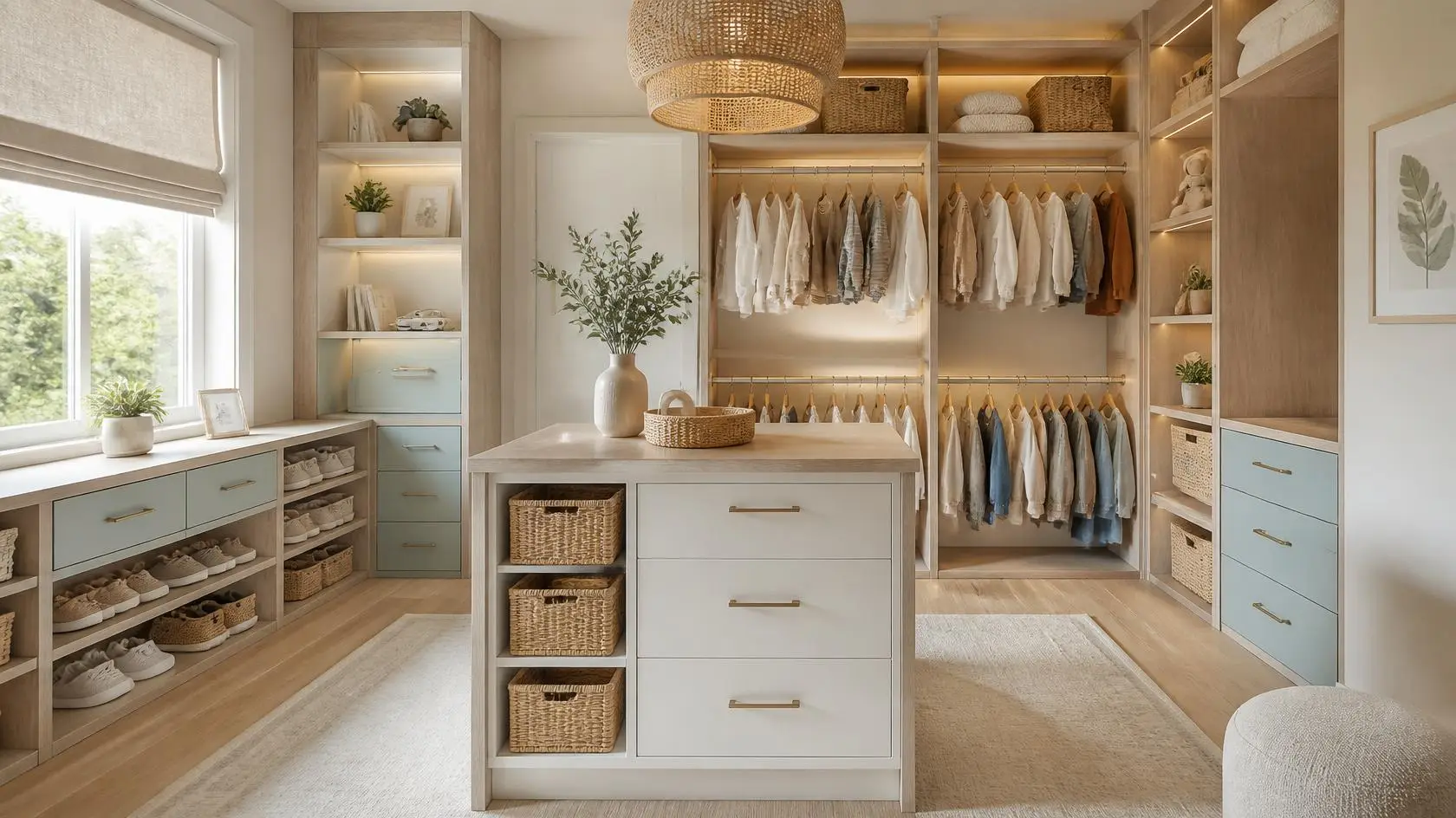

Kids Closets Designed to Grow with Every Stage
Kids closets are specialized storage systems designed to promote independence and adapt as children grow from toddlers into teenagers. By utilizing lower hanging rods, accessible cubbies, pull-out bins, and adjustable custom cabinetry, these organizers allow young children to reach their own clothes and toys, keeping bedrooms clutter-free while maximizing vertical wall space.
What are Adjustable Kids Closets and How Do They Work?
Kids closets are dynamic, height-adjustable organization systems built to handle changing wardrobe sizes and toy collections over time. Unlike static adult wardrobes, these systems use moveable pin tracks, reconfigurable hanging rods, and modular drawer towers so parents can adjust shelf heights as their children grow.
In many family homes, children's bedrooms quickly become ground zero for daily clutter. Standard builder-grade wire shelves are usually mounted 65 inches high—far out of reach for a five-year-old. This forces parents to fetch every pair of socks, shirt, and toy, creating extra morning work and leaving clothes piled on the floor.
Designing dedicated children's storage solves these daily routines. By using smart space planning, you can place daily shirts, school uniforms, and play clothes within arm's reach of your child. As they grow into teenagers with longer clothing, hanging rods can be raised, turning low toy cubbies into adult double-hanging sections without needing a full remodel.
What are the Main Benefits of Upgrading a Child's Closet?
Upgrading a child's closet fosters self-reliance, reduces morning routine stress, and keeps bedrooms organized. Furthermore, installing durable built-in storage made from quality materials provides an adaptable feature that seamlessly transitions into teenage and young adult storage, directly enhancing your home's long-term resale value.
- Promotes Childhood Independence: Low hanging rods and open bin cubbies empower toddlers and young children to dress themselves and clean up their toys independently.
- Adaptable Vertical Space: Adjustable shelf pins allow you to raise hanging rods and reconfigure shelves every few years without replacing the main cabinet boxes.
- Concealed Toy and Sports Storage: Deep lower drawers hide sports gear, board games, and extra bedding out of plain sight, keeping the main bedroom uncluttered.
- Long-Term Home Value: In luxury homes, versatile bedroom storage systems that adapt to any age group are considered valuable built-in features by home buyers.
How Much Do Custom Kids Closets Cost?
Custom kids closets typically cost between $800 and $8,500+, depending on room dimensions, drawer counts, and material selections. While simple reach-in organizers with open melamine shelving sit on the lower end, large walk-in closets featuring painted wood cabinets, soft-close drawers, and integrated lighting represent higher-tier investments.
To help you budget for your child's bedroom makeover, let us review the average price ranges:
| System Style & Scope | Average Price Range | Key Features & Structural Highlights |
| Custom Walk-In Kids Closet | $3,500 – $8,000+ | Floor-to-ceiling cabinetry; adjustable MDF or plywood frames; painted shaker cabinetry; soft-close drawers; LED lighting. |
| Custom Built-In Reach-In | $1,800 – $3,500 | Adjustable double-hanging rods; central drawer tower; open shoe cubbies; full-extension drawer slides; adjustable shelving. |
| Modular Kids Closet | $800 – $1,800 | Wall-mounted melamine panels; open adjustable melamine shelving; moveable chrome hanging rods; removable storage bins. |
Adjustable Track Systems vs. Fixed Built-In Cabinets: Which is Best?
Choosing between an adjustable track system and a fixed built-in cabinet depends on how long you want the setup to adapt. Adjustable track systems offer total flexibility to move shelves and rods every few years, while fixed built-ins provide a permanent, furniture-grade look that works best for older kids and teenagers.
Comparing Storage System Approaches
Let us evaluate these two popular approaches to help you decide which fits your child's room best:
| Feature | Adjustable Track Systems | Fixed Built-In Cabinetry |
| Height Flexibility | High; rods, shelves, and bins can be moved up or down in seconds. | Moderate; shelf heights are adjustable, but main cabinet box frames remain fixed. |
| Aesthetic Integration | Casual look; metal wall tracks are partially visible behind shelves. | High-end furniture look; integrates seamlessly with home millwork and baseboards. |
| Weight Capacity | Moderate; ideal for children's clothes, shoes, and lightweight toys. | Exceptional; anchored directly to wall studs to handle heavy adult clothing. |
| Longevity & Growth | Perfect for toddlers through middle school years. | Ideal for middle schoolers, teenagers, and guest room transitions. |
MDF vs. Plywood: What is the Best Cabinet Material for Children's Rooms?
Selecting the best material depends on whether you prefer a smooth painted finish or a durable natural wood grain. High-density MDF is the gold standard for smooth, painted shaker doors that resist cracking, while multi-layered plywood is the premier structural choice for holding heavy toy loads without sagging.
Material Options Compared
Understanding cabinet materials ensures your children's built-ins withstand daily play and wear:
- Medium-Density Fiberboard (MDF): Made from fine wood fibers bound with resin, MDF is flat, dense, and uniform. It does not warp or split with humidity shifts, making it the ideal substrate for a smooth, painted finish on shaker cabinets and drawer fronts.
- Cabinet-Grade Plywood: Constructed from alternating layers of wood veneer, plywood provides exceptional strength and screw-holding power. It is the preferred material for building heavy cabinet boxes that support heavy toy bins or book collections.
- Natural Hardwoods (White Oak / Walnut): Natural hardwoods like white oak and walnut bring warmth to a home's custom carpentry. While less common in young kids' rooms, light white oak is increasingly popular for modern, gender-neutral teenage bedroom designs.
What Common Kids Closet Design Mistakes Should You Avoid?
The most frequent mistakes in kids closet design are mounting hanging rods too high, ignoring safety anchors, and using open drawers without soft-close dampers. Placing daily items out of reach forces children to pull on shelves, while failing to secure heavy drawer towers to wall studs creates serious tipping hazards.
Avoid these critical design and safety pitfalls when planning your child's space:
- Mounting Hanging Rods at Adult Heights: Mounting rods at the standard 65-inch height prevents young kids from hanging up their own shirts. Place primary rods 30 to 36 inches from the floor for toddlers and elementary age children.
- Forgetting Heavy-Duty Soft-Close Hinges: Young children often slam cabinet doors and drawers, which can pinch fingers and damage cabinet frames. Always specify heavy-duty soft-close hinges and drawer slides.
- Skipping Wall Stud Anchoring: Children occasionally try to climb open shelving to reach high toys. Every floor or wall-mounted drawer tower must be anchored securely into wall studs using heavy-duty steel brackets.
- Using Deep, Undivided Drawers for Small Items: Deep drawers become chaotic catch-alls for socks, underwear, and small toys. Use shallow drawers fitted with removable canvas or acrylic dividers to keep small items sorted.
How to Successfully Implement a Growing Kids Closet System
Implementing a growing closet system requires zoning storage by height, incorporating open bins for easy cleanup, and choosing adaptable materials. Start by placing daily clothes on low rods, installing pull-out baskets at floor level for toys, and reserving top shelves for seasonal items and out-of-size clothing.
Follow this five-step implementation process for a functional children's closet:
- Step 1: Audit Current and Future Storage Needs: Take everything out of the closet. Sort items into daily clothing, shoes, toys, and out-of-season gear. Determine how much vertical space your child needs right now versus what they will need in 3 to 5 years.
- Step 2: Establish Height Zones: Divide the closet into three distinct vertical zones:
- Low Zone (0 to 36 inches): Low hanging rods, open shoe cubbies, and canvas toy bins for easy child access.
- Middle Zone (36 to 60 inches): Drawers for folded shirts, socks, and activewear, plus eye-level display shelves.
- Top Zone (60+ inches): High storage shelves for out-of-season winter coats, extra bedding, and keepsake boxes managed by parents.
- Step 3: Build Sturdy Cabinet Frames: Work with a custom cabinet maker to install sturdy plywood or MDF frames fitted with full-length adjustable shelf pin tracks.
- Step 4: Add Soft-Close Drawers and Dividers: Install smooth drawers using full-extension drawer slides. Add internal dividers to keep socks, underwear, and accessories organized.
- Step 5: Finish with Crown Molding and Low-Voltage Lighting: Wrap the top of custom built-ins with crown molding for a clean finish, and add motion-activated low-voltage LED lighting strips so kids can see inside dark corners easily.
Expert Styling and Organization Tips for Children's Storage
- Use Color-Coded Hangers: Assign specific hanger colors to different clothing categories (e.g., white for school uniforms, blue for play shirts) to help young children sort clothes visually.
- Label Bins with Picture Icons: For toddlers who cannot read yet, attach picture labels to the fronts of fabric storage bins showing images of socks, shoes, or toys.
- Incorporate Pull-Out Laundry Hampers: Place a tilt-out or pull-out canvas hamper inside lower cabinetry. This makes throwing dirty clothes away as easy as dropping them into an open basket.
- Add Low Valet Hooks: Mount small valet hooks on cabinet side panels at a child's eye level for hanging backpacks, jackets, and lunchboxes right when they get home from school.
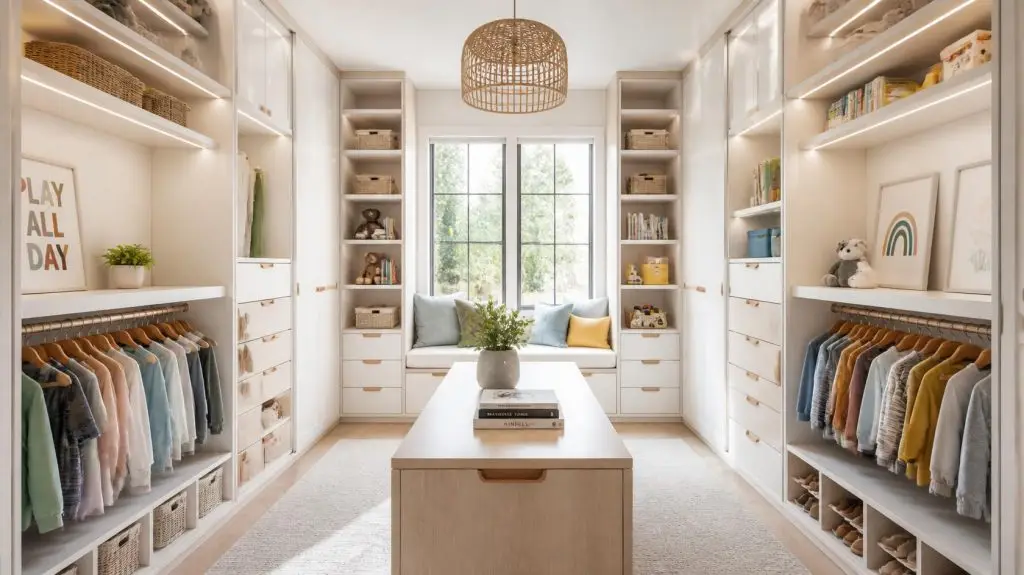
Frequently Asked Questions
What is the ideal height for a child's closet rod?
For toddlers and young children (ages 3 to 7), mount the primary hanging rod 30 to 36 inches above the floor. For older children (ages 8 to 12), raise the rod to 42 to 48 inches.
How do I make a small reach-in closet work for two kids sharing a room?
Divide the closet vertically down the middle into two symmetrical halves. Assign each child their own side with double-hanging rods, shoe cubbies, and labeled drawer storage.
Are custom built-in closets worth it for kids' rooms?
Yes, absolutely. High-quality adjustable built-ins grow with your child from toddlerhood through their teenage years, preventing the need to buy multiple dressers and adding built-in value to your home.
What is the best material for kids' closet shelving?
Smooth, painted MDF or durable melamine-coated plywood are the best choices. They are easy to wipe clean with a damp cloth, resist scratches from toy bins, and do not warp.
How can I keep my child's closet organized as they grow?
Schedule an annual closet refresh at the start of each school year. Raise hanging rods, adjust shelf heights, donate outgrown clothing, and swap out low toy bins for sweater or shoe storage.
What is the safest drawer hardware for children?
Use full-extension drawer slides equipped with soft-close dampers and integrated stop catches. This prevents drawers from slamming on fingers or pulling completely out of the cabinet frame.
Should I put doors on a child's closet?
Sliding pocket doors or open cabinet layouts work best for young children, as swinging bi-fold doors can pinch small hands and block access in tight bedrooms.
How do motion-sensor LED lights help in kids' closets?
Motion-sensor LED lighting strips turn on automatically when a child opens the closet door, ensuring they can see clothes clearly without struggling to reach a high wall switch.
Design Your Child's Ideal Space with Clear Closets
Are you ready to eliminate bedroom floor clutter, encourage your children to stay organized, and design an adaptable closet system that grows alongside your family? The design and master cabinetry team at Clear Closets is here to bring your ideas to life. From custom kids' closets and master walk-ins to pantries, laundry rooms, and home offices, we manage the entire project—from 3D spatial planning to clean, professional installation.
We proudly design and build custom storage systems throughout Alpharetta, Roswell, Johns Creek, and the greater Atlanta metro area. Contact the design experts at Clear Closets to schedule your complimentary custom design consultation today.