
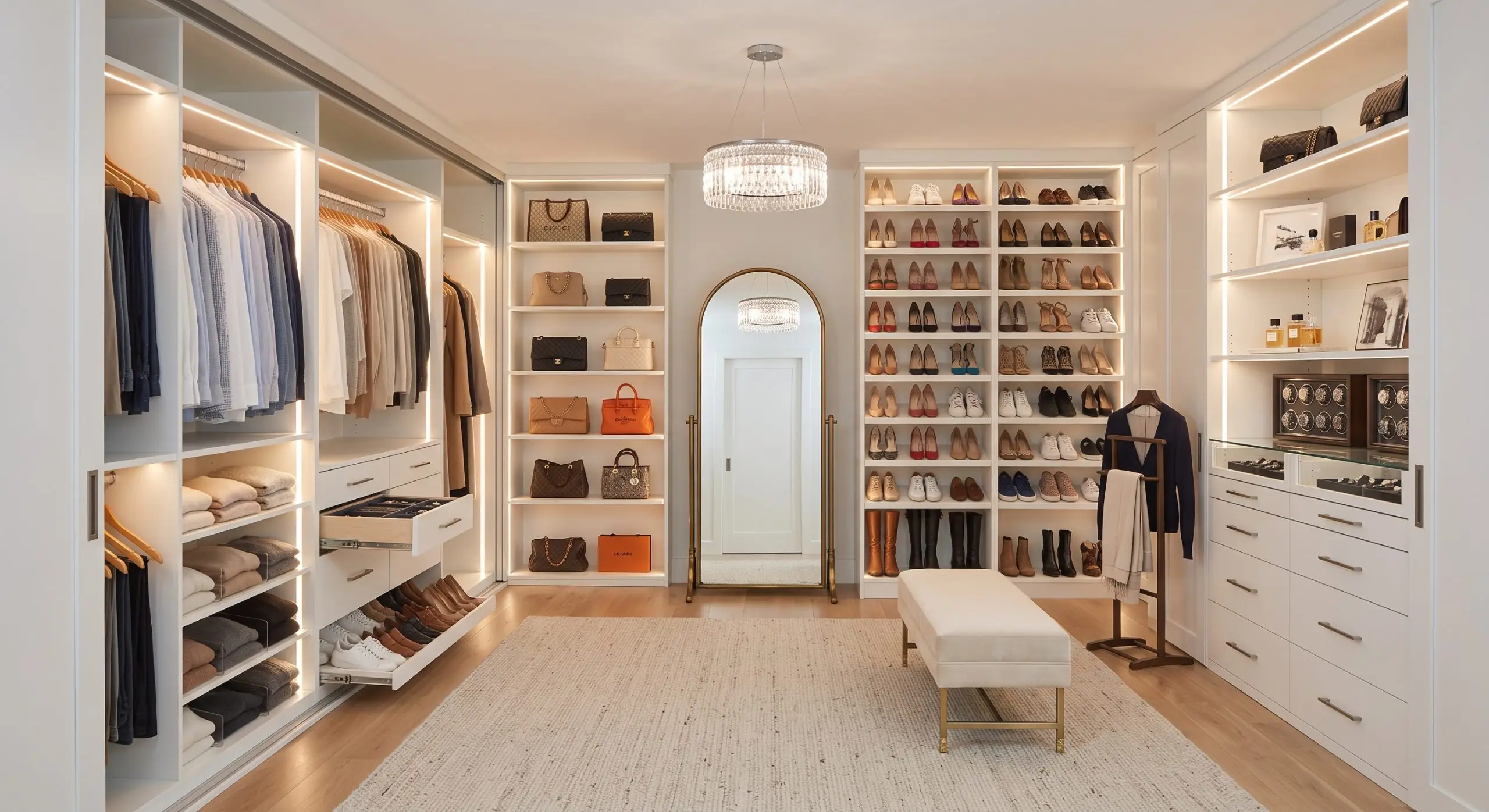

What is the Best Wardrobe Closet for Your Space?
A wardrobe closet is a dedicated storage system designed for hanging clothes, storing folded garments, and organizing footwear and accessories. Available as freestanding armoires, built-in systems, or custom walk-in configurations, a wardrobe closet maximizes vertical wall space through a strategic combination of clothes rods, adjustable shelving, integrated drawers, and specialized storage accessories.
What is a Wardrobe Closet and How Does It Work?
A wardrobe closet is an organized storage enclosure—either standalone furniture or a built-in architectural structure—specifically engineered to store apparel, shoes, and personal accessories. It functions by dividing vertical and horizontal space into targeted storage zones, utilizing hanging rods, adjustable shelves, pull-out bins, and drawers to optimize bedroom organization.
Unlike standard reach-in closets built behind drywall, a wardrobe closet offers flexible architectural integration. Historically evolving from simple wooden armoires to modern modular storage systems, the contemporary wardrobe closet serves as both a functional utility and a design centerpiece in master suites, guest rooms, and compact apartments.
Primary Core Components
- Hanging Zones: Double-hang rods for shirts and folded pants (38–42 inches high each) alongside full-length hanging zones (60–65 inches) for dresses and long coats.
- Adjustable Shelving: Rigid shelving units spaced 10 to 14 inches apart for sweaters, jeans, and storage bins.
- Integrated Drawers: Concealed storage for undergarments, socks, and delicate apparel to keep surfaces uncluttered.
- Specialized Hardware: Soft-close slides, belt/tie racks, valet poles, and pull-out shoe organizers.
What is the Best Type of Wardrobe Closet for Your Space?
The best wardrobe closet depends on your room dimensions, storage needs, and budget. Freestanding armoires work best for renters needing portability, built-in custom closets maximize awkward wall alcoves for homeowners, and open modular systems suit minimalist aesthetics or walk-in dressing rooms requiring easy visibility.
Choosing the right structure requires balancing permanent home improvements against flexible furniture solutions.
Freestanding Wardrobe Armoires vs. Built-in Custom Closets
| Feature / Metric | Freestanding Wardrobe Closet | Built-In Custom Wardrobe |
| Installation Time | 1–3 Hours (Assembly) | 1–3 Days (Professional) |
| Portability | High (Moveable between homes) | None (Permanent fixture) |
| Space Utilization | Standard dimensions; leaves gaps | 100% floor-to-ceiling customization |
| Average Cost Range | $300 – $2,500 | $1,500 – $10,000+ |
| Resale ROI | Low (Treated as furniture) | High (Adds home appraisal value) |
| Best For | Renters, guest rooms, older homes | Master suites, long-term homeowners |
Modular and Reach-in Closet Systems
For homeowners seeking an intermediate option between flat-pack furniture and high-end millwork, modular wardrobe closet systems offer an ideal middle ground. These wall-mounted or floor-supported tracks allow you to rearrange shelves, hanging bars, and shoe racks as your seasonal wardrobe evolves.
How Much Does a Wardrobe Closet Cost?
A wardrobe closet costs between $200 for basic DIY wire or laminate kits and over $10,000 for luxury custom solid-wood built-ins. Most homeowners spend between $1,200 and $3,500 for a professionally designed modular or semi-custom wardrobe system including installation, hardware, and soft-close accessories.
Understanding the primary cost drivers helps you budget effectively without compromising structural durability.
+-----------------------------------------------------------------------+
|                       WARDROBE CLOSET COST SPECTRUM                   |
+-----------------------------------------------------------------------+
| $200 - $600     | Entry-Level DIY Modular / Wire Kits                 |
| $600 - $1,800   | Mid-Grade Melamine & Laminate Freestanding Systems   |
| $1,800 - $4,500 | Professional Semi-Custom Built-In Storage           |
| $4,500 - $12,000| High-End Solid Wood / Walk-In Master Wardrobes        |
+-----------------------------------------------------------------------+
Key Factors Influencing Total Price
- Materials: Thermofused laminate and particleboard sit at the lower price threshold, whereas solid hardwoods (oak, walnut, cherry) and powder-coated steel hardware significantly raise investment costs.
- Dimensions & Depth: Standard depth for hanging clothes is 24 inches. Deep custom units require more raw materials and structural support.
- Accessories: Integrated LED strip lighting, velvet-lined jewelry drawers, pull-out mirrors, and acrylic organizers increase overall component expenses.
- Labor & Assembly: Professional carpentry and installation typically add 20% to 35% to total material costs.
How Do I Choose and Plan the Ideal Wardrobe Layout?
To choose the ideal wardrobe layout, measure your room's wall dimensions, audit your current clothing collection, and apply the 70/30 storage rule: dedicate 70% of space to daily active clothing and 30% to seasonal, bulk, or specialized storage. Ensure a minimum depth clearance of 24 inches.
Follow this step-by-step planning process to avoid layout errors and maximize space efficiency:
1.Conduct an Inventory Audit:Count hanging items vs. folded garments.
Group your clothing into four categories: short hang (shirts, jackets), long hang (dresses, coats), folded items (sweaters, t-shirts), and accessories (shoes, bags, ties).
2.Measure Space Constraints Accurately:Account for door clearance and baseboards.
Record ceiling height, wall width, and depth. Verify that closet doors or pull-out drawers won't obstruct bed frames or room passageways.
3.Establish Vertical Hanging Zones:Standard heights prevent garment dragging.
Set double-hang rails at 40 inches and 80 inches off the floor. Reserve a full-length single-hang section at 66 inches from the floor for long dresses or coats.
4.Incorporate Integrated Drawer Units:Place drawers between waist and chest level.
Position drawers between 24 and 48 inches from the floor for comfortable everyday access without excessive bending or reaching.
What Are Common Wardrobe Closet Planning Mistakes to Avoid?
The most common wardrobe closet mistakes include underestimating depth clearances, neglecting long-hang spaces, ignoring vertical ceiling height, and relying on static shelving. Failing to leave a full 24-inch interior depth causes suit jacket sleeves to get caught and crumpled in sliding or hinged doors.
Experienced organizers and closet designers regularly fix layout errors caused by improper pre-planning:
- Shallow Cabinet Depth: Designing units under 22 inches deep forces coat hangers to rest at an angle, causing clothes to jam against doors.
- Over-Allocating Full-Length Hanging: Dedication of too much space to long garments wastes valuable vertical real estate. Most modern wardrobes require only 10% to 15% long-hang space; the rest should use double-hang configurations.
- Dark Corners and Zero Visibility: Deep shelves without proper visibility make items hard to find. Incorporating clear dividers or transparent drawer fronts helps keep small items visible and easy to retrieve.
- Fixed, Non-Adjustable Shelving: Permanently fixed shelves prevent you from reconfiguring your closet when switching between bulky winter boots and lightweight summer footwear.
Are Custom Built-In Wardrobes Worth the Investment?
Custom built-in wardrobes are worth the investment for homeowners seeking long-term organization, tailored spatial efficiency, and increased property resale value. While priced higher than freestanding units, custom builds eliminate wasted corner space, seamlessly fit room contours, and deliver higher durability through quality materials.
Real-World Case Study: Master Bedroom Optimization
Consider a standard 1950s suburban home featuring a narrow 4-foot reach-in closet. The homeowners struggled with overflowing dressers and seasonal clothing piles.
- The Problem: Poor vertical space utilization left 3 feet of dead space above the top clothing bar.
- The Solution: A floor-to-ceiling semi-custom wardrobe system installed along an underutilized bedroom wall, featuring integrated sliding doors and clear acrylic drawers.
- The Result: Total hanging capacity doubled, two external dressers were removed from the bedroom floor plan, and usable floor area increased by 18%.
Expert Organization Hacks for Maximum Efficiency
Maximize wardrobe efficiency by adopting slim velvet hangers to increase rod capacity by 30%, organizing apparel by length and color gradient, using acrylic dividers to keep sweater stacks straight, and placing off-season garments in dust-proof top-shelf bins.
- Implement the 'One-In, One-Out' Principle: Keep your closet balanced by donating or selling an older piece of clothing whenever you add a new item.
- Group by Category and Shade: Arrange garments first by type (sleeveless, short-sleeve, long-sleeve, outerwear) and then by color from light to dark. This speeds up morning outfits and reveals duplicate purchases.
- Utilize Door Backs and Side Panels: Add adhesive hooks or narrow racks to internal door panels for hanging scarves, belts, or everyday bags.
- Incorporate Clear Accessories: Replacing opaque fabric bins with clear drawers or transparent shelving bins makes it easy to see stored items, keeping accessories visible and accessible.
Frequently Asked Questions About Wardrobe Closets
What is the standard depth of a wardrobe closet?
The standard depth for a wardrobe closet is 24 inches (61 cm) outer depth, providing at least 22 inches of interior clearance. This depth allows standard clothing hangers to hang straight without crushing garment sleeves against back walls or front doors.
Can you put a wardrobe closet in a room without a built-in closet?
Yes. Installing a freestanding wardrobe armoire or wall-anchored modular closet system is the standard solution for bedrooms lacking built-in drywall closets.
How do I prevent clothes from smelling musty inside a wardrobe?
Ensure adequate air circulation by avoiding over-packing garments. Use cedar blocks or charcoal moisture absorbers, and periodically air out the cabinet by leaving doors open for an hour.
What is the difference between an armoire, a wardrobe, and a wardrobe closet?
While the terms are often used interchangeably, an armoire typically refers to a ornate, freestanding wooden cabinet with doors. A wardrobe is a broader term covering any free-standing apparel cabinet, while a wardrobe closet encompasses both freestanding units and built-in modern storage systems.
Is double hanging better than single hanging space?
Double hanging doubles your available linear storage space for short garments like t-shirts, button-downs, skirts, and folded trousers. Single hanging is only necessary for long coats, dresses, and jump suits.
Should wardrobe closet doors slide or swing open?
Sliding doors are ideal for tight bedrooms where floor space in front of the wardrobe is restricted. Hinged swinging doors allow full, simultaneous access to the entire interior at once, provided you have 30+ inches of front clearance.
How high should wardrobe shelves be placed?
Adjustable shelf heights should range from 10 to 12 inches apart for folded t-shirts and jeans, and 14 to 16 inches for bulky winter knits, boots, and handbag storage.
How do I lighting-optimize a deep wardrobe closet?
Install battery-powered or hardwired motion-sensor LED light strips along side panels or beneath shelves. Target 3000K–4000K neutral light color temperatures for accurate clothing color depiction.
Optimize Your Living Space
Creating an organized home starts with smart, adaptable storage solutions tailored to your unique lifestyle. If you are looking to streamline your bedroom clutter, explore clear storage organization products and tailored home layout tools at Clear Closets to build a functional, clutter-free space today.