

Custom Bookshelf Design: Elevating Home Library Systems
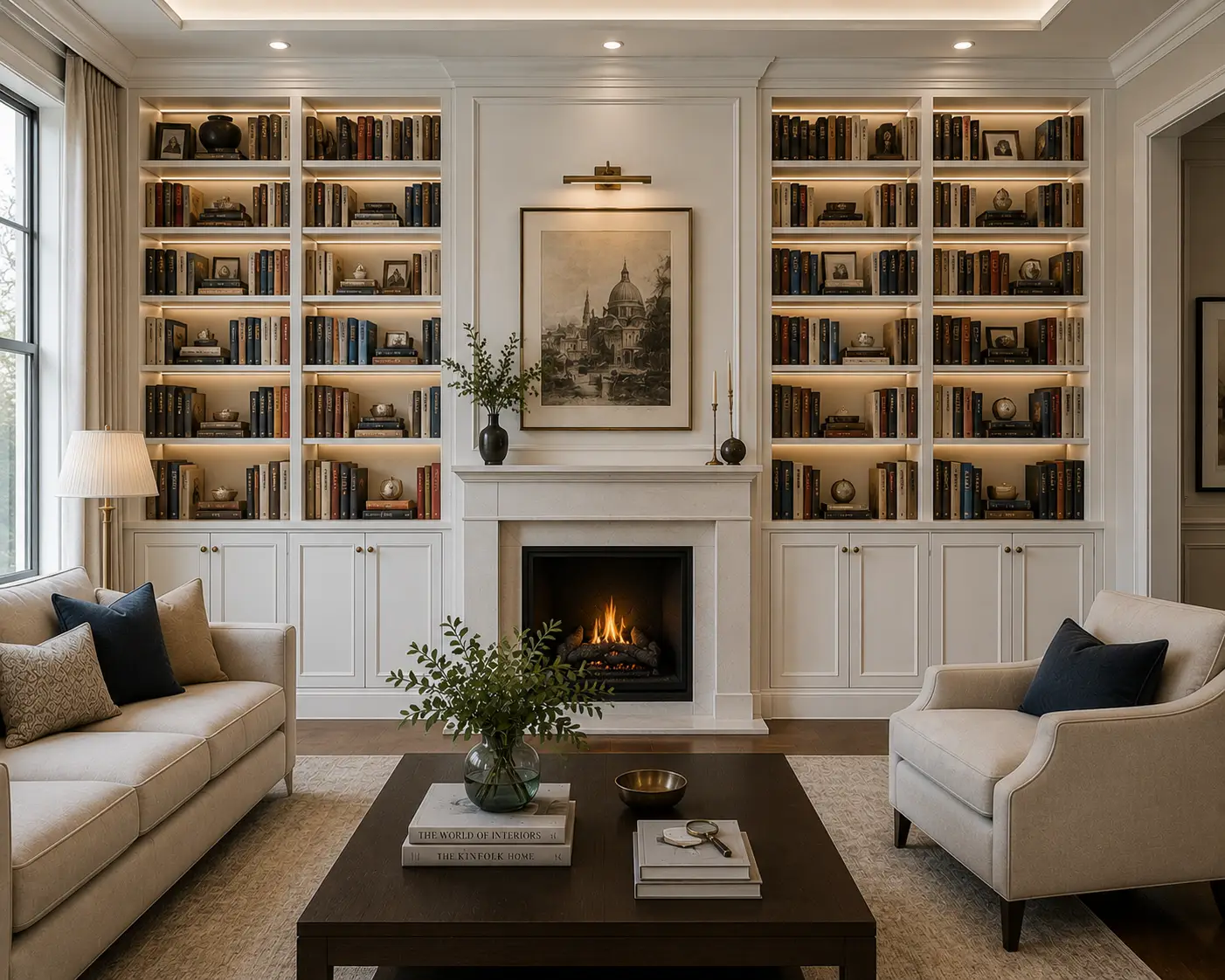
A custom bookshelf is a tailored, built-in shelving system designed to fit the exact physical dimensions and architectural style of a specific wall or room. Unlike mass-produced freestanding units, a custom-designed bookcase utilizes premium hardwoods, architectural trims, integrated LED accent lighting, and specialized millwork to transform blank walls into functional, high-value storage galleries and structural design focal points.
Table of Contents
What Exactly is a Custom Bookshelf?
A custom bookshelf is a bespoke architectural millwork installation crafted to maximize vertical space while aligning with your home’s existing woodwork and design aesthetic. Far more than basic storage, these systems are engineered to carry significant weight, house integrated media components, conceal wiring, and establish a permanent, high-end focal point in residential spaces.
When you transition from ready-to-assemble flat-pack furniture to custom cabinetry, the difference in quality and performance is immediately clear. Standard shelves frequently bow, sag, or pull away from drywall over time when loaded with heavy hardcovers or art pieces.
A custom bookshelf is built into the home’s actual framing. This integration ensures structural stability and provides a seamless, high-end look by eliminating gaps between the unit and your walls, floor, or ceiling. It can also be designed to run continuously around doors and windows to frame architectural features beautifully.
Many homeowners choose custom bookshelves to create a functional home library that reflects their reading habits, design preferences, and available space. Whether you are planning a dedicated library room or incorporating shelving into a living room or home office, custom built-ins provide a timeless storage solution.
What are the Main Benefits of a Custom Bookshelf System?
Investing in a custom bookshelf maximizes awkward wall configurations, dramatically improves organizational efficiency, and provides structural longevity. Unlike generic modular shelves, custom built-ins act as permanent architectural upgrades that elevate a property's market value, customize room proportions, and securely display highly cherished collections.
- Flawless Architectural Integration: Custom units run floor-to-ceiling, wrap around structural pillars, and span wall recesses that standard retail furniture cannot fit.
- Engineered Weight Capacities: Professional builders calculate structural loads to prevent sagging. This is done by selecting appropriate shelf thicknesses, spans, and materials based on what you plan to store.
- Integrated Cord and Wire Management: Behind-the-scenes routing channels completely hide cords, power strips, and smart-home components from plain sight.
- Property Equity Growth: High-quality built-in bookcases are highly sought-after features that appraise as permanent fixtures, directly boosting home equity.
How Much Does a Custom Bookshelf Cost?
A professional custom bookshelf typically costs between $3,000 and $15,000+, depending on the wall dimensions, chosen materials, and design details. While simple MDF systems with paint-grade finishes sit on the lower end of the pricing spectrum, extensive hardwood libraries with integrated lighting and trim demand premium investments.
To help you budget for your home storage project, here is an overview of standard pricing categories:
| Project Scope | Approximate Cost | Ideal Materials & Included Features |
| Luxury Floor-to-Ceiling Library | $12,000 – $30,000+ | Floor-to-ceiling solid cherry, oak, or walnut; mitered crown molding; integrated LED accent strip channels; sliding library ladder track. |
| Custom Built-In Bookshelves | $4,000 – $12,000 | High-density furniture-grade MDF or cabinet-grade plywood with paint-grade lacquer; adjustable shelves; lower cabinet storage doors. |
| Decorative Wall Niches & Shelving | $2,500 – $5,000 | Accent wall built-in shelving; basic crown molding matching; open-face design; heavy-duty hidden steel brackets. |
How Do I Choose Between Different Materials?
Choosing the best material depends on whether you prefer a painted finish or a natural wood-grain look. Furniture-grade MDF is the ideal, warp-free choice for clean, painted designs, whereas hardwood veneers and solid woods are necessary to achieve high-end, stained, or natural-grain architectural aesthetics.
MDF vs. Plywood vs. Solid Hardwoods
Understanding the core materials used in cabinetry is critical before kicking off your custom project:
- Furniture-Grade MDF (Medium-Density Fiberboard): Highly stable, completely flat, and entirely free of natural knots. It expands and contracts minimally with temperature changes, making it the perfect substrate for a smooth, painted finish.
- Cabinet-Grade Plywood: Constructed from layered wood veneers, this material is extremely strong and lightweight. It holds screws tightly and is the industry standard for structurally demanding shelf spans that will be finished with wood-veneer banding.
- Solid Hardwoods (Oak, Walnut, Maple): The ultimate choice for luxurious, stained built-ins. Solid hardwoods offer rich natural grains, classic warmth, and unmatched strength, though they require careful environmental control to prevent seasonal warping.
What Common Mistakes Should I Avoid with Custom Bookcases?
The most critical mistakes when designing custom shelves are calculating shelf spans poorly, neglecting baseboard and molding alignment, and ignoring accessory depth. Failing to plan shelf depths for deep art volumes or ignoring light switch placement often results in costly post-installation modifications.
Keep these design rules in mind to ensure your project runs smoothly:
- Ignoring the "Sagulator" Limit: Unsupported plywood shelves should rarely exceed 32 to 36 inches in length if they are carrying heavy books. Spanning too far without central support or thicker materials leads to unsightly bowing.
- Forgetting Baseboard Details: Do not install built-ins directly over existing baseboards. The baseboards must be carefully cut and wrapped around the base of the new unit to make it look original to the home.
- Shallow Shelf Depths: Standard novels need only 9 to 10 inches of depth, but large art books, binders, and decorative bowls require 12 to 14 inches. Always plan your shelf depth based on your actual inventory.
- Blocking Outlets and HVAC Vents: Always work with a professional to reroute floor vents and extend wall outlets directly into the toe-kick or face-frames of your custom unit.
Practical Steps to Design and Style Your New Shelving
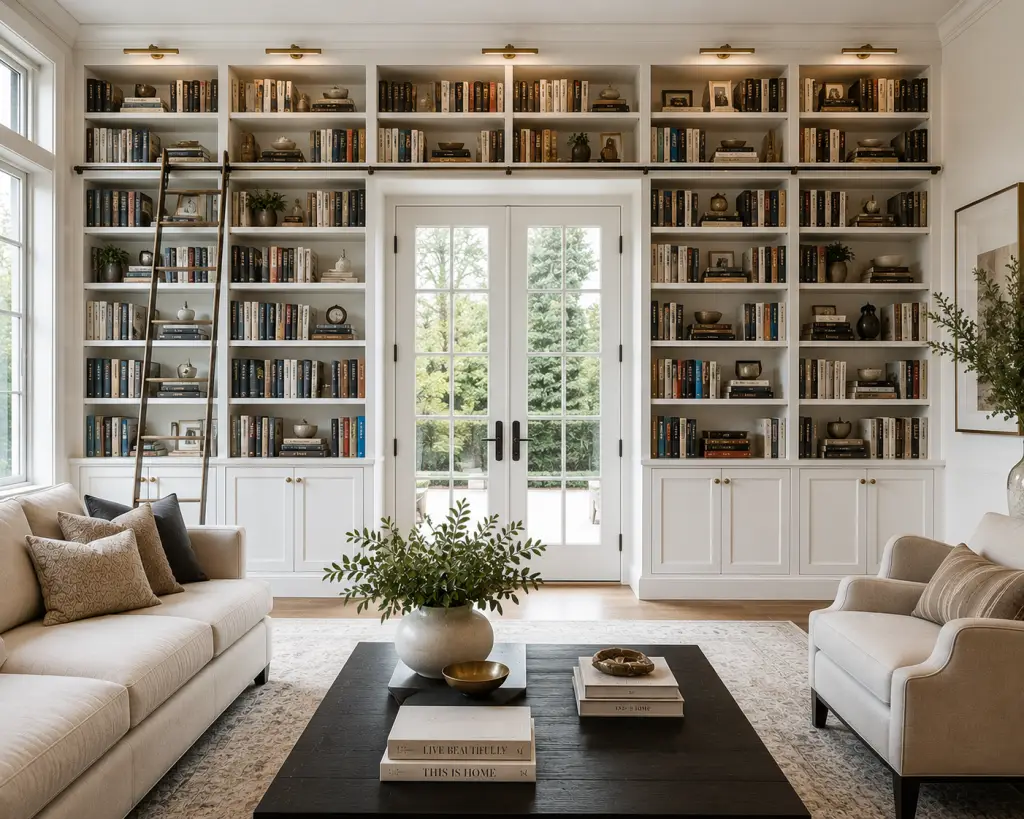
Creating a balanced built-in shelf system requires mixing vertical book stacks, horizontal book arrangements, and open negative space. Start by placing larger, heavier items on the lower shelves, keeping frequently referenced volumes within reach, and utilizing the top third of the shelving for lighter, decorative accents.
To build an attractive and functional wall library, try utilizing these step-by-step styling steps:
- De-clutter and Categorize: Sort your collection by size, color, or genre. Keep only the pieces that bring beauty or utility to your daily life.
- Anchor the Bottom: Use closed lower cabinetry to store board games, blankets, and loose paperwork. This grounds the structure visually and physically.
- Use the Rule of Thirds: Dedicate roughly one-third of your shelving to books, one-third to art pieces and family photos, and leave the remaining third as open, restful negative space.
- Incorporate Layering: Place a framed piece of art at the back of a shelf, and slightly overlap it with a small vase or a stack of horizontally arranged books in front.
- Utilize Task and Accent Lighting: Mount brass picture lights on the headers or route continuous LED channels along the undersides of shelves to highlight your favorite items.
These same design principles apply whether you are styling a built-in bookcase or planning a custom home library. A well-designed home library balances storage, display space, lighting, and comfortable seating to create a room that is both functional and inviting.
Expert Tips for Designing a Long-Lasting Bookcase
- Always Specify Adjustable Pin Shelves: While fixed shelves look clean, adjustable pin holes hidden behind face frames give you the flexibility to adapt to changing collection sizes over the years.
- Plan for a Library Ladder Early: If you are building a system over nine feet tall, ensure the upper header structure is heavily reinforced to anchor the weight and lateral force of a sliding library ladder track.
- Install Backing Material: Instead of letting the drywall show through the back of your shelves, specify a finished beadboard or contrasting wood-veneer backing to give the system depth and contrast.
- Pre-wire for Future Tech: Even if you do not have built-in lighting today, run low-voltage conduit lines during framing so you can easily install smart LED setups in the future.
If you are designing a dedicated home library, consider leaving enough floor space for comfortable seating, layered lighting, and future collection growth. Built-in shelving should complement the room's architecture while providing flexible storage for books, décor, and personal collections.
Create a Functional Home Library with Custom Bookshelves
A well-designed custom bookshelf does more than organize books—it helps create a comfortable and functional home library tailored to your lifestyle. Whether you're designing a dedicated library or adding storage to a living room or home office, custom bookshelf maximize every inch of available space while giving your home a polished, built-in look.
Combine Open Shelving with Smart Storage
The most practical custom bookshelves combine open shelving with concealed storage. Lower cabinets keep office supplies, electronics, and seasonal items out of sight, while open shelves provide room for books, artwork, and decorative accents. This balanced approach keeps your home library organized without sacrificing style.
Add a Built-In Study Desk
Many homeowners choose to integrate a study desk into their custom bookshelves. A built-in workspace creates the perfect spot for reading, studying, or working from home while maintaining a seamless, furniture-free appearance. This solution is especially popular in home offices and multifunctional rooms.
Layer Your Lighting
Great lighting makes a home library more inviting and easier to use. Combine recessed ceiling lights with integrated LED shelf lighting to brighten book displays and architectural details. Adding a desk lamp or wall sconce near the study desk creates comfortable task lighting for everyday use.
Design a Comfortable Reading Nook
Every home library benefits from a cozy reading nook. An upholstered chair, a small side table, and warm lighting can transform an unused corner into a relaxing place to enjoy your favorite books. Placing the seating area beside your custom bookshelf keeps everything within easy reach while making the room feel welcoming and complete.
Plan for Long-Term Flexibility
Your book collection will likely grow over time, so your custom bookshelves should grow with it. Adjustable shelving, durable materials, and flexible built-in bookshelves provide lasting storage while adapting to changing needs. A thoughtfully designed system continues to add value, functionality, and timeless style for years to come.
Frequently Asked Questions
What is the standard depth of a custom bookshelf?
The standard shelf depth is 12 inches. This depth easily fits about 95% of standard books, novels, novels, and decorative objects. If you plan to display oversized coffee table books or massive binders, increase the depth of those specific shelves to 14 or 16 inches.
Is it cheaper to build your own bookshelf or hire a professional?
While building a DIY bookshelf using modular storage cubes is cheaper upfront, it lacks the longevity, seamless architectural integration, and weight capacity of custom cabinetry. Hiring professionals ensures structural safety, precise molding integration, and a flawless finish that adds tangible value to your property.
How do I prevent bookshelf shelves from sagging over time?
To prevent sagging, keep shelf spans under 36 inches for 3/4-inch plywood or MDF. If you need longer spans, reinforce the front edge of each shelf with a 1.5-inch solid wood face frame, or increase the shelf substrate thickness to a robust 1 inch.
Can a custom bookshelf block a window or doorway?
We do not recommend blocking natural light or walkways. Instead, have your shelving custom-designed to gracefully frame the window or archway. This creates a charming "bridge" effect that turns structural transitions into gorgeous, cozy design features.
How do I hide unsightly cables on a media bookshelf?
Your design should include a hollow chase-way or double-backing system behind the shelves. This allows cords to pass vertically from upper shelves down to lower cabinet outlets without ever being visible from the front of the unit.
What is the best wood paint or stain for custom built-ins?
For painted units, professional cabinet shops use industrial-grade polyurethane or lacquer coatings rather than standard latex wall paint. These specialized finishes dry to an incredibly hard, non-tacky finish that resists scratching, blocking, and sticking when heavy books are moved across them.
Do custom bookshelves require wall anchoring?
Yes, absolutely. Any tall shelving unit must be anchored securely into the wood studs behind the drywall using heavy-duty structural screws. This prevents tipping hazards and ensures the unit remains perfectly plumb and level, even when fully loaded.
Can I incorporate desk space into a custom wall unit?
Yes, this is highly popular. Integrating a floating desk surface at a comfortable height of 30 inches within your custom shelving creates a highly functional home office nook that blends beautifully with the rest of your room's design.
Are built-in bookshelves better for a home library?
Built-in bookshelves maximize storage, create a seamless architectural appearance, and can be fully customized to fit your room, making them one of the best options for a custom home library.
Can a home library be combined with a home office?
Yes. Many homeowners combine a home library with a home office by incorporating built-in bookshelves, custom desks, closed storage, and layered lighting into one multifunctional space.
Design Your Perfect Storage System with Clear Closets
Ready to elevate your home with beautiful, tailored storage solutions? The design and engineering team at Clear Closets specializes in bringing highly functional, custom-milled spaces to life. From boutique walk-in closets and organized home offices to elegant custom bookshelves, we work closely with you to transform your home's unique layout into a functional work of art.
We proudly serve homeowners in Alpharetta, Roswell, Johns Creek, and throughout the Atlanta metro area. Contact the design experts at Clear Closets to schedule your complimentary custom design consultation today.