
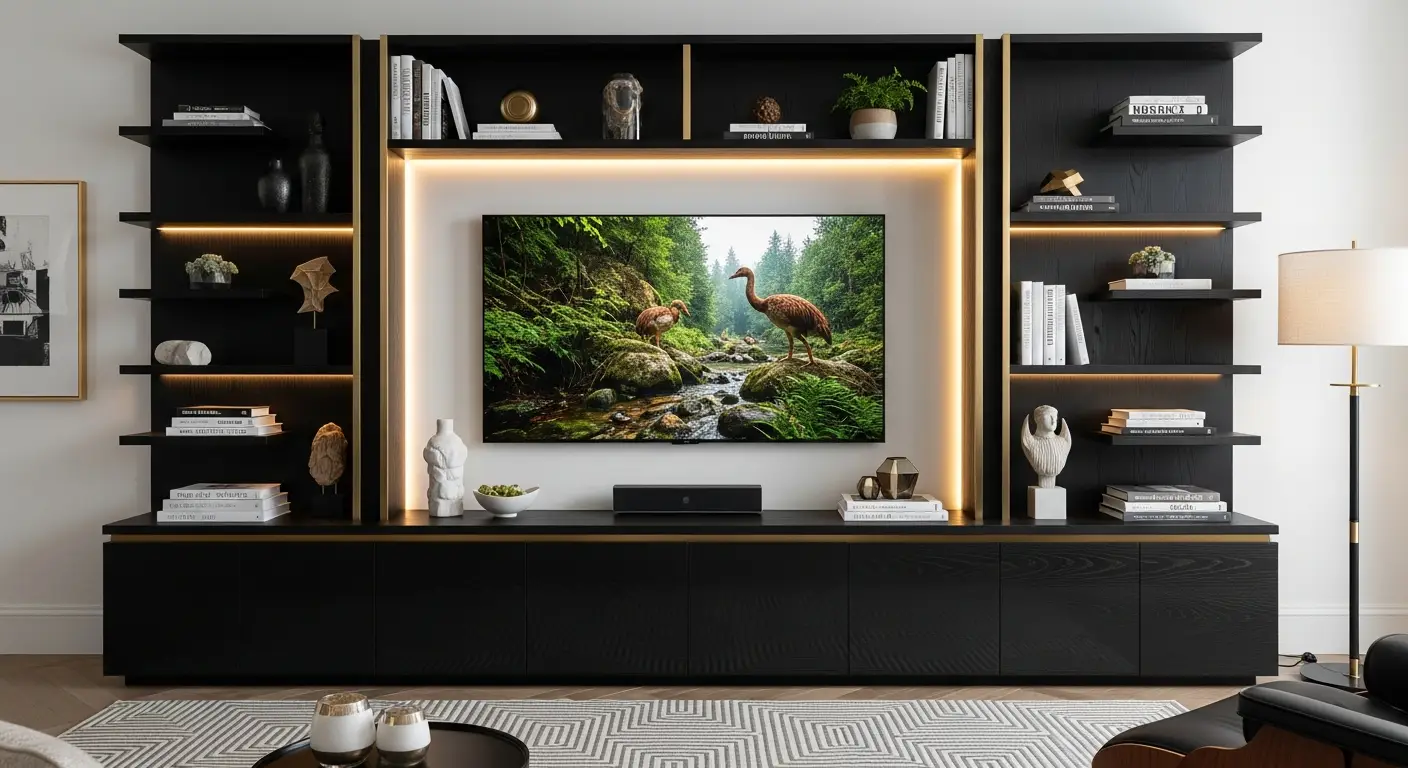

Custom Entertainment Centers Designed for Modern Homes
A custom entertainment center is a tailored media wall and cabinetry system engineered to house a television, conceal wiring, and store audio-visual equipment. Unlike generic television stands, these units integrate furniture-grade custom cabinetry, ventilated shelving, and smart cord-routing channels to transform your living room wall into a highly organized, cohesive design centerpiece that maximizes home storage.
What Exactly is a Custom Entertainment Center?
A custom entertainment center is a bespoke media wall designed to fit the exact dimensions of your living space while matching your home's architectural style. These integrated systems combine sturdy wall frames with customized cabinetry to organize media players, streaming devices, soundbars, and decorative accessories into a clean, unified layout.
The living room is the primary gathering space in the modern home. Because the television and its associated media components usually sit at the physical center of this room, how you present them has a major impact on your entire home's interior design. A freestanding retail media console often leaves you looking at a tangled web of power cords, dusty components, and visible power strips.
Upgrading to a custom entertainment center turns a blank wall or a pair of awkward fireplace alcoves into a highly functional focal point. By utilizing professional space planning, designers can build custom cabinetry that frames your television beautifully, completely conceals messy cables, and provides dedicated drawers for games, blankets, and remotes.
What are the Main Benefits of Custom Media Built-Ins?
Installing custom entertainment centers maximizes your room's vertical storage footprint, eliminates cord clutter, and protects fragile electronics from overheating. These permanent structural additions match your home’s existing moldings to create a cohesive design flow that directly elevates your property's market appeal and long-term resale value.
- Flawless Space Planning: Custom cabinetry runs from wall-to-wall or floor-to-ceiling, transforming wasted wall cavities and alcoves into useful storage space.
- Completely Hidden Cord Management: Integrated wire chases, cable grommets, and double-backed panels route power cords and HDMI cables completely out of sight.
- Protection for Expensive Equipment: Dedicated shelves keep delicate media consoles, audio receivers, and streaming devices organized, clean, and elevated away from dust and pet hair.
- Unified Architectural Flow: Custom units can be built to match your home's existing trim, utilizing details like shaker cabinets and decorative crown molding to look original to the home.
How Much Does a Custom Entertainment Center Cost?
A custom entertainment center typically costs between $4,000 and $15,000+, depending on the wall dimensions, material choice, and custom configurations. While simple floating media consoles sit at the lower end of the range, large, full-wall units with built-in fireplaces and accent lighting occupy the premium tier.
To help you budget for your next living room upgrade, let us break down the typical cost structures:
| Configuration | Average Price Range | Key Materials & Built-In Features |
| Custom Media Wall | $8,000 – $20,000+ | Full-wall footprint; premium natural white oak or walnut cabinetry; built-in electric fireplace; integrated LED lighting. |
| Built-In Entertainment Center | $4,000 – $10,000 | Painted MDF cabinetry or sturdy cabinet-grade plywood construction; closed lower storage; full-extension drawer slides. |
Floating Entertainment Center | $1,500 – $4,500 | Wall-mounted horizontal console; smooth wood veneer or painted lacquer finish; soft-close flip-down doors; built-in cable management. |
MDF vs. Plywood: What is the Best Cabinet Material?
Selecting the best material depends on your preferred design style, budget, and durability needs. High-density MDF is the gold standard for smooth, painted finishes because it resists cracking, while multi-layered cabinet-grade plywood is the ideal structural choice for holding heavy-weight loads under gorgeous wood veneers.
Core Cabinetry Materials Compared
When planning your custom cabinetry, the underlying materials determine both the strength and longevity of your shelves:
- Medium-Density Fiberboard (MDF): Made from fine wood fibers and resin pressed under high pressure, MDF is perfectly flat, stable, and uniform. It does not warp or split with seasonal humidity changes, making it the perfect choice for a flawless, painted finish on cabinet doors, drawer fronts, and decorative shaker cabinets.
- Cabinet-Grade Plywood: Constructed from thin, cross-laminated layers of wood veneer, plywood is exceptionally strong and holds screws tightly. It resists bowing under heavy weight, making it the ideal structural choice for long shelves, cabinet box frames, and drawers.
- White Oak and Walnut: These premium hardwoods are highly popular in luxury homes. White oak provides a bright, modern, and highly durable Scandinavian look, while walnut brings a deep, rich, and classic warmth to your home's millwork.
What Common Entertainment Center Design Mistakes Should You Avoid?
The most frequent mistakes in media unit design are calculating future TV size upgrades poorly, neglecting proper ventilation for hot electronics, and blocking outlet access. Failing to use heavy-duty wall anchors or forgetting to route wire pathways behind backing panels leads to saggy shelves and exposed cords.
Make sure to avoid these critical design and structural pitfalls:
- Designing Only for Your Current TV: Televisions get larger and cheaper every year. If you build a tight, custom wood alcove around a 55-inch TV, you will not be able to upgrade to a 65-inch or 75-inch screen later without tearing down your cabinetry. Always leave ample breathing room around the TV opening.
- Trapping Hot Electronics in Closed Cabinets: Game consoles, cable boxes, and home theater receivers generate a massive amount of heat. If you trap them inside unventilated wood cabinets, they can overheat and break down. Always include louvred doors, open wire shelves, or hidden cooling fans.
- Forgetting Access to Wall Outlets: Never block wall outlets with a heavy, permanent wooden back panel. Ensure your cabinetry design includes cutouts, removable backing panels, or magnetic covers so you can easily plug in new devices or reset your router.
- Using Weak, Indoor-Grade Drawer Slides: Heavy gaming controllers, soundbars, and Blu-ray collections can weigh a lot. Ensure your lower media drawers are equipped with high-quality, full-extension drawer slides rated for heavy weight loads.
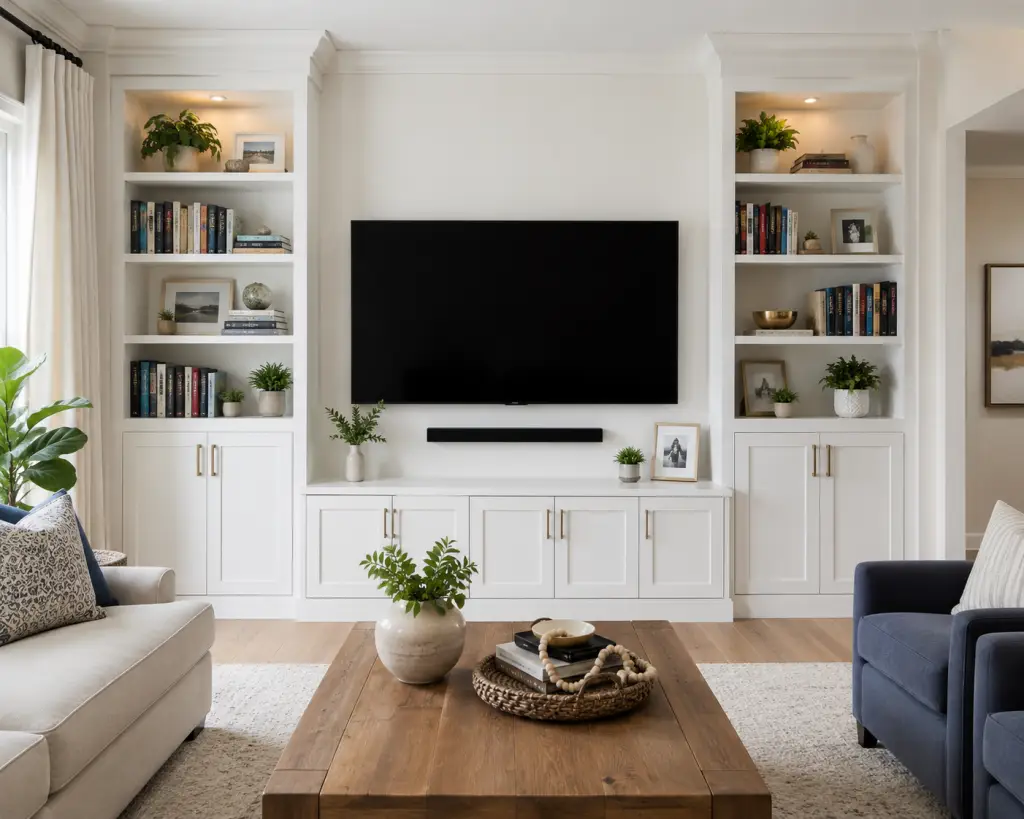
How to Successfully Implement a Custom Media Wall Layout
Designing a successful custom media unit requires dividing your wall space into distinct zones for display, active media gear, and concealed storage. Start by mapping out your television's viewing height, placing lower cabinets on soft-close hinges, routing hidden wire channels, and wrapping the top with elegant moldings.
To build a reliable and organized entertainment wall, use this five-step design process:
1.Audit Your Electronics and Decor:Step 1.
Count and measure your game consoles, soundbars, streaming boxes, books, and decorative vases. This physical inventory determines the ratio of closed cabinets to open shelves in your final layout.
2.Map the Perfect TV Viewing Height:Step 2.
The center of your television screen should sit at comfortable eye level when you are seated on your couch—typically 39 to 42 inches above the finished floor. Avoid mounting your TV too high, as this causes neck strain over long viewing periods.
3.Construct the Lower Storage Base:Step 3.
Build a sturdy lower cabinet console using high-density plywood. This base should house your active media gear and include deep drawers on smooth drawer slides to hide loose cords, game controllers, and manuals.
4.Configure the Upper Shelves and Wire Pathways:Step 4.
Mount open shelves or accent backing panels above the console. Route all power cords and HDMI lines through hidden channels behind the backing panels directly to the wall outlets below.
5.Finish with Architectural Trim:Step 5.
Finish the top edge of your wall unit with elegant crown molding to blend the cabinetry seamlessly with your living room ceiling and existing home trim.
Expert Styling and Wire-Management Tips for Your Living Space
- Install Low-Voltage LED Strip Lights: Run warm LED lighting channels behind your television or along the undersides of open shelves. This provides gorgeous ambient light that reduces eye strain in dark rooms.
- Upgrade to Shaker Style Doors: Use classic shaker cabinets for your lower storage doors to add a touch of traditional craftsmanship that works beautifully in both modern and classic homes.
- Mount Your TV on an Articulating Arm: Instead of mounting your television flat to the back panel, use an adjustable wall mount. This allows you to pull the TV out or angle it toward the kitchen or dining table when needed.
- Use Fabric Panels for Speakers: If you have large surround-sound speakers, hide them inside your custom cabinets using acoustic fabric panel doors. This keeps your speakers completely invisible without dampening the sound quality.
Frequently Asked Questions
What is the ideal depth for a custom tv unit?
The standard depth for a custom media console or lower cabinet system is 16 to 18 inches. This depth provides plenty of room for deep cable boxes, audio receivers, and game consoles, while leaving space behind them for ventilation and wire connections.
How high should my TV be mounted on a custom wall unit?
The middle of your television screen should be mounted at comfortable eye level, which is typically 39 to 42 inches from the floor for a standard living room couch. If you are mounting your TV above a fireplace, you may need to tilt the screen slightly downward.
Can I build a custom tv unit next to a fireplace?
Yes, absolutely. Building custom bookshelves and media cabinets on either side of a fireplace mantel is one of the most popular ways to create a symmetrical, high-end focal point in a living room.
Are custom built-in entertainment centers worth the investment?
Yes. They dramatically reduce daily living room clutter, completely hide messy cords, protect expensive electronics, and act as highly desirable built-in features that directly increase a home's overall aesthetic and resale value.
How do I prevent my electronics from overheating inside closed cabinets?
You can incorporate small, silent exhaust fans inside your cabinets, leave the cabinet back open to allow air to circulate against the wall, or use slatted wood doors or metal grilles instead of solid cabinet fronts.
What is the best wood to pair with a custom TV unit?
Premium hardwoods with rich, natural wood grains like walnut and white oak are the most popular choices for modern media walls. For painted finishes, industrial-grade MDF is the gold standard because it provides a perfectly smooth, warp-free surface.
How do I hide a TV when it is not in use?
You can mount your television behind custom sliding wood panels, hide it inside a cabinet with a motorized TV lift, or use a specialized television (like the Samsung Frame) that displays high-resolution art when turned off.
Should I choose floating cabinets or a floor-to-ceiling media wall?
Choose a floating console if you want a sleek, minimalist, and modern look in a smaller room. If you need maximum storage for books, decorations, and toys in a large living room, a floor-to-ceiling media wall is the best option.
Elevate Your Living Space with Clear Closets
Are you ready to clear out living room clutter, completely hide messy cords, and create a gorgeous focal point for your family gatherings? The design and master cabinet-making team at Clear Closets is here to help you bring your dream media wall to life. From custom TV units and living room bookshelves to beautiful walk-in closets, pantries, and laundry systems, we handle every step of the project—from initial 3D design sketches to professional, clean installation.
We proudly design and install premium home storage solutions throughout Alpharetta, Roswell, Johns Creek, and the greater Atlanta metro area. Contact the design experts at Clear Closets to schedule your complimentary custom design consultation today.