


How to Get Rid of Things and Live Clutter-Free
By Clear Closets Editorial Team
Clutter is a silent thief of peace. It crowds our physical spaces, drains our mental energy, and distracts us from the beauty of our homes. Yet, despite knowing this, the physical process of getting rid of stuff can feel incredibly daunting. It is rarely a matter of physical labor; rather, it is an emotional and psychological negotiation with our past, our guilt, and our anxieties about the future.
To truly learn how to get rid of things, you must shift your mindset. You are not losing your possessions; you are reclaiming your space, your time, and your clarity. This masterclass outlines a sophisticated, guilt-free system to curate your home so that every object you own serves a deliberate purpose. If you are also looking to optimize your wardrobe structure after decluttering, explore our complete guide on how to arrange a closet for expert spatial design formulas, or check out this practical list of 30 quick items to clear out for instant inspiration.
Why is getting rid of stuff so difficult?
Getting rid of stuff is difficult because human psychology links possessions with identity, memory, and security. We suffer from loss aversion and the sunk cost fallacy, mistakenly believing that holding onto unused items honors their past financial expense or emotional significance, when in reality, it only creates spatial and mental burden.
Psychological Anchors
If you struggle with decluttering, understand that it is a natural psychological response. Professional organizers recognize three primary mental anchors:
- The Sunk Cost Trap: Feeling forced to keep an item simply because it was expensive. Remind yourself: the money is spent, and keeping an unused item won't bring it back. It is only costing you space now.
- The "Someday" Delusion: Keeping items for hypothetical future scenarios. If you haven't used it in a year, the statistical likelihood of needing it in the future is less than 1%.
- Inherited Guilt: Keeping family heirlooms, gifts, or vintage items that do not fit your personal style out of fear of offending someone. Your relationships exist in your heart, not in cardboard boxes in your attic.
Which decluttering method is best for high-end homes?
The best decluttering method for high-end homes is the Curated Four-Zone Method. This systematic approach divides all items in a room into four distinct, clean categories: Keep, Donate/Sell, Recycle, and the Transitional Maybe Box. This removes emotional friction, allowing you to make fast, objective decisions without visual mess.
The Four-Zone Execution Guide
When curating a room, place four large, elegant canvas bins or boxes in the center of the space. Never move on to another room until every single item in your current space has been placed into one of these zones:
- The Keep Zone: Items that align perfectly with your current lifestyle, bring you genuine joy, and are in excellent structural condition.
- The Curated Donation/Sell Zone: Premium items that no longer serve you but hold incredible value for someone else. This includes donating luxury clothing to professional women's shelters or selling designer pieces on consignment.
- The Responsible Recycle Zone: Damaged, stained, broken, or outdated items that cannot be repaired. Dispose of these responsibly according to local recycling standards.
- The Transitional Maybe Box: The ultimate safety net. If you are deeply torn on an item, place it inside this box. Seal the box, write a date ninety days from now on the top, and store it in your garage or attic. If you do not open it to retrieve the item within those three months, donate the sealed box without opening it.
How do I decide what to keep and what to let go?
You can decide what to keep by asking yourself if you have worn or used the item in the past twelve months, and if you would buy it again at full price today. If an item does not fit your body, your aesthetic, or your daily routine right now, it should be let go.
4 Critical Questions to Evaluate Your Belongings
When you feel stuck on a particular garment or item, run it through this quick checklist:
| The Question | If the Answer is YES | If the Answer is NO |
|---|---|---|
| Have I used this in the last 12 months? | Keep it (if it's in good condition) | Donate or recycle it |
| Would I buy this again today? | Keep it (it still matches your taste) | Let it go (your style has evolved) |
| Does it fit my body/lifestyle right now? | Keep and style it | Let it go (stop saving "aspirational" items) |
| Is it easy to replace if needed? | Donate it (free up the space) | Keep it (if it is truly rare/functional) |
What are the most common mistakes when getting rid of stuff?
The most common mistakes are trying to tackle the entire house at once, starting with highly sentimental items, and failing to establish an organized system for the things you keep. These errors cause emotional exhaustion, leading to half-finished projects and immediate clutter rebound.
How to Avoid Burnout: Real-World Experiences
A classic mistake we observe is the "Weekend Blitz." A homeowner, suddenly inspired, empties every closet, dresser, and cabinet onto their bedroom floor on a Saturday morning. By Saturday evening, they are exhausted, emotionally drained, surrounded by a mountain of clothes, and end up stuffing everything back into the closet out of pure frustration.
To avoid this, start incredibly small. Begin with a single drawer, a single shelf, or a single category (like coats). This builds momentum and gives you a satisfying sense of accomplishment without the overwhelming mess.
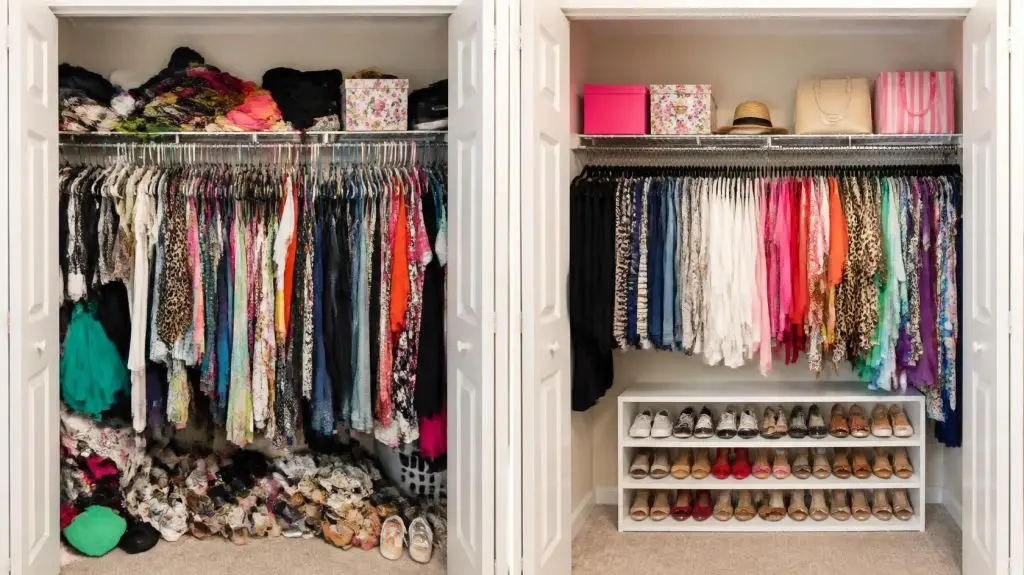
Furthermore, remember that decluttering is only half the battle. Once you have curated your items, you must provide them with a structured, high-quality home. If you keep throwing your curated clothes back onto poor, dysfunctional wire shelves, clutter will inevitably return. Investing in a professional custom closet design service ensures every shoe, bag, and tailored shirt has an engineered home, making order effortless.

How should I handle sentimental items that I don't use?
Handle sentimental items by separating the memory from the physical object. Take high-resolution photographs of large sentimental items to store digitally, or select one "hero" piece to professionally frame or display, allowing you to donate the remaining duplicate items with peace of mind.
Preserving Memories Without the Clutter
Consider your old college journals, a massive collection of childhood trophies, or your grandmother's vintage china set that you never use because it is hand-wash only. Keeping these stored in dusty cardboard boxes in your attic does not honor the memories. Instead:
- Create a Digital Memory Book: Scan old letters, artwork, and photos into a beautiful, secure cloud drive. This preserves the history forever while taking up zero physical square footage.
- The "Hero Piece" Strategy: If you have a 12-piece china set, keep one stunning tea cup and saucer to display on an open kitchen shelf. Donate the remaining pieces to someone who will cherish and use them daily.
- Gift with Intention: Pass family heirlooms down to younger relatives who are moving into new homes and actively need the items, rather than hoarding them out of guilt.
Frequently Asked Questions
How do I start decluttering when I am completely overwhelmed?
Start with a non-emotional area, like your pantry or medicine cabinet, to build your decision-making muscles before tackling highly personal items like clothing or photos.
Is it better to sell or donate my old designer clothes?
If an item is in mint condition and from a sought-after luxury brand, luxury consignment is a great option. However, if you want immediate mental clarity, donating to a worthy cause offers instant gratification.
What is the 20/20 rule for decluttering?
If you can replace an item in under 20 minutes for less than $20, you can safely let it go. This is highly effective for random cables, duplicate kitchen tools, and cheap accessories.
How do I stop buying things I don't need?
Implement a "one-in, one-out" rule. For every new item you bring into your home, you must donate or recycle one old item. This keeps your curated home in perfect equilibrium.
How do I deal with a partner who is a hoarder?
Lead by example. Focus entirely on decluttering your own personal spaces and shared living rooms. Once they experience the peace of a cleared environment, they are often inspired to join in.
What should I do with old wire hangers and retail plastic bags?
Many dry cleaners will gladly take back and reuse wire hangers, and local grocery stores often have designated drop-off bins to recycle plastic film and bags responsibly.
How can I keep my closet looking organized long-term?
Assign an exact, dedicated spot for every item. If you don't have enough shelf space, it is a sign that you either need to declutter further or install a more efficient closet system.
Is a capsule wardrobe actually practical?
Absolutely. A curated capsule wardrobe of high-quality, interchangeable basics makes getting dressed faster, reduces decision fatigue, and ensures you always look polished.
Ready to Curate Your Dream Home?
Learning how to get rid of things is an incredibly liberating experience. Once you strip away the excess, you are left with room to breathe, create, and focus on what truly matters. Complete your home's transformation by organizing what you love within a beautifully tailored custom system.
Schedule a Free Consultation