

Mudroom Closet Design: Organizing Your Home's Busiest Transition Zone
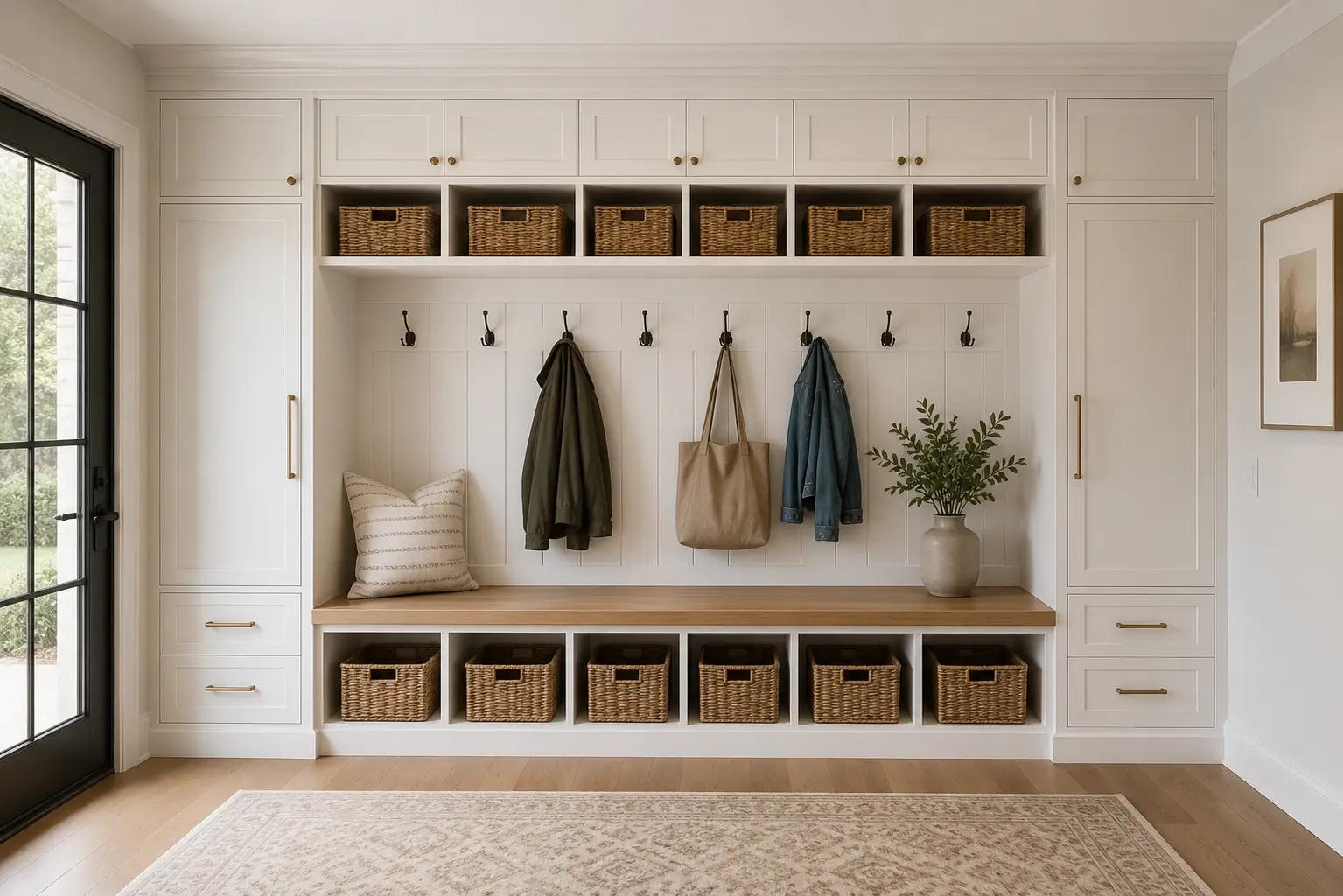
A mudroom closet is a specialized entryway storage system engineered to capture outdoor gear, footwear, coats, and bags before they enter the main living areas of a home. Strategically placed near primary entry points, modern mudrooms integrate open storage hooks, closed cabinetry, sturdy benches, drop zones, and heavy-duty organizational hardware to transition cleanly between the outdoors and your home's interior.
What is a Mudroom Closet and Why Do Homes Need One?
A mudroom closet serves as a home’s primary structural barrier against outdoor debris, moisture, and daily clutter. By providing dedicated, organized storage compartments for every family member, these transitional spaces streamline morning departures, protect interior flooring, and keep high-traffic hallways completely clear of scattered shoes and bags.
Think of a mudroom as your home’s buffer zone. It acts as a processing station for the messiness of life—muddy boots, wet umbrellas, heavy winter coats, sports gear, and school backpacks. In the past, houses relied on basic, cramped coat closets that quickly turned into chaotic piles of tangled hangers and buried shoes.
Today, custom design has completely reimagined this transition. Homeowners are building smart, highly structured entry hubs. By designing a designated station for everything, you eliminate the frantic search for car keys, dog leashes, or school permission slips right as you are trying to head out the door.
What are the Core Benefits of a Custom Mudroom Closet?
Investing in custom-built mudrooms improves home cleanliness, reduces stress, and protects expensive flooring from abrasive dirt and water. Furthermore, tailored storage solutions maximize every square inch of awkward entry nooks, converting wasted space into high-functioning organizational zones that add immediate buyer appeal and resale value.
- Minimized Floor Wear and Tear: Sand, grit, and moisture destroy hardwood floors and stain carpets. A mudroom stops these elements at the door, providing a durable surface where dirty shoes can dry safely.
- A Place for Everything: Custom cubbies, lockers, and hooks give each family member a dedicated space, teaching kids organization and keeping clutter out of communal living areas.
- Customized Drop Zones: Integrating charging outlets, key trays, and mail slots directly into your entryway cabinetry prevents paper piles and electronic clutter from taking over kitchen counters.
- Maximized Small Footprints: Professional designers can turn tiny laundry rooms, hallway corners, or garage entryways into incredibly efficient storage centers using smart vertical engineering.
How Much Does a Custom Mudroom Closet Cost?
A custom mudroom closet typically costs between $3,000 and $12,000+, depending heavily on the size of the unit, choice of materials, and added features like drawers or doors. While larger mudrooms with custom cabinetry, enclosed lockers, bench seating, and premium finishes typically fall into the luxury price range. Factors such as cabinet height, bench size, hardware selection, painted or stained finishes, and built-in storage accessories can all affect the final cost.
To help you plan your entryway budget, let us review the standard pricing categories:
| Design Tier | Price Range | Included Features & Materials |
Luxury Custom Mudroom | $8,000 – $15,000+ | Large floor-to-ceiling cabinetry, fully enclosed locker doors, solid hardwood or premium lacquer finishes, integrated charging stations, custom bench with shoe drawers underneath. |
| Custom Built-In Mudroom | $4,000 – $8,000 | Heavy-duty structured melamine, open locker cubbies, sturdy butcher-block wood bench, overhead cabinet storage, heavy-duty double-prong coat hooks. |
Entryway Bench & Storage | $2,000 – $4,000 | Compact design fitted to a recess, open upper shelves, simple bench seating, beadboard backing, basic wall-mounted hooks. |
Open Lockers vs. Closed Cabinets: Which is Best for Your Home?
Choosing between open lockers and closed cabinets depends entirely on your family's daily habits and aesthetic goals. Open lockers are best for active families with young children who require fast, frictionless access, whereas closed cabinets are ideal for busy households seeking a clean, minimalist entryway that hides clutter.
Open Storage vs. Closed Storage
Let us compare these two primary entryway storage strategies to see which fits your lifestyle:
| Feature | Open Lockers (Frictionless Access) | Closed Cabinets (Hidden Clutter) |
| Daily Usability | High; children can easily hang coats and toss shoes in cubbies without opening doors. | Moderate; requires the extra step of opening and closing doors to put items away. |
| Visual Cleanliness | Displays your gear; can look busy or untidy if shelves are packed. | Extremely clean; keeps colorful coats, bulky sports gear, and clutter hidden out of sight. |
| Air Circulation | Excellent; wet coats, damp boots, and athletic gear dry out quickly. | Restrained; requires ventilation grilles or slatted doors to prevent odors and moisture buildup. |
| Ideal For | Active families with kids, pet owners, and busy side-entrance mudrooms. | Minimalist homes, main front foyers, and formal hall spaces. |
What Common Mistakes Should I Avoid in Mudroom Closet Design?
The most frequent mistakes in mudroom design are selecting delicate, hard-to-clean materials, installing too few hooks, and ignoring seating requirements. Forgetting to match bench heights to child accessibility or ignoring wet shoe drainage leads to a space that is frustratingly impractical for daily use.
Avoid these critical design pitfalls when mapping out your project:
- Using Delicate Materials: Mudrooms face heavy impacts, mud, and water. Avoid delicate paint finishes or cheap particle board that swells when exposed to moisture. Opt for high-moisture-resistant cabinet substrates and highly durable bench surfaces like quartz, solid hardwood, or heavy-duty laminate.
- Relying on Weak Hooks: Cheap, single-prong hooks bend and pull out of the wall under the weight of heavy backpacks. Always specify heavy-duty, double-prong metal hooks anchored directly into structural studs or robust backer boards.
- Failing to Plan for Boot Height: Standard shoe cubbies are too short for tall winter or rain boots. Be sure to include tall, open floor bays under your bench specifically for boots and umbrellas.
- Ignoring Ventilation: Wet gear trapped in unventilated cubbies can develop musty odors. Incorporate open wire baskets, slatted doors, or even boot dryers to keep fresh air moving through the space.
How to Successfully Implement a Custom Entryway Layout
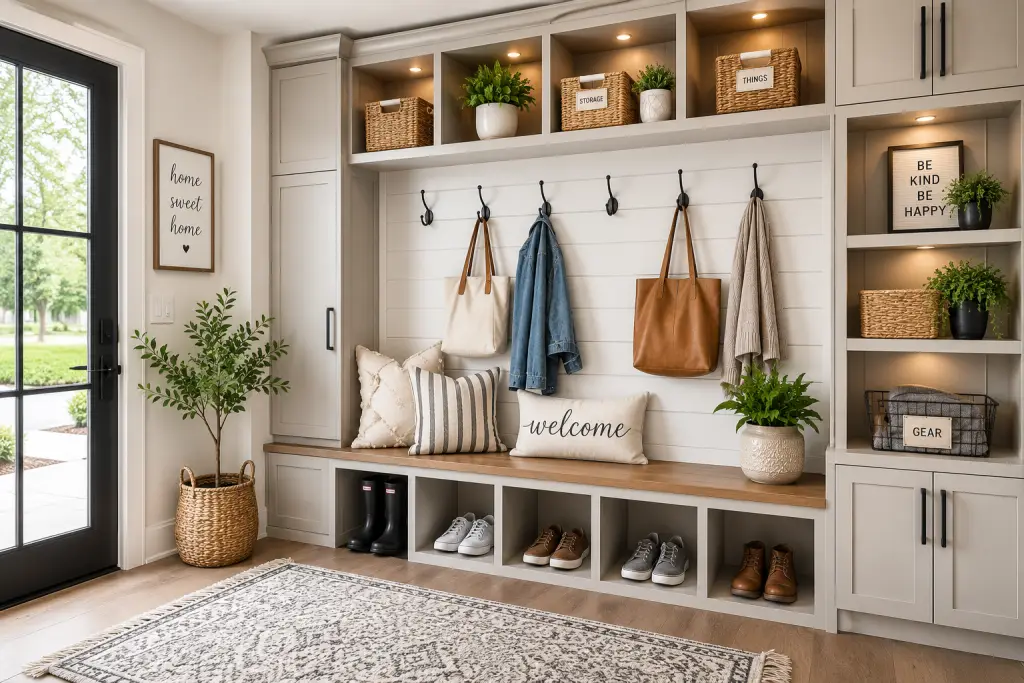
Implementing a highly functional mudroom layout requires zoning your storage based on how your family naturally enters the home. Create a logical sequence: first, a bench for shoe removal; second, hooks for immediate coat and bag drop-off; and third, upper cabinets for long-term seasonal storage.
To build a reliable and organized entryway system, follow this clear design process:
1.Measure and Analyze Your Traffic Flow:Step 1.
Assess how family members enter. Check door swings, measure hallway clearances, and make sure you maintain a comfortable walkway of at least 36 to 40 inches.
2.Design the Anchoring Bench:Step 2.
Incorporate a sturdy bench with a comfortable height of 18 inches. Ensure the bench material can handle moisture, groceries, and heavy packages.
3.Configure the Drop Zone:Step 3.
Position hooks at various heights—lower hooks for children's backpacks and coats, and higher hooks for adults. Add small drawers or open baskets nearby for keys, wallets, and mail.
4.Integrate Shoe Storage Solutions:Step 4.
Incorporate open, easy-to-clean cubbies or pull-out wire baskets directly beneath the bench. This keeps damp shoes off your main floors while allowing them to dry.
5.Incorporate Seasonal Upper Cabinets:Step 5.
Utilize the high vertical space near the ceiling for closed cabinets. Store out-of-season hats, gloves, beach towels, and holiday items here.
Expert Design Tips for Your Mudroom Sanctuary
- Incorporate Smart Outlets: Add electrical outlets inside lower cubbies or middle drawers so you can charge your phones, smartwatches, and tablets out of sight.
- Invest in Heavy-Duty Baskets: Use durable plastic, metal wire, or high-quality canvas baskets instead of delicate wicker. Wicker baskets tend to splinter and snag delicate fabrics like knit scarves and sweaters.
- Install a Dedicated Pet Station: If you have dogs, add a low cabinet drawer for food bowls, a hook for leashes, and a pull-out bin to store large bags of pet food.
- Add a Message Board: Mount a magnetic whiteboard or corkboard on the side of a cabinet to write down weekly schedules, grocery lists, and school reminders.
Frequently Asked Questions
What is the ideal height for a mudroom bench?
The ideal height for a mudroom bench is 18 inches. This is the standard height of a chair, making it incredibly comfortable for both adults and children to sit down while putting on or removing shoes.
Can I build a mudroom closet in a small hallway?
Yes. If you have a narrow hallway, you can design a shallow-depth unit. By using wall-mounted hooks and a slim-profile bench with built-in shoe cubbies, you can create a highly functional drop zone in as little as 12 to 15 inches of depth.
How do I handle wet clothes and dripping boots?
Integrate open wire shelves, boot trays with raised edges, or slatted wood panels that allow water to drain and evaporate. It is also wise to choose water-resistant materials like quartz for the bench or heavy-duty laminate for the lower cabinetry.
Are open cubbies better than closed lockers for kids?
For households with younger children, open cubbies are highly recommended. Kids are much more likely to hang up their coats and slide their shoes into an open slot than they are to open cabinet doors and use hangers.
What is the best flooring for a mudroom area?
The best flooring materials are highly durable, slip-resistant, and water-resistant. Natural stone, porcelain tile, luxury vinyl plank (LVP), and brick are fantastic choices because they are easy to clean and stand up to heavy moisture and dirt.
How many hooks should I include per person?
We recommend installing at least two heavy-duty hooks per family member. This allows one hook for a primary everyday coat and another for a backpack, purse, or accessory bag.
Should my laundry room and mudroom be combined?
Combining your laundry room and mudroom is a highly efficient use of space. It allows dirty sports uniforms, muddy clothes, and damp towels to go straight from the entryway door directly into the washing machine without tracking dirt through the home.
How deep should mudroom cabinets be?
Standard mudroom cabinets and lockers are typically 18 to 24 inches deep. This depth provides plenty of room for heavy winter coats to hang flat without getting pinched by cabinet doors.
Create a Welcoming Entryway with Clear Closets
Tired of tripping over shoes and backpacks the moment you walk through the door? The design experts at Clear Closets are here to help you craft a beautifully organized, highly functional entryway. From custom mudroom lockers and storage benches to complete master closet systems, we handle every detail from 3D conceptual drawings to professional, mess-free installation.
We proudly design and install storage solutions throughout Alpharetta, Roswell, Johns Creek, and the greater Atlanta metro area. Reach out to the Clear Closets team today to schedule your complimentary design consultation.