
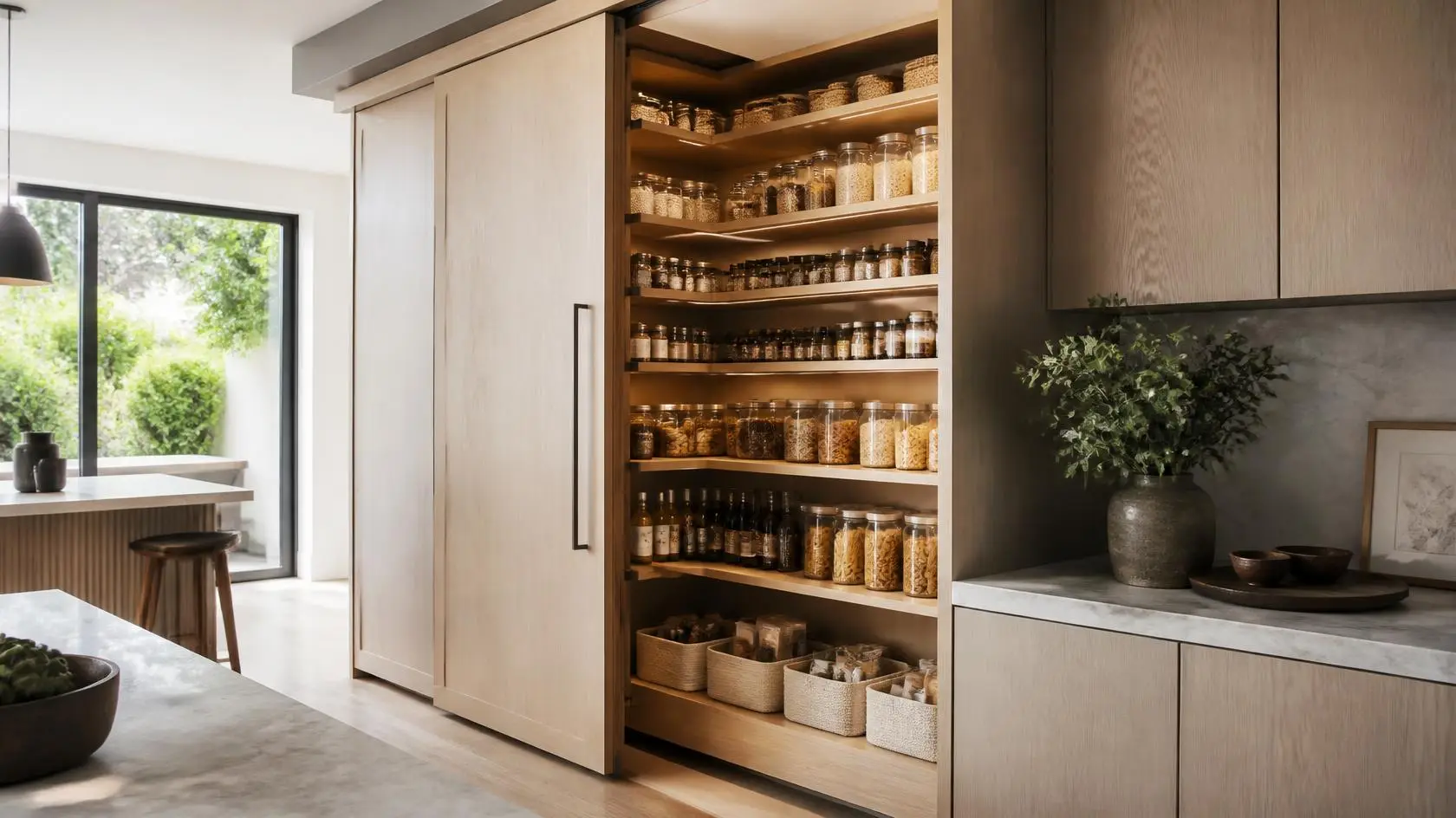

Sliding Pantry Ideas for a More Organized Kitchen
A sliding pantry, also known as a pull-out pantry, is a specialized kitchen cabinet mechanism featuring full-extension sliding tracks that pull entire vertical shelving units forward. Designed to fit into narrow gaps or full-height tall cabinets, a sliding pantry provides complete 360-degree visibility and side access to dry goods, spices, and small appliances without requiring deep cabinet digging.
What Is a Sliding Pantry and How Does It Improve Kitchen Efficiency?
A sliding pantry is a space-saving cabinet system engineered with heavy-duty ball-bearing glides or soft-close runners that extend vertical shelves entirely out of a cabinet wall. Unlike traditional deep stationary shelves where canned goods get lost in dark corners, sliding pantries bring food items directly to the cook, maximizing storage density and reducing food waste.
In traditional kitchen cabinets with deep, fixed shelves (typically 24 inches deep), items stored toward the back frequently go forgotten until long after their expiration dates. Reaching into lower or upper cabinet depths requires uncomfortable crouching or stooping, creating daily kitchen friction during meal preparation.
Installing a sliding pantry replaces static depth with full-extension movement. By pulling the entire cabinet contents forward into the open kitchen space, homeowners gain immediate visual access to both sides of every shelf. This spatial accessibility streamlines grocery unpacking, meal preparation, and inventory management, making it an essential upgrade for modern kitchen renovations.
How Do I Choose the Best Sliding Pantry Design for My Kitchen Layout?
Choosing the best sliding pantry design depends on available cabinet width, total weight load requirements, and existing kitchen floor plan constraints. Narrow 6-to-12-inch gap pull-outs utilize awkward spaces next to refrigerators, full-height tall cabinet pull-outs maximize vertical storage, and base cabinet sliding drawers improve under-counter accessibility.
Sliding Pantry Type Typical Cabinet Width Best For Narrow Pull-Out Pantry 6–12 in. Spices, oils, canned goods, and baking supplies Full-Height Pull-Out Pantry 15–30 in. Dry goods, packaged foods, and larger pantry items Base Cabinet Pull-Out Shelves 18–36 in. Pots, pans, small appliances, and heavier kitchen items Swing-Out Pantry System 24–36 in. High-capacity storage with easier access to multiple shelf levels
Slim Gap Pull-Out Racks
The 6-to-12-inch gap between a refrigerator and surrounding cabinetry often sits unused. Installing a narrow slim pull-out sliding pantry turns this tight architectural nook into high-density storage for spice jars, oils, vinegars, and rolled baking paper.
Full-Height Tall Cabinet Pull-Outs
For primary kitchen pantry walls, a full-height tall cabinet sliding system utilizes full floor-to-ceiling space. Heavy-duty bottom slides handle up to 250 pounds of canned goods, dry grains, and bottled beverages, extending smoothly with soft-close dampening.
Individual Sliding Drawer Trays
Rather than pulling out a single tall structure, built-in individual sliding drawers (roll-out shelf trays) allow you to pull out one specific tier at a time behind traditional cabinet doors. This reduces the weight you move during routine cooking tasks.
What Are the Best Features to Include in a Custom Sliding Pantry?
The best features for a custom sliding pantry include adjustable shelf heights, soft-close heavy-duty glides, solid wood or anti-slip bottom surfaces, chrome or matte black guardrails, and integrated door-mounted storage racks. These components ensure smooth operation, prevent tipping, and maximize internal volume.
- Heavy-Duty Soft-Close Glides: Quality runners prevent heavy pull-out units from slamming or shaking, protecting delicate glass jars and liquid containers from tipping over.
- Solid Bottom Trays with Anti-Slip Liners: Smooth solid wood or melamine shelf bases are far easier to clean than open wire mesh shelves, preventing small spice bottles from wobbling.
- Adjustable Shelf Intervals: Footwear-like height variations exist in groceries; adjustable shelf brackets allow you to raise or lower tiers for tall cereal boxes or short tuna cans.
- Full-Extension Ball-Bearing Tracks: Full extension ensures the rearmost 3 inches of the pantry pull completely out past the cabinet face for effortless top-down viewing.
How Much Does a Sliding Pantry Cost to Install?
A sliding pantry installation costs between $350 and $2,800 on average. Retrofitting an existing cabinet with prefabricated sliding metal rack kits costs between $200 and $600, while custom built-in wood pull-out pantries with soft-close commercial hardware range from $1,200 to $3,500+.
| Pantry Solution | Typical Installed Cost | Typical Features |
|---|---|---|
| Retrofit Pull-Out System | $300–$800 | Pull-out baskets or shelves, sliding hardware, and installation within an existing cabinet |
| Semi-Custom Pull-Out Pantry | $800–$2,000 | Wood or premium laminate shelving, soft-close slides, and customized storage configurations |
| Fully Custom Sliding Pantry | $2,000–$5,000+ | Custom cabinetry, premium hardware, full-extension slides, integrated storage accessories, and optional lighting |
Key Cost Considerations
- Hardware Load Capacity: Standard slide hardware rated for 75 lbs is budget-friendly. Heavy-duty commercial slides rated for 200+ lbs increase hardware costs but prevent shelf sagging over time.
- Cabinet Millwork Adjustments: Modifying existing cabinet faces or installing custom-matched cabinet door panels adds custom carpentry labor costs.
- Material Selection: Steel wire basket inserts offer economical utility, whereas solid maple, walnut, or lacquer-finished tray boxes require higher material investments.
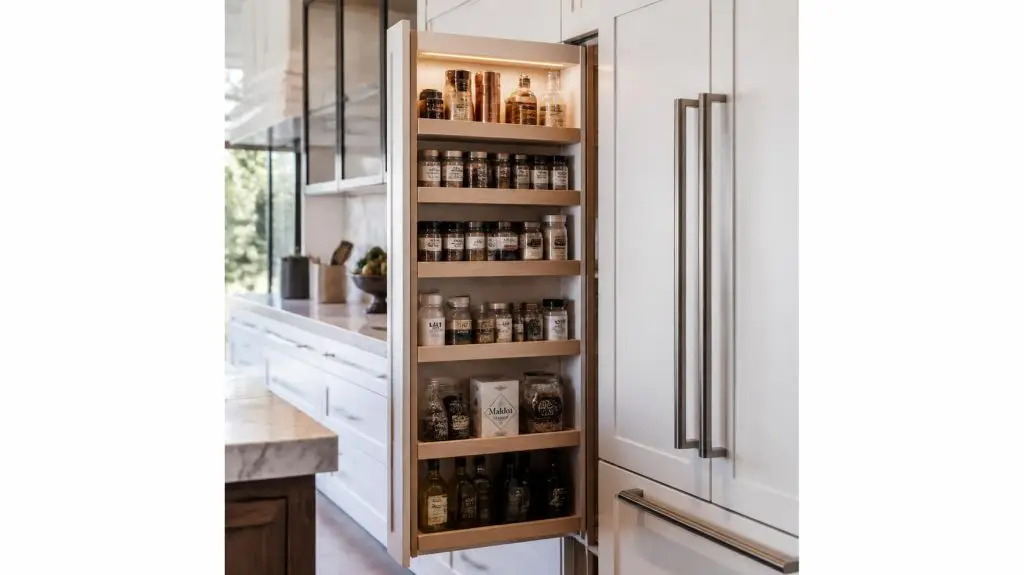
Metal Wire Pull-Outs vs. Solid Wood Sliding Shelves: Which Is Better?
Solid wood sliding shelves are superior for overall stability, ease of cleaning, preventing small bottle tipping, and luxury kitchen aesthetics. Metal wire pull-out racks offer lower upfront costs and improved air circulation, but allow small items to tip sideways and let flour or sugar spills drop down to lower tiers.
| Comparison Factor | Solid Wood Pull-Out Shelves | Metal Wire Pull-Out Racks |
|---|---|---|
| Small-Item Storage | Solid surface supports small containers easily | Smaller items may require bins or liners |
| Spill Management | Solid surface contains spills more effectively | Open construction allows spills to pass through |
| Weight Capacity | Varies by construction and slide hardware | Varies by rack design and hardware |
| Appearance | Furniture-like, integrated cabinetry look | Lightweight, functional appearance |
| Cost | Typically higher | Typically more affordable |
While wire racks are widely available in big-box retail stores, homeowners frequently find that small spice bottles, baking powder tins, and packet boxes tip sideways between wire gaps. Solid-bottom pull-out trays lined with washable mats keep pantry items upright and contain accidental liquid drips safely.
What Are Common Sliding Pantry Design Mistakes to Avoid?
The most common sliding pantry design mistakes include overloading slide mechanisms past weight ratings, failing to account for door hinge clearance, installing fixed shelf heights that waste vertical space, choosing cheap non-soft-close tracks, and neglecting side-rail heights needed to prevent tall items from falling.
- Ignoring Door Hinge Clearance: Installing pull-out drawers inside traditional cabinet doors without offset spacer blocks causes sliding hardware to scrape against cabinet door hinges.
- Exceeding Weight Capacities: Stacking dozens of glass jars and heavy flour bags on light-duty slides causes tracks to bind, grind, or fail prematurely.
- Low Side Guardrails: Using shallow 1-inch tray lips on high-tier pull-outs allows tall oil bottles or cereal boxes to tip over the side when the pantry is pulled open quickly.
- Fixed Shelf Heights: Installing rigid, non-adjustable sliding tiers prevents you from reconfiguring storage space as grocery buying habits change.
Step-by-Step Guide: How to Organize a Sliding Pantry for Maximum Efficiency
To organize a sliding pantry effectively, place heavy cans and liquid bottles on bottom tiers, group cooking essentials at waist level, store lightweight boxed goods on upper shelves, use clear airtight containers, and label shelf zones clearly.
- Audit and Group Pantry Items: Empty all cabinet contents. Group items into clear categories: baking supplies, canned goods, breakfast grains, oils/sauces, and snacks.
- Assign Tiers Based on Item Weight: Place heavy items (beverage cases, flour sacks, large oil jugs) on the bottom sliding tier to keep the center of gravity low and stable.
- Establish Daily Prep Zones: Position high-frequency ingredients—such as cooking oils, salt, pepper, and primary spices—on middle shelves located between waist and chest height.
- Decant Dry Goods into Clear Bins: Transfer flour, sugar, rice, and pasta into uniform square or rectangular clear acrylic containers. Square containers eliminate wasted rounded gaps on sliding shelves.
- Install Side Guard Railings or Dividers: Use adjustable wooden or acrylic shelf dividers to keep narrow spice bottles from sliding around during movement.
- Label Tier Edges: Apply subtle labels on shelf edges so family members return groceries to their designated zones consistently.
Expert Tips for Maintaining Pull-Out Hardware and Smooth Glides
To maintain pull-out hardware, clean track channels twice a year using a dry vacuum brush, apply dry silicone lubricant spray to ball bearings, tighten mounting screws annually, and avoid hanging heavy bags on extended pantry frames.
Pull-Out Pantry Maintenance:
Clean the Tracks
Vacuum dust and debris as needed.Check the Hardware
Inspect mounting screws and slide alignment periodically.Lubricate When Needed
Use only the lubricant recommended by the hardware manufacturer.Avoid Overloading
Stay within the manufacturer’s specified weight capacity.
Kitchen pantries collect flour dust, sugar grains, and stray crumbs over time. When loose debris falls into lower slide tracks, it mixes with factory grease, creating a thick sludge that causes drawers to stick or roll unevenly.
Avoid spraying wet WD-40 or heavy grease into cabinet tracks, as this attracts dirt. Instead, vacuum channels thoroughly using a narrow crevice tool, wipe rails clean with a microfiber cloth, and apply a light coat of dry PTFE silicone spray lubricant to maintain a effortless glide.
Frequently Asked Questions About Sliding Pantries
What is the minimum cabinet width needed for a sliding pantry?
The absolute minimum functional cabinet width for a sliding pantry is 6 inches for narrow spice pull-outs. For general dry food pantry storage, a minimum width of 12 to 15 inches is recommended.
Can you add sliding pull-out shelves to existing kitchen cabinets?
Yes. You can retrofit existing static cabinets by installing aftermarket sliding shelf kits or custom-measured wood roll-out trays mounted directly to the cabinet floor or interior side walls.
How much weight can a full-height sliding pantry hold?
Weight capacity varies by hardware grade. Standard residential pull-out pantries hold 75 to 100 pounds, while heavy-duty commercial soft-close slide systems handle 200 to 250 pounds safely.
Are pull-out pantries better than standard pantry shelves?
Yes, pull-out pantries are vastly superior for accessibility, organization, and visibility. They bring items stored at the back out into the open, eliminating dark corners and reducing forgotten expired food.
How do you keep items from falling off sliding pantry shelves?
Prevent items from falling by choosing trays with raised side guardrails (at least 3 to 4 inches high), using anti-slip shelf liners, and packing items snugly using square clear storage containers.
What is the difference between a pull-out pantry and a roll-out shelf?
A pull-out pantry features one single connected vertical frame where all shelves move forward together when pulled. Roll-out shelves are individual sliding drawers mounted behind traditional cabinet doors that pull out one at a time.
How deep should a kitchen sliding pantry cabinet be?
Standard kitchen base and tall pantry cabinets are 24 inches deep. Sliding pantry hardware is designed specifically to utilize this full 24-inch depth efficiently.
Do sliding pantries waste cabinet space on the sides?
Sliding pantries lose approximately 1 to 1.5 inches of total horizontal width to accommodate side glide tracks and cabinet side clearance, but they gain far more usable volume by utilizing full cabinet depth.
How do you clean behind a full-height sliding pantry?
Most modern soft-close sliding pantries feature quick-release lever clips on the bottom slide tracks. Pressing these clips allows you to disconnect and slide the entire shelf frame out of the cabinet frame for thorough cleaning.
What wood is best for custom sliding pantry drawers?
Solid maple, birch plywood with hardwood edge banding, and high-density Baltic birch are the premier materials for sliding pantry drawers due to their dimensional stability, smooth finish, and screw-holding strength.
Enhance Your Kitchen Storage with Custom Cabinetry Solutions
Creating an efficient, stress-free kitchen relies on clever spatial engineering and smooth, durable hardware integration. Whether you want to turn an awkward narrow gap into a high-capacity spice pull-out or outfit your main kitchen with a full-height luxury sliding pantry wall, custom craftsmanship ensures every inch serves a purpose. Explore full-home storage ideas, custom kitchen pantry integration, and master layout solutions at Clear Closets to build a home designed around your daily life.