
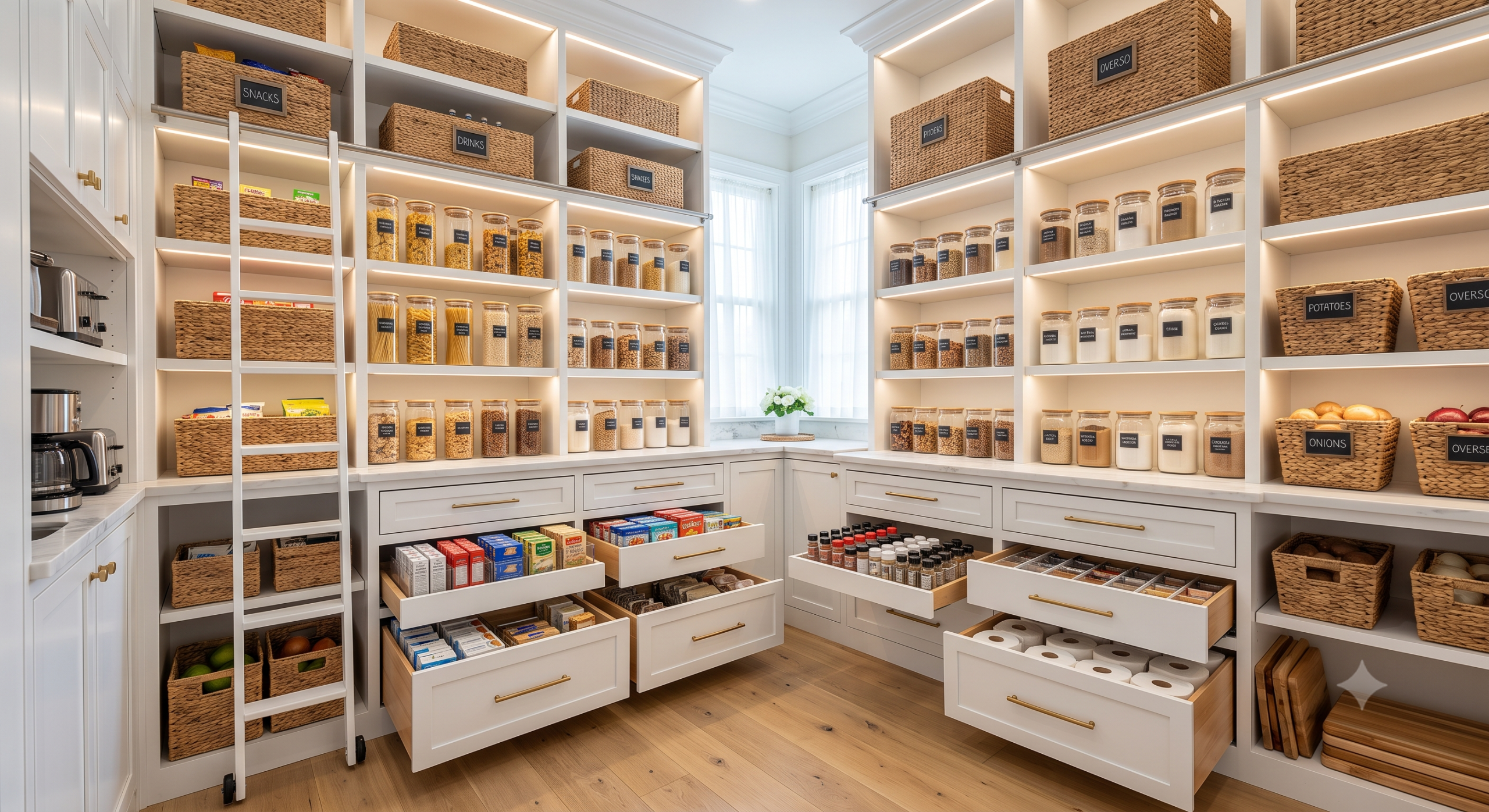

Pantry Organization Tips for Smarter Storage and Built-In Solutions
Effective pantry organization tips focus on grouping food items by category, establishing clear vertical sightlines, and utilizing air-tight storage containers. To fix a messy kitchen pantry, clear out expired goods, install shallow adjustable shelves, use pull-out drawers for heavy items, and place daily essentials at eye level to maximize accessibility, prevent food waste, and streamline meal prep.
What is Modern Pantry Organization?
Pantry organization is a systematic approach to arranging food inventory, small appliances, and kitchen supplies based on household cooking habits and frequency of use. Modern systems combine space planning, air-tight storage bins, and custom built-ins to eliminate dead corners, improve food visibility, and reduce grocery waste.
In busy households, the kitchen pantry easily becomes one of the most chaotic spots in the home. Overcrowded shelves, half-empty snack boxes, and duplicate spice bottles turn daily dinner preparation into a frustrating search.
Moving beyond temporary fixes requires treating your pantry as a key component of your overall interior design. By replacing weak wire racks with custom built-in storage, you create a clean, durable environment. Incorporating custom cabinetry ensures every item—from bulk paper goods to delicate baking ingredients—has a logical, easy-to-reach home.
What are the Main Benefits of an Organized Kitchen Pantry?
Organizing your kitchen pantry prevents food spoiling, saves money on duplicate grocery purchases, and streamlines daily meal preparation. Furthermore, upgrading to custom cabinetry and structured organizational systems elevates your home's aesthetic appeal, adds daily functional value, and directly boosts your property's long-term resale value.
- Drastically Reduced Food Waste: Clear containers and shallow shelves keep expiration dates visible, ensuring food is used before it spoils.
- Faster Meal Preparation: Grouping items into dedicated cooking zones allows you to grab spices, oils, and grains in seconds without shuffling boxes.
- Maximized Space Planning: Tailored shelf heights capture every inch of vertical wall space, converting awkward corners into high-capacity storage zones.
- Elevated Home Equity: In luxury homes, a well-designed, custom-milled walk-in pantry is a highly sought-after feature that appeals heavily to home buyers.
How Do I Choose Between Different Container Materials?
Choosing the best containers depends on your budget, safety needs, and preferred style. Clear glass canisters are ideal for long-term dry food storage because they are non-porous and chemical-free, clear acrylic bins are lightweight and shatterproof for family snack zones, and woven baskets excel at hiding bulk items.
Clear Glass vs. Acrylic vs. Wire Baskets
To help you choose the best storage tools for your shelves, let us compare how common container materials perform in daily life:
| Container Type | Best Use Case | Key Advantages | Potential Limitations |
| Clear Glass Jars | Flour, sugar, rice, pasta, and baking staples. | Air-tight seals; non-porous; chemical-free; elegant look; easy to wash. | Heavy; prone to shattering if dropped by young children. |
| BPA-Free Acrylic Bins | Snack bags, juice boxes, condiment bottles, and packets. | Lightweight; completely transparent; shatterproof; easy for kids to pull out. | Can scratch over time if cleaned with abrasive sponges. |
| Wire & Woven Baskets | Potatoes, onions, bulk paper towels, and extra snacks. | Excellent airflow for fresh produce; conceals visual clutter easily. | Small items or crumbs can fall through loose wire gaps. |
How Much Does a Custom Pantry Upgrade Cost?
A custom pantry makeover typically costs between $2,500 and $18,000+, depending on the room size, door style choices, and material selections. While basic reach-in organizers utilizing melamine panels sit on the lower end, large walk-in butler-style pantries featuring hardwood cabinetry, stone counters, and lighting represent major investments.
To help you budget for your kitchen renovation, here is a breakdown of average project costs:
| Project Type | Average Price Range | Key Materials & Structural Features |
| Luxury Walk-In Butler's Pantry | $8,000 – $18,000+ | Large room footprint; natural white oak or walnut wood veneers; quartz prep counter; recessed LED lighting channels; custom trim. |
| Custom Built-In Pantry | $3,500 – $8,000 | Custom-milled painted MDF or cabinet-grade plywood; shaker cabinets; full-extension drawer slides; pull-out pantry shelves; built-in spice storage. |
| Modular Reach-In Pantry | $1,200 – $3,500 | Durable melamine cabinetry; adjustable shelving; pull-out pantry shelves; slide-out wire baskets; brushed nickel hardware. |
What Common Pantry Organization Mistakes Should You Avoid?
The most frequent mistakes in pantry management are using deep stationary shelves, buying storage containers before measuring, and over-categorizing. Deep shelves without pull-out drawers cause food to get lost at the back, while unmeasured bins lead to wasted shelf space and awkward fitting.
Avoid these critical design and organizational pitfalls when setting up your space:
- Installing Shelves That Are Too Deep: Shelves deeper than 14 inches act as black holes for canned goods and small jars. If you have deep cabinets, install slide-out drawers mounted on full-extension drawer slides so you can easily reach items at the back.
- Buying Bins Before Decanting and Measuring: Never purchase a set of storage baskets just because they look pretty in a store. Always measure your shelf height and depth first, and audit your actual food inventory before buying containers.
- Ignoring Heavy Appliance Placement: Storing heavy appliances like stand mixers, blenders, or pressure cookers on high shelves is a safety hazard. Place heavy electrics on lower shelves or build a dedicated counter zone with outlets.
- Leaving Shelves Dark: Windowless pantries are notoriously dim, making it difficult to read food nutrition labels. Run low-voltage LED lighting strips vertically along your cabinet face frames to keep every shelf illuminated.
How to Implement a 5-Step Pantry Organization System
Implementing a lasting organization system requires emptying your shelves, categorizing inventory into functional zones, and placing daily items at eye level. Use clear, labelled containers for loose items, install pull-out drawers for heavy goods, and finish upper shelves with lightweight overflow storage.
To transform your kitchen storage, follow this structured, five-step process:
- Step 1: Complete Empty and Clean: Take every single item out of your pantry. Check expiration dates, throw away stale goods, wipe down the shelves, and vacuum up loose crumbs.
- Step 2: Group Into Functional Zones: Categorize your food into clear groups:
- Dinner Zone: Rice, pasta, canned tomatoes, and dry grains.
- Baking Zone: Flour, sugar, baking soda, chocolate chips, and oils.
- Breakfast & Snack Zone: Cereal, granola bars, nuts, and crackers.
- Prep Zone: Oils, vinegars, sauces, and spices.
- Step 3: Establish Vertical Reach Zones: Place daily snacks, school lunch items, and cereal on middle shelves at eye level. Store heavy cans, bulk drinks, and appliances on lower shelves, and keep seasonal holiday items up high.
- Step 4: Decant Dry Goods and Add Labels: Pour open bags of flour, sugar, and cereal into air-tight glass or acrylic canisters. Add clear labels with expiration dates written on the bottom.
- Step 5: Install Finish Details and Trim: If you are building custom cabinets, finish the upper edge with elegant crown molding to blend the storage units seamlessly with your kitchen's ceiling and architectural trim.
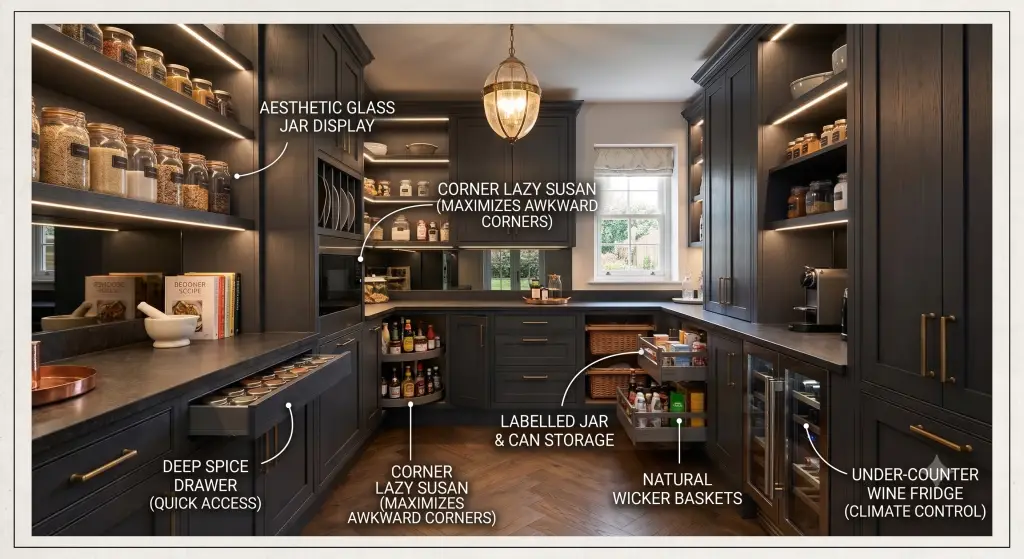
Expert Tips for Designing High-Performance Kitchen Storage
- Upgrade to Shaker Cabinet Doors: Use classic shaker cabinets for lower storage doors to keep bulky appliances, trash bins, and paper towels hidden from view.
- Install Lazy Susans in Corners: Corner shelves are notoriously hard to organize. Place rotating lazy Susans in tight corners to keep oils, vinegars, and condiment bottles accessible with a simple spin.
- Incorporate Soft-Close Hardware: Ensure all cabinet doors use soft-close hinges to prevent slamming and protect your wood frames from daily wear and tear.
- Create an Appliance Garage: Build an open counter section with hidden electrical outlets inside your pantry. This lets you use your coffee maker, toaster, and blender without cluttering your main kitchen counters.
Frequently Asked Questions
How do I choose the best pantry containers?
Choose clear, air-tight containers that stack easily. Square or rectangular containers are much more space-efficient than round jars because they sit flush against each other, eliminating empty gaps on your shelves.
What is the ideal shelf depth for a kitchen pantry?
The ideal shelf depth is 12 to 14 inches. This depth easily holds cereal boxes, large canisters, and canned goods without allowing smaller items to get buried or lost behind each other.
Are custom built-in pantries worth the investment?
Yes, absolutely. They maximize every cubic inch of your kitchen, prevent food waste by keeping items visible, keep main counters clear, and serve as high-value built-in features that boost home resale value.
What is the best wood for custom pantry cabinetry?
High-density MDF is the gold standard for smooth, painted finishes, while cabinet-grade plywood finished with white oak or walnut veneers is the premier choice for rich, natural wood-grain styles.
How do I organize spices so they are easy to find?
Use tiered riser shelves or slanted drawer inserts so you can see every spice label at a glance. Avoid stacking spice bottles on top of one another on flat, high shelves.
What is the best lighting color temperature for a pantry?
The best color temperature is between 3500K (neutral white) and 4000K (natural day white). This ensures food labels are easy to read and ingredients appear in their natural, true colors.
How do I keep fresh produce like potatoes and onions fresh?
Store fresh root vegetables in open wire baskets or slatted wooden drawers to allow air circulation. Keep potatoes and onions in separate baskets, as onions emit gases that cause potatoes to spoil faster.
How high should pantry shelves be spaced apart?
Leave 8 to 10 inches between shelves for canned goods and spices, 12 to 14 inches for cereal boxes and canisters, and 16 to 18 inches for large appliances and bulk storage baskets. Installing adjustable shelf pins is highly recommended.
Transform Your Kitchen with Clear Closets
Are you ready to say goodbye to kitchen clutter, completely reorganize your food inventory, and design a gorgeous, functional pantry that makes cooking a joy? The custom cabinetry and design experts at Clear Closets are here to help you bring your dream home storage to life. From modern walk-in butler's pantries and efficient reach-ins to custom master closets, laundry rooms, and home offices, we manage the entire project—from 3D conceptual designs to professional, clean installation.
We proudly design and install premium home storage systems throughout Alpharetta, Roswell, Johns Creek, and the greater Atlanta metro area. Contact the design experts at Clear Closets to schedule your complimentary custom design consultation today.